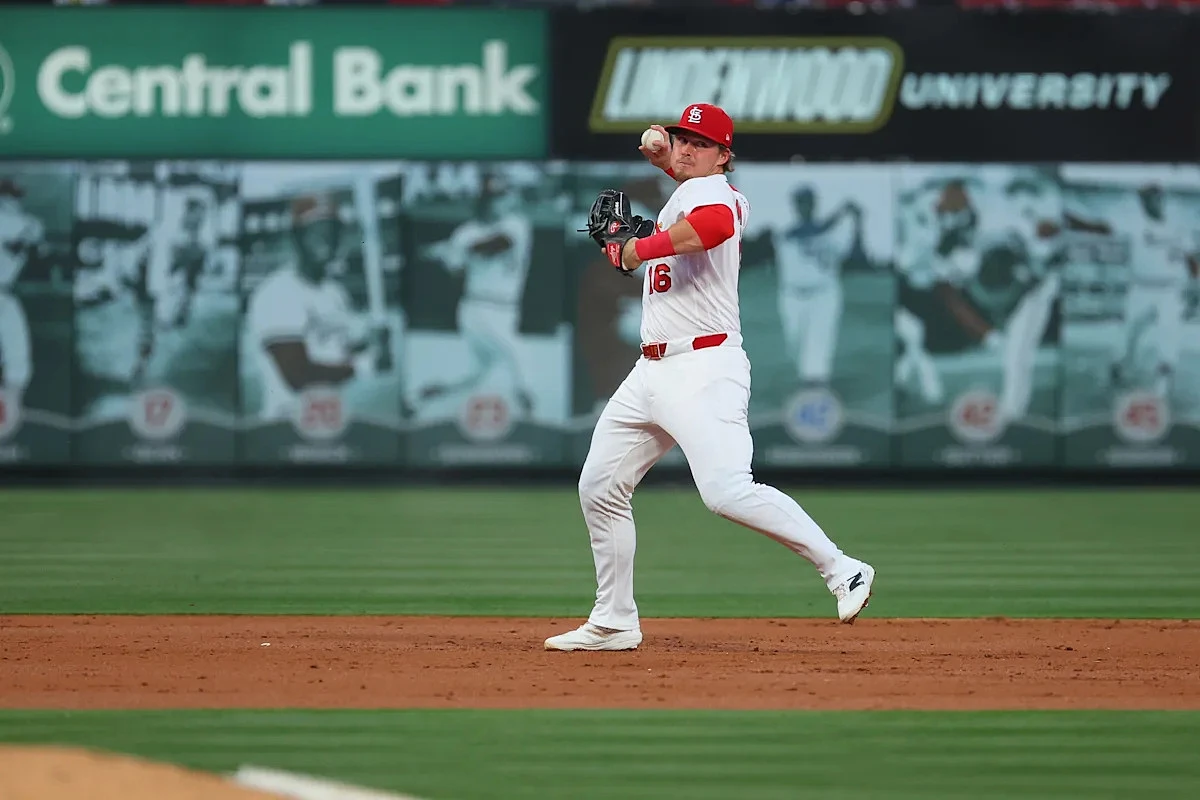
In the world of baseball, lineup protection is a topic that sparks endless debate. Recently, a comment from Memphis Myke raised an intriguing question about the St. Louis Cardinals: does Jordan Walker really lack protection in the lineup when he's followed by Nolan Gorman? It's a fair point, especially given Gorman's surprising RBI total this season.
Let's break down the numbers. Through 29 games, Gorman has driven in 18 runs—a pace that would translate to 100 RBIs over a full season. On the surface, that looks like a productive bat protecting Walker in the order. But here's the catch: RBIs don't tell the full story of a hitter's effectiveness. While Gorman is getting the job done with runners on base, his overall performance tells a different tale.
When opposing pitchers look at Gorman's stat line, they see a .214 batting average, a .357 slugging percentage, and a 79 wRC+. These numbers suggest that Gorman is far from a feared hitter. In fact, pitchers would much rather face him than Jordan Walker. So, does "protection" really exist in the way we think?
I've long held the belief that protection is more myth than reality. Years ago, an article on this very site examined the performance of the #2 hitters batting in front of Albert Pujols. The findings were clear: those hitters didn't perform significantly better in that spot than elsewhere in the lineup. While I couldn't track down that specific piece, I did find research by Tom Tango that shed more light on the subject.
Tango's analysis revealed that pitchers do adjust their approach based on who's waiting in the on-deck circle. If a weak hitter follows, pitchers are more likely to pitch around the current batter, leading to an increase in both walks and strikeouts. However, here's the key insight: when a protected hitter actually makes contact, there's no meaningful difference in performance. The idea that a strong batter behind you forces pitchers to throw better pitches? It doesn't hold up. Pitchers still avoid giving good hitters anything to hit, regardless of what's coming next.
The whole point of protection is to boost a hitter's offensive output by forcing pitchers to pitch to him. And yes, we do see fewer walks for protected hitters. But when the ball is put in play, the results are essentially the same. So while Gorman's RBI total might suggest he's providing cover for Walker, the underlying numbers tell a different story—one where lineup protection might not be the game-changer we often assume.