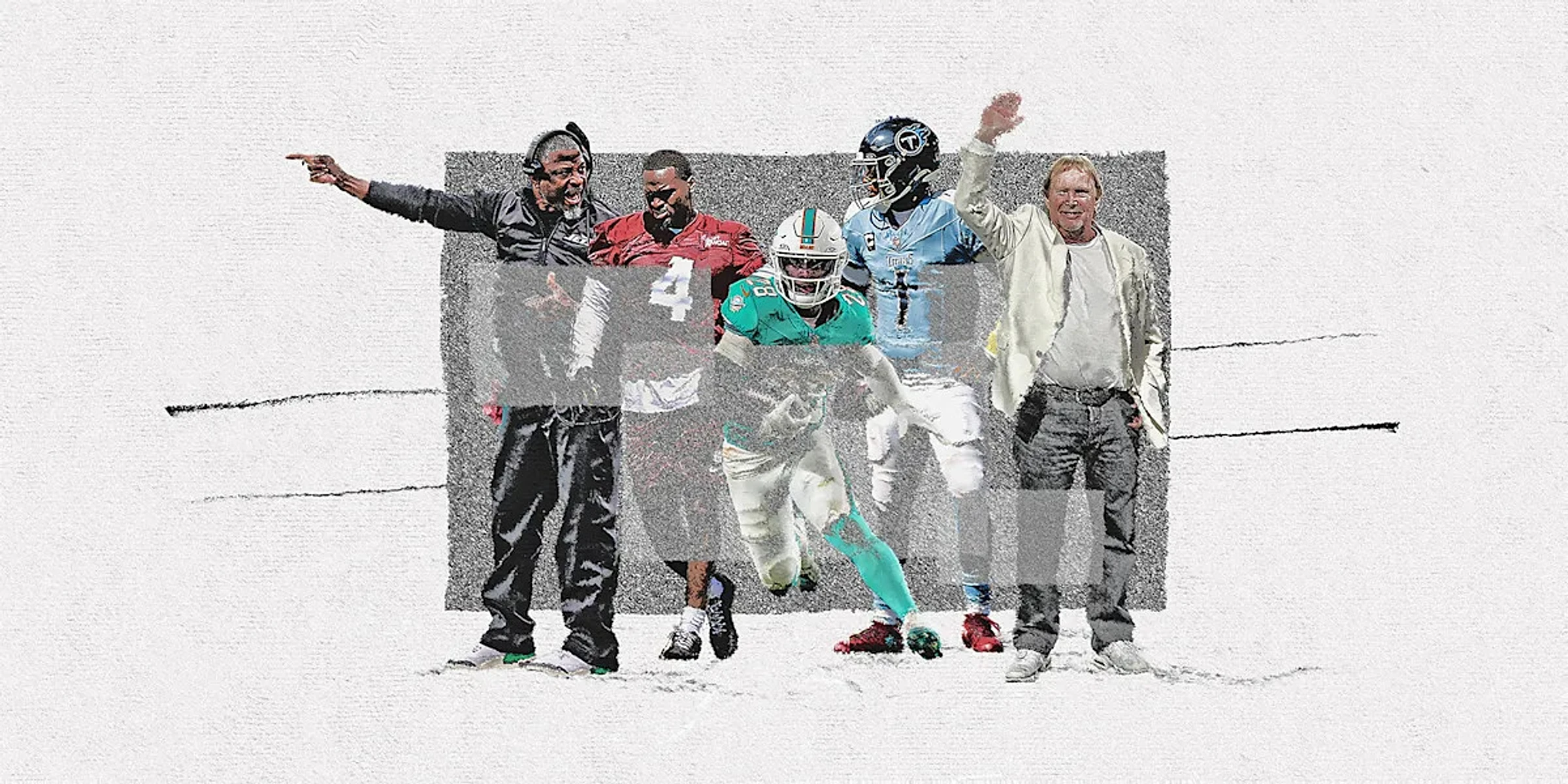
The NFL has sent a clear message to five teams this season, and it's not exactly a vote of confidence. For the first time in recent memory, the New York Jets, Las Vegas Raiders, Miami Dolphins, Tennessee Titans, and Arizona Cardinals won't see a single minute of prime-time football in 2026. While the league never officially admits it, this scheduling freeze-out is widely interpreted as a not-so-subtle nudge to ownership: get your organizations back on a competitive track.
The Titans are feeling this sting for the second year running, having been shut out of prime time in 2025 alongside the Cleveland Browns and New Orleans Saints. What makes this particularly striking is that it means the past two No. 1 overall draft picks—Tennessee's Cam Ward and Las Vegas's Fernando Mendoza—could go through their entire rookie seasons without a national spotlight. Ward might even spend his first two years in the league playing exclusively in the early or late afternoon windows.
It's no coincidence that four of these five teams—the Jets, Raiders, Titans, and Cardinals—all finished 3-14 last season, landing dead last in their divisions. The Dolphins are the outlier at 7-10, but they followed that mediocre campaign by gutting most of their roster this offseason. When you combine those records with their preseason Super Bowl odds—five of the six longest in the league—it's hard not to see the NFL's scheduling decisions as a reflection of on-field performance and marketability.
This isn't just about TV ratings; it's about the broader business of football. Prime-time games drive revenue for the league, networks, and even the teams themselves. When you're showcasing what oddsmakers consider the worst franchises, it doesn't help that pipeline of interest—or the merchandise and ticket sales that come with it. For fans of these teams, it's a tough pill to swallow, but it's also a clear call to action: rebuilds need to deliver results, and fast.