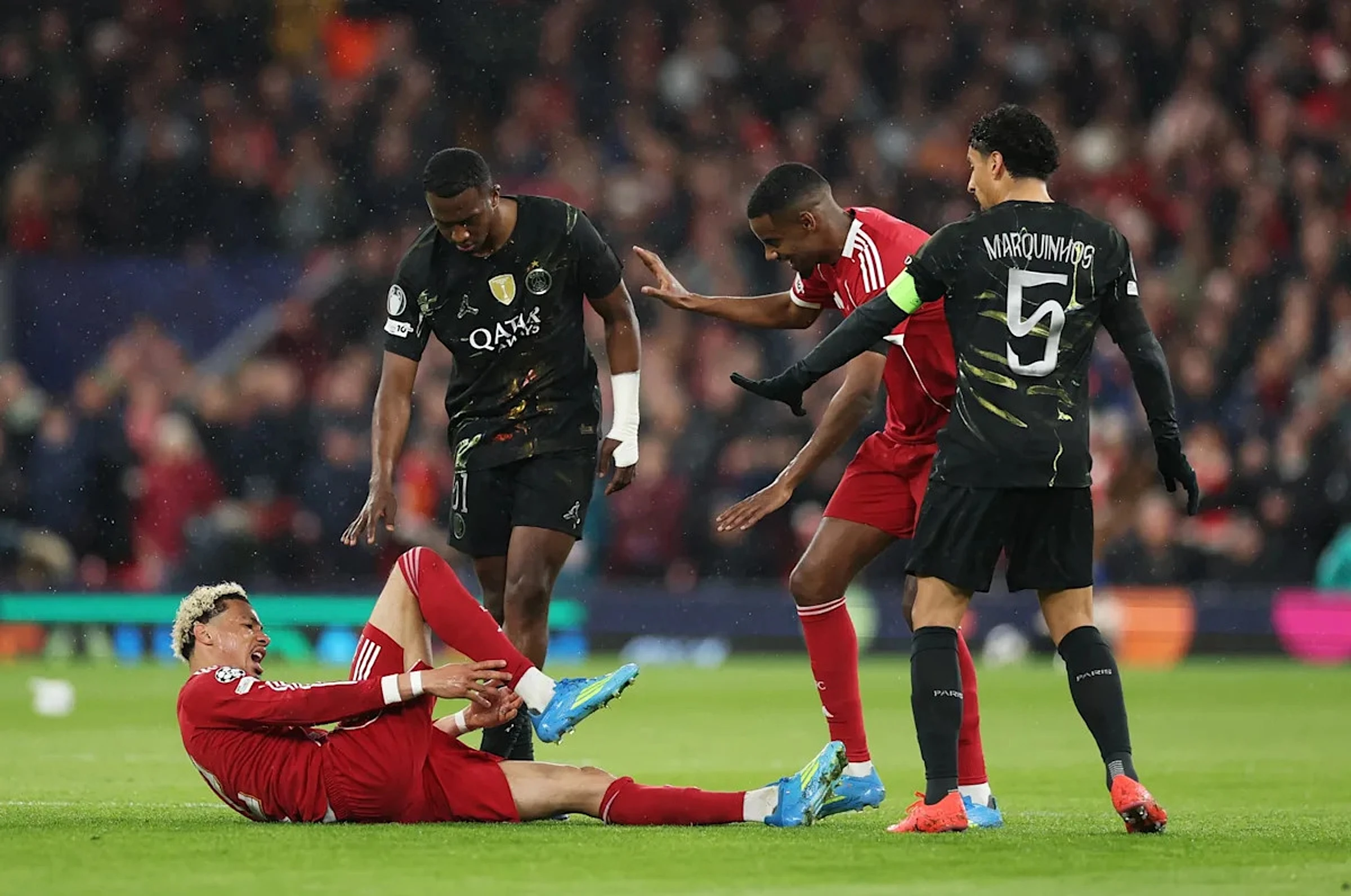
Liverpool's recent campaigns tell a story that goes far beyond tactics and formations. The real game-changer has been something far less visible but equally decisive: recovery. Injuries at Anfield haven't just disrupted lineups—they've fundamentally reshaped how the team plays, how minutes are managed, and how success is sustained across grueling, high-intensity seasons. What emerges from the past few years isn't a tale of bad luck, but a masterclass in how modern football is increasingly defined by the fine margins of physical resilience.
The 2020-21 season remains the clearest example of how quickly Liverpool's structure can unravel. Virgil van Dijk's ACL injury at Goodison Park was the headline-grabbing moment, but the real damage came in waves. Joe Gomez followed with a long-term setback, while Joël Matip's recurring fitness issues left the squad without a single natural centre-back option. What unfolded wasn't just a defensive crisis—it was a systemic breakdown. Fabinho and Jordan Henderson were pulled from midfield into defense, weakening the pressing structure and ball progression that had made Liverpool so formidable. Under Klopp, the team's identity had always depended on coordinated movement across every line. Once that chain broke, Liverpool lost more than personnel; they lost their rhythm.
This is a key principle in elite football: injuries are rarely isolated events. They create compensations, and those compensations carry their own risks. Liverpool's success under Jürgen Klopp was built on one of the most physically demanding systems in the modern game. The high press, rapid transitions, and full-backs operating as primary creators require repeated high-intensity actions over 90 minutes. Research in elite football consistently shows that muscle injuries—particularly hamstring strains—are closely linked to fixture congestion and insufficient recovery windows. According to FIFA medical research, the modern calendar significantly increases injury risk due to accumulated fatigue rather than single-match load. For Liverpool, this has been a harsh but valuable lesson in the science of recovery.