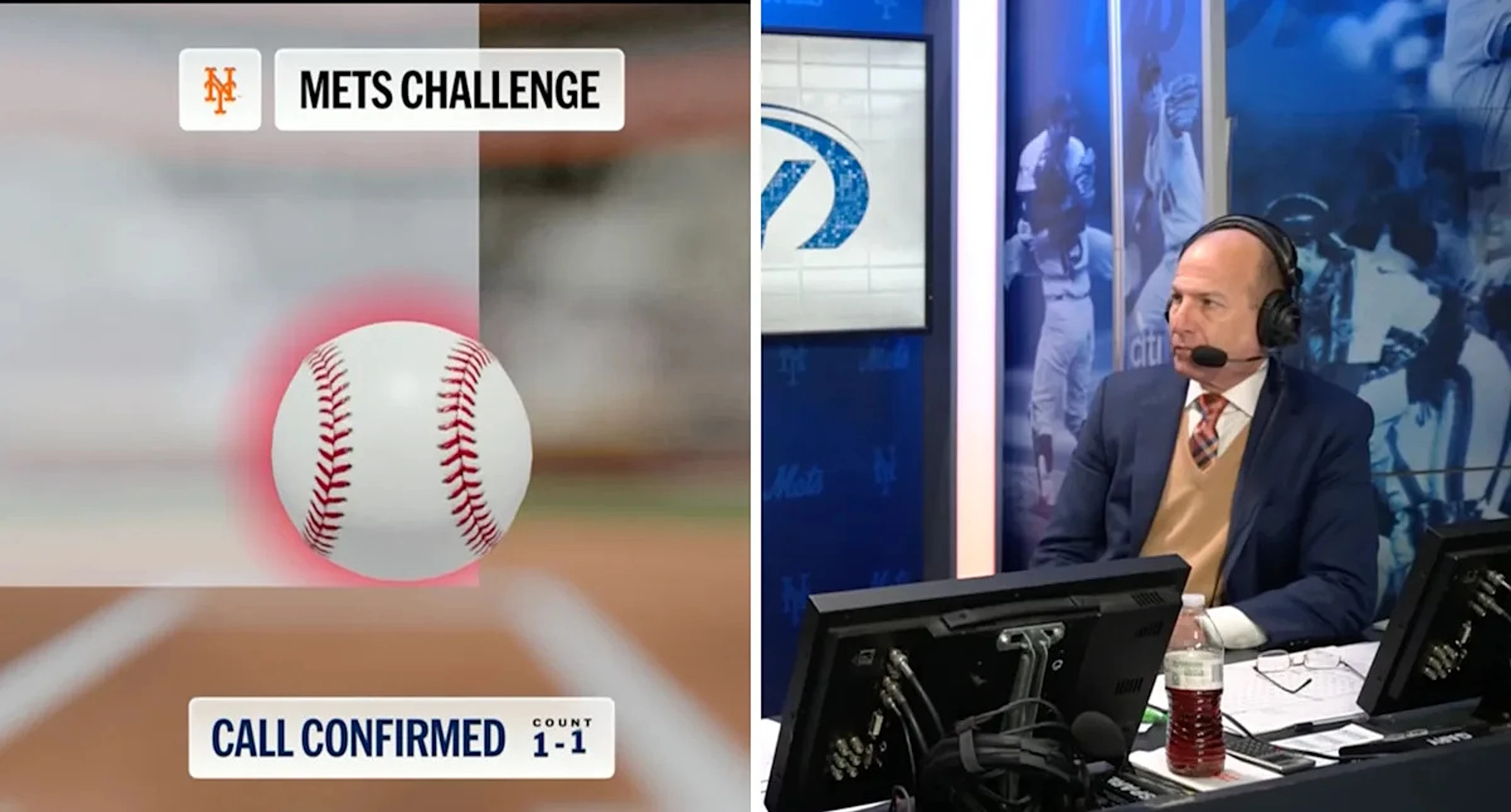
Gary Cohen has had enough. The legendary Mets broadcaster is calling out players for wasting ABS challenges, and he's not mincing words.
The automated ball-strike challenge system is designed to be a strategic tool—a resource to be used wisely, not a reflex to be triggered impulsively. But so far in 2026, too many players are treating it like the latter. Tuesday night's Mets 10-2 win over the Tigers provided the latest example, and Cohen used the moment to deliver a pointed message.
The scene: second inning, Mets trailing 2-0, facing Tigers starter Jack Flaherty. Designated hitter MJ Melendez challenged a 1-1 pitch. Not a 3-2 count with runners on. Not a bases-loaded jam in the late innings. A 1-1 pitch in the second inning, down two runs.
“The managers are gonna have to get a hold of this because these hitters are challenging calls and losing challenges for their team early in games in non-leverage situations, and it’s just bad for your club,” Cohen said during the broadcast.
His partner, Ron Darling, agreed—and went a step further. “The two worst at it are pitchers and hitters. Why? Because they’re fully invested in the throwing of it and the at-bat. Their eyes are deceiving them,” Darling explained. “This should be a team challenge each and every time, and you should really be cognizant of holding at least one of them for a late situation—maybe bases loaded or whatever. It just seems to me to be very selfish at times.”
Cohen contrasted Melendez's wasted challenge with a smarter one from earlier in the game. In the first inning, Mets catcher Francisco Alvarez challenged a 3-2 pitch with a runner on base. “That makes sense,” Cohen said. “That’s a high-leverage spot. But you can’t be doing it leading off the inning.”
Melendez isn't alone in this bad habit. Earlier this season, Jazz Chisholm Jr. challenged a pitch that was right down the middle—a reminder that even the game's most exciting players can make head-scratching decisions in the heat of the moment.
For baseball fans who love the strategy as much as the action, the lesson is clear: the ABS challenge is a team asset, not a personal toy. And if players don't start treating it that way, managers will have to step in. As Cohen put it, “It’s just bad for your club.”