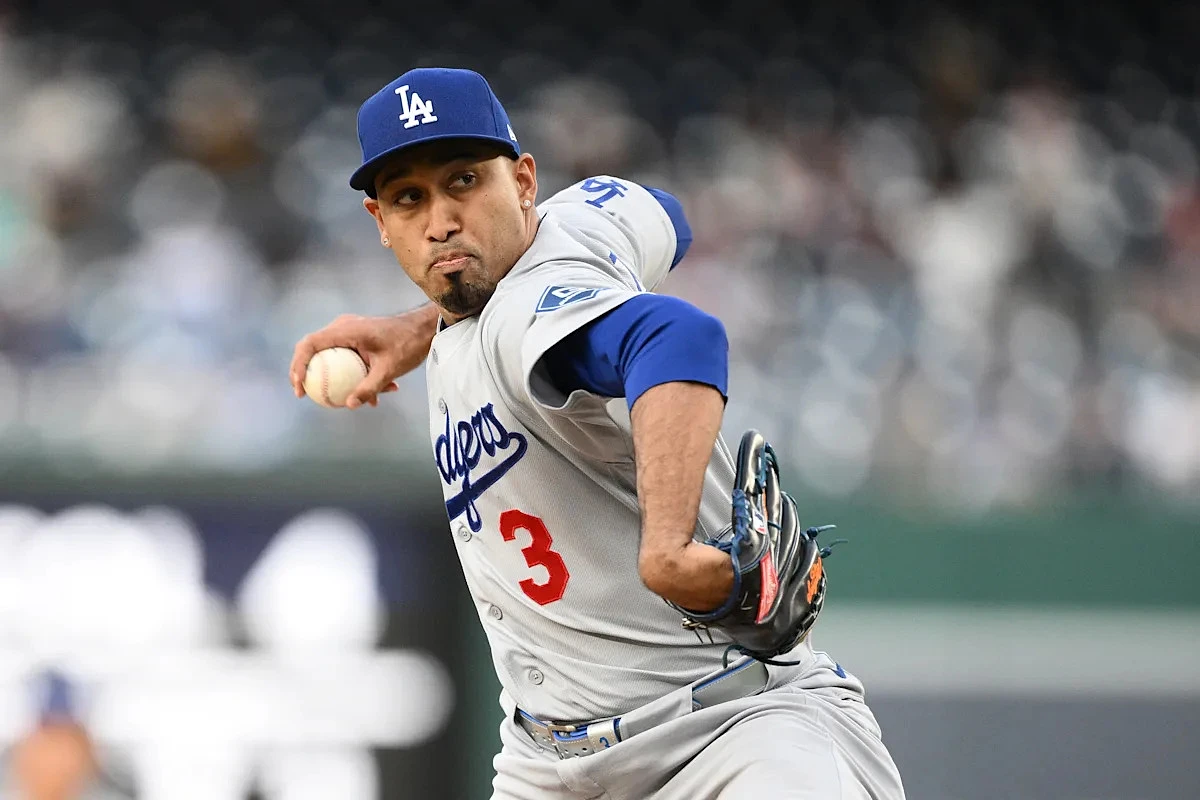

Jordan ShustermanSenior writerTue, April 21, 2026 at 7:36 PM UTC·6 min readEdwin Díaz never seemed quite right.
In the weeks leading up the Los Angeles Dodgers’ offseason bullpen addition landing on the injured list on Monday, only on occasion had Díaz looked like his shutdown closer self. He secured two saves in the Dodgers’ opening series sweep of the D-backs, but since then, Díaz’s outings increasingly inspired more concern than confidence.
Most glaringly, Díaz’s velocity was below what we’re accustomed to seeing from him. Before his knee injury in the World Baseball Classic that cost him all of the 2023 season, Díaz’s four-seam fastball sat comfortably in the 98-99-mph range, climbing as high as 102.8. Even after returning from his torn patellar tendon, Díaz’s heater still hummed at around 97 mph, and he could touch triple digits when needed.
This year, however, Díaz’s heater is averaging 95.7 mph. He hit 98.6 in the World Baseball Classic quarterfinals against Italy on March 14, 98.0 in his final spring training outing on March 23 and 97.9 to close out the Blue Jays for his fourth save on April 7. Even so, this is a noticeable decline from last season, when he threw 160 pitches 98 mph or faster, including 43 in excess of 99 mph.
This spring, Díaz insisted that he wasn’t dealing with any sort of physical limitations and that he has navigated early-season velocity struggles ever since returning from his knee injury. But after Díaz’s woeful outing on April 10, in which he allowed three earned runs against Texas, the Dodgers decided to take it easy for a while and didn’t use their new closer again for more than a week. When Díaz got even more disastrous results on April 19 in Colorado — four batters faced, one walk, three hits allowed, zero outs recorded — a more startling revelation came to light: He was dealing with “loose bodies” in his elbow, necessitating surgery that will keep him on the shelf for several months.
It’s a devastating development for Díaz, who was in the early stages of endearing himself to a new fan base after seven years as a fan favorite with the Mets. Outside of his horribly unlucky knee injury, he has been one of the most durable high-leverage arms in baseball since debuting in 2016, with his only other injured list stint coming in 2024, when a right shoulder impingement cost him a couple of weeks.
Díaz’s decision to join the Dodgers on a three-year, $69 million deal this past offseason sent a jolt throughout the industry, as the two-time defending champs splurged once again to address one of their few weaknesses with the best option available. But now, for the second season in a row, an expensive bullpen solution has gone off the rails. Last year, it was left-hander Tanner Scott who signed a four-year, $72 million deal and proceeded to fumble the closer’s job by late May, before a series of injuries rendered him largely irrelevant for the remainder of the season. This year it’s Díaz, who arrived with far more hype than Scott, sidelined after just seven appearances, forcing the Dodgers to find a new path to victory late in games.
Now healthy and looking more like the lights-out version of himself that motivated Los Angeles to grant him that lucrative free-agent deal, Scott is suddenly a crucial character in manager Dave Roberts’ plans to replace Díaz late in games. Scott has allowed just one run (a solo homer to José Ramírez) across 10 appearances this season and has yet to issue a walk, racking up eight strikeouts in 8 ⅔ innings. But he won’t be given the ninth inning to handle on his own; Roberts is expected to lean on several arms to secure the final outs.
IPSVERAKBBT. ScottLAD - RP8.201.0480A. VesiaLAD - RP8.220.00103B. TreinenLAD - RP6.204.0563Joining Scott in that effort will be another left-hander, Alex Vesia, who has allowed just five baserunners across 8 ⅔ scoreless innings. This is Vesia’s sixth season as a staple in the Dodgers’ bullpen; he has recorded at least one save (but no more than five) every year with Los Angeles. So far, that includes this season, as Vesia notched two saves during Díaz’s down period before he landed on the injured list. In fact, Vesia is the only non-Díaz Dodger who has recorded a save through the team’s MLB-best 16 victories this season.
Another mainstay of this unit who could emerge as an option to close is 37-year-old Blake Treinen, whose tenure in the Dodgers’ bullpen stretches back to 2020. Treinen delivered eight scoreless outings to begin the season but faltered badly on Sunday, surrendering three runs without recording an out. He was one of baseball’s best bullpen arms at his peak but has been far less reliable since the start of last season. Díaz’s absence could present Treinen the chance to restore his once-sterling reputation as an impact relief arm, but it could also thrust him into situations he’s no longer equipped to handle.
Beyond those two familiar faces, some more recent additions to the Dodgers bullpen will vie for Roberts’ trust in high-leverage situations. An unexpected hero last October for his epic effort in the 18-inning World Series Game 3, Will Klein has continued to contribute as a capable middle reliever. Lefty Jack Dreyer doesn’t feature elite velocity, but his fastball/slider combo gives opposing hitters fits. On the other end of the stuff spectrum is Edgardo Henriquez, whose average fastball velocity is higher than every pitcher in MLB not named Mason Miller. Injuries and command woes have prevented Henriquez from establishing himself as a reliable relief option thus far, but his sharp early form suggests he might be turning a corner.
All of which is to say the Dodgers have options, though the shakiness their bullpen exhibited for much of last season might resurface in Díaz’s absence. And of course, looming above all is the tantalizing possibility that Roki Sasaki, still struggling immensely in the rotation, could return to the bullpen, where he shined in the postseason.
However, Dodgers brass have been adamant that no such transition is in the works anytime soon and that they’d prefer Sasaki continue to progress toward becoming a reliable starting pitcher, rather than putting him in the bullpen permanently at age 24. While those questions will continue to be asked until Sasaki proves his worth as a starter, it doesn’t appear that Díaz’s injury will spark a change on that front.
Ultimately, for Díaz, this injury marks a sour introduction to his Dodgers tenure, a disappointing setback at a pivotal juncture in his career. But the Dodgers are no strangers to overcoming injuries on the mound en route to winning a championship, so to label this injury as something that could derail their World Series ambitions would be naive.
With baseball’s best record already, fueled in large part by the league’s most potent offense and terrific starting pitching, the Dodgers are good enough to win most games without facing the headache of managing a narrow lead in the ninth.