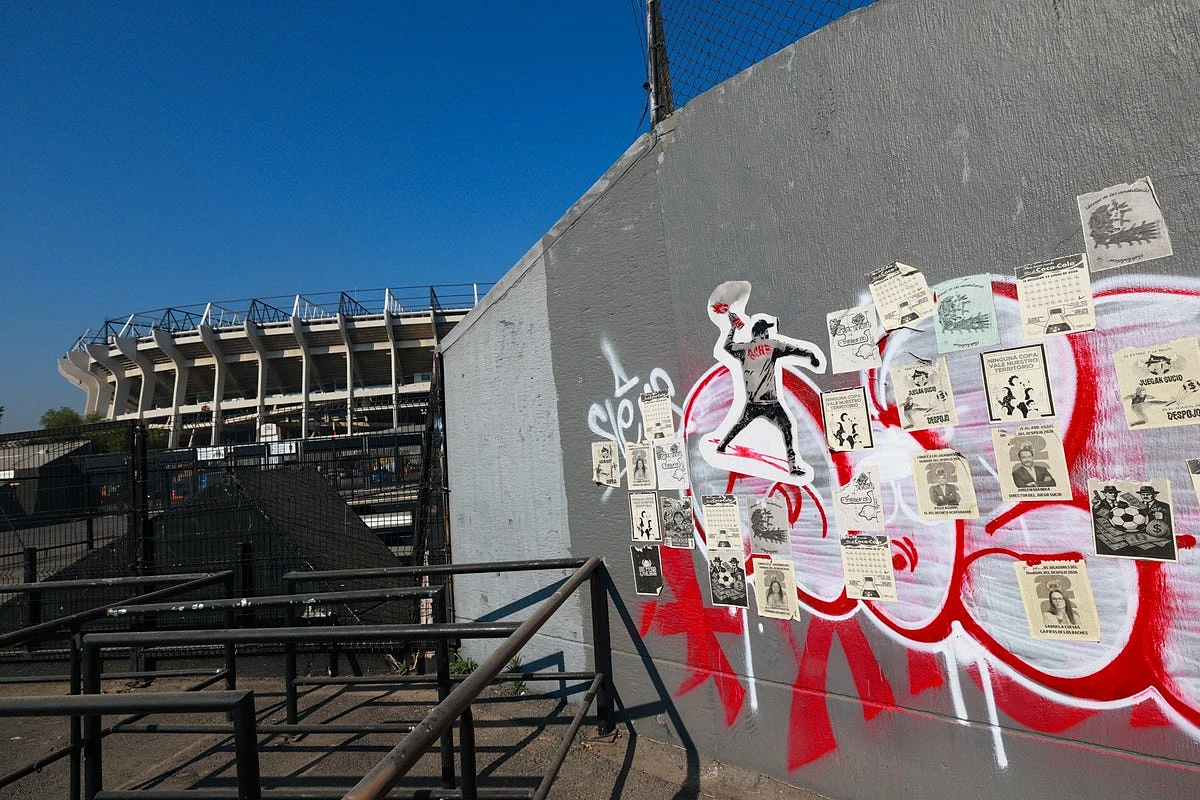
The countdown to the FIFA World Cup is on, but billions of fans might be left in the dark. With just weeks until the first whistle blows in North America, two of the world's most football-mad nations—China and India, home to a staggering 2.8 billion people—still haven't secured broadcasting rights. That means the planet's biggest sporting event could go unwatched in the very places where passion for the game runs deep.
The 48-team tournament kicks off on June 11th, with Mexico taking on South Africa at the iconic Estadio Azteca in Mexico City. It's the first of 104 matches, and FIFA has proudly announced broadcasting deals in over 175 territories. But conspicuously missing from that list are China, India, Pakistan, Bangladesh, Thailand, and Myanmar.
So, what's the hold-up? Money, and a whole lot of it. In India, a joint venture between Reliance and Disney offered just $20 million for the TV rights. But according to Reuters, FIFA initially wanted $100 million before slashing its asking price. Sony also showed interest but never made a formal bid. In China, state broadcaster CCTV—which aired both the 2018 and 2022 tournaments—has yet to sign on the dotted line. The Beijing Daily reports that FIFA originally sought around $300 million for Chinese rights, then halved the price, but still no deal.
This is a huge missed opportunity. During the 2022 World Cup in Qatar, China accounted for a massive 17.7% of global linear TV viewership, with 510 million fans tuning in. India added another 84 million viewers, contributing 2.9%. Together, these two nations made up nearly half of all hours watched on digital and social platforms. Even though neither country qualified for this year's tournament—China hasn't made the cut, and India has never played in a World Cup—their football audiences are enormous and fiercely engaged.
Why the gap between what FIFA wants and what broadcasters will pay? It comes down to timing and competition. Most matches in North America will kick off in the middle of the night in China and India, which dramatically lowers their commercial appeal. In India, every major broadcaster is saving their budget for the next Indian Premier League and the Women's T20 Cricket World Cup—events that are far more lucrative and fan-friendly in that market.
If no deal is reached, Chinese sponsors of the World Cup could face a major visibility problem. And for fans in these regions, the beautiful game might just be a highlight reel away, rather than live and unmissable. For now, the clock is ticking, and the world is watching to see if a last-minute agreement can save the broadcast.