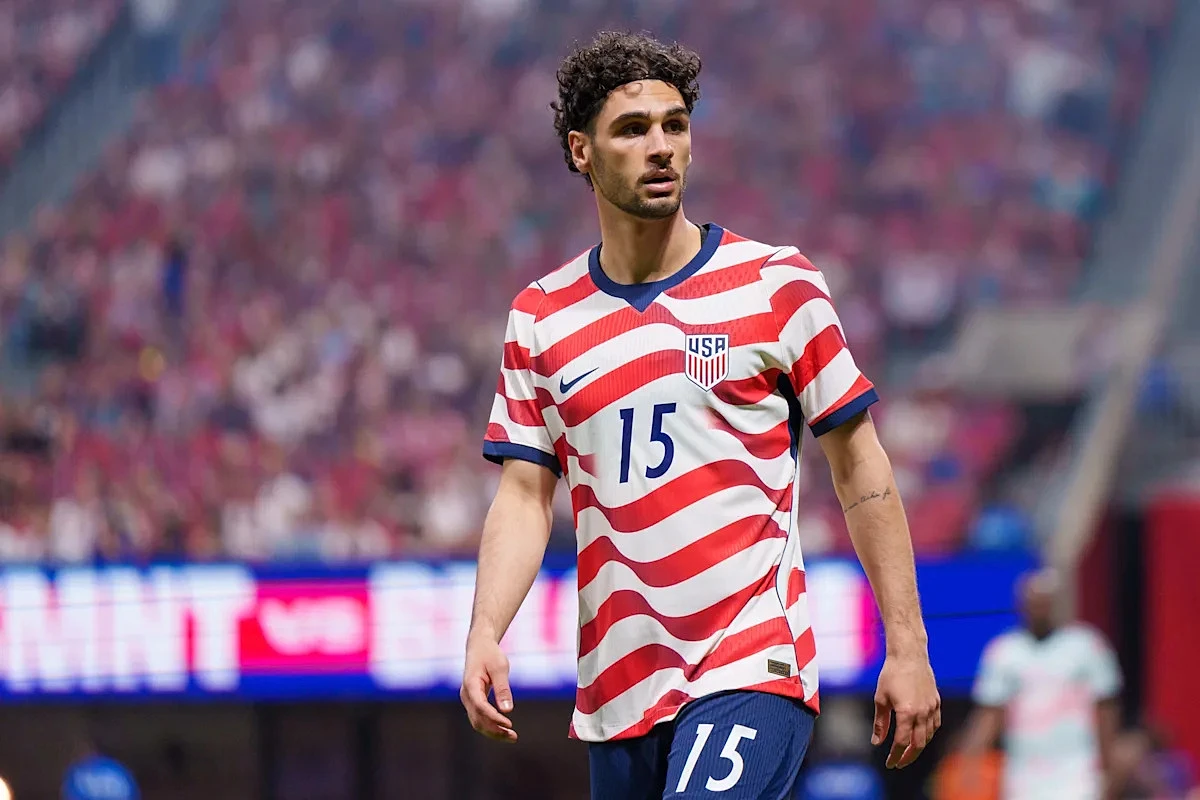
The U.S. Men's National Team has suffered a significant midfield blow as Johnny Cardoso is set to undergo ankle surgery, effectively ruling him out of the upcoming World Cup. The 24-year-old defensive midfielder injured his right ankle during training with Atlético Madrid last week, and the Spanish La Liga club confirmed the need for surgery on Monday.
While no official recovery timeline has been announced, the World Cup kicks off in just one month, making Cardoso's participation all but impossible. Atlético Madrid revealed that Cardoso initially suffered a high-grade sprain, which has now also impacted the joint itself. The U.S. Soccer Federation confirmed they've been in contact with the Champions League semifinalists but declined further comment.
Cardoso's World Cup hopes had already been fading even before this injury. He has struggled to secure a consistent role under head coach Mauricio Pochettino, competing in a crowded defensive midfield pool for likely just four roster spots. Tyler Adams and Tanner Tessmann are considered the frontrunners, while Aidan Morris and Cristian Roldan also remain in contention. Other midfielders can fill the role too, adding to the competition.
Cardoso's international journey has been marked by club success—moving from Brazil's Internacional to Real Betis before joining Atlético Madrid last summer—but he has yet to fully translate that into national team prominence. He was invited to U.S. camp in March after an eight-month absence, starting against Belgium before exiting at halftime with a leg issue and missing the subsequent friendly against Portugal. Ankle problems had previously kept him out of call-ups in October and November.
Cardoso now joins a growing list of U.S. players sidelined by injuries ahead of the tournament, including forward Patrick Agyemang, midfielder James Sands, left wing John Tolkin, and goalkeeper Jonathan Klinsmann. Of those, only Agyemang was considered high on the depth chart. With the World Cup roster deadline approaching, Pochettino's midfield decisions just became a little clearer—and a lot tougher.