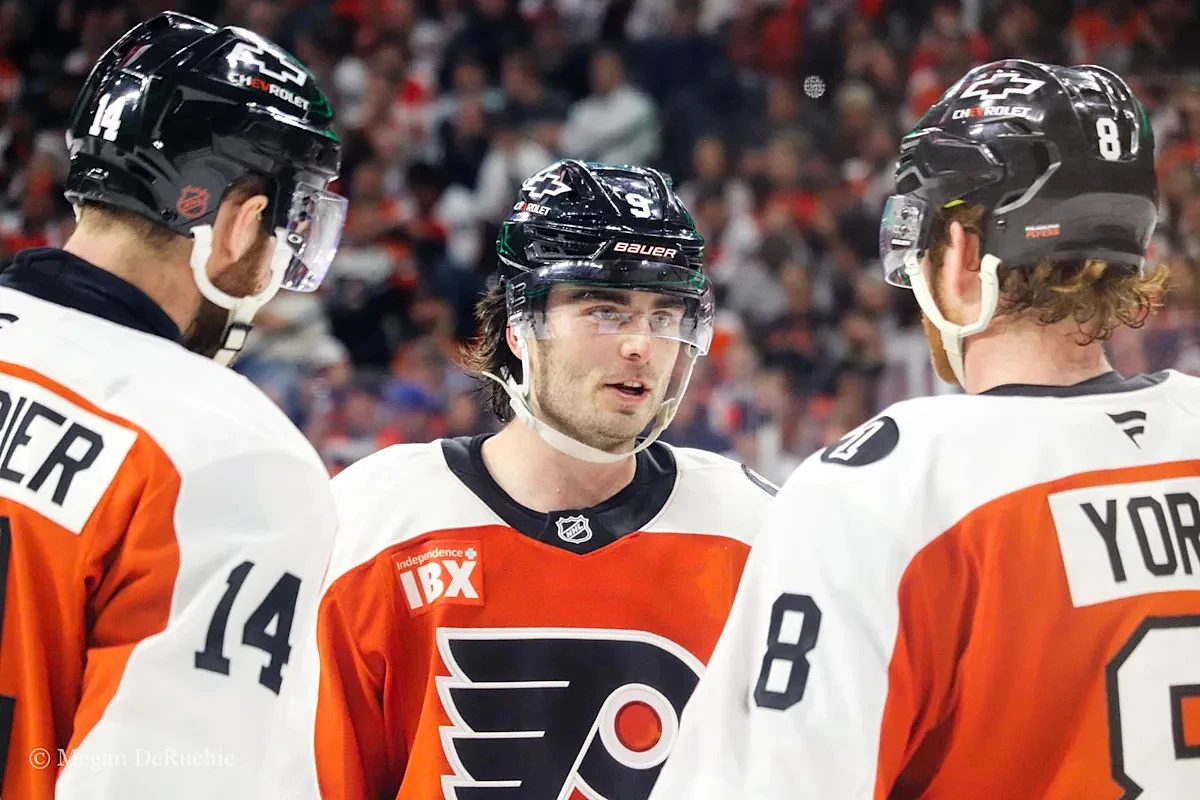


The second game of a playoff series is never quiet.
Not in the locker room, where routines remain intact but the undercurrent shifts—from anticipation to adjustment. Certainly not in a series like this one, where a single game doesn’t settle anything so much as it sharpens everything that comes next.
For the Philadelphia Flyers, Game 2 against the Pittsburgh Penguins is obviously about protecting a lead in the series, but it is equally about confirming something more difficult: that what worked once can withstand a deliberate response.
Playoff series are conversations. Game 1 is simply the opening statement.
The Penguins, with their experience and internal standards, are not a team that absorbs a loss passively. Their response will not be cosmetic—it will be structural. They will implement sharper puck management through the neutral zone and cleaner support on retrievals. There will be more urgency in second efforts, particularly in the offensive zone where they were limited to shorter, less layered sequences in the opener.
The Flyers understand that. What they are not doing is overcorrecting for it.
“If it ain’t broke, don’t fix it” is a cliché, but in this case, it’s closer to a guiding principle. Philadelphia’s Game 1 success wasn’t built on unpredictable bounces or unsustainable stretches. It came from repeatable habits: controlled spacing, disciplined puck decisions, and a commitment to playing through the interior of the ice. The challenge now is replication under more resistance.
Rick Tocchet framed this second game as escalation.
“We know they’re gonna come and we’ve gotta go, too," he said pregame. "They’re gonna throttle up, so we have to throttle up… I think that our team approach, like any team, is to initiate. The stuff after the whistle—you’ve gotta stay away from that sort of stuff. But if you initiate and people get frustrated, that’s fine. I tell our players [that] sometimes we get frustrated so we’ve gotta make sure to just initiate and when it’s over, get out of there. That’s what I believe the officials want. Once you get in those scrums, you never know who they’re going to pull off the ice.”
Rick Tocchet on the #Flyers Game 2 preparations: “We’ve gotta come the same way… They’re gonna throttle up, so we have to throttle up.”
The first is tactical: the Flyers are preparing to meet whatever adjustments Pittsburgh is certain to make. That means continuing to step up in the neutral zone, continuing to pressure pucks early, and continuing to force decisions before the Penguins can settle into their offensive structure.
The second is situational: discipline after the whistle.
That may be where Game 2 diverges most from Game 1. As intensity rises, so does the temptation to extend plays beyond the whistle, to turn momentum into confrontation. Tocchet’s emphasis is clear: initiate within the play, disengage when it’s over.
Sean Couturier’s read on the opponent is measured, but precise.
“I think we can expect [the Penguins] to be sharper," he said pregame. "I don’t know if we can expect them to change everything. The type of team they are, they’re gonna be better. It’s on us to really just keep playing the way we are. We have been establishing our game, and it’s about us.”
Both Sean Couturier and Noah Cates emphasized that they know the Penguins will have a response tonight in Game 2, but they have a better idea at what this building brings and are confident that they can handle whatever gets thrown at them.
That distinction between sharpness and change is important. The Penguins are unlikely to alter their identity. They will still look to build offense through controlled entries and sustained zone time. They will still rely on structure to manage the game.
What will change is their execution. Passes that were slightly off in Game 1 will connect. Support that arrived a half-step late will be on time. Retrievals that turned into turnovers will become extended possession.
For the Flyers, that means their margin for error narrows. It also means their structure must hold under cleaner, faster pressure.
One of the more understated elements of Game 1 was how the Flyers used physicality as a way to engage themselves in the game.