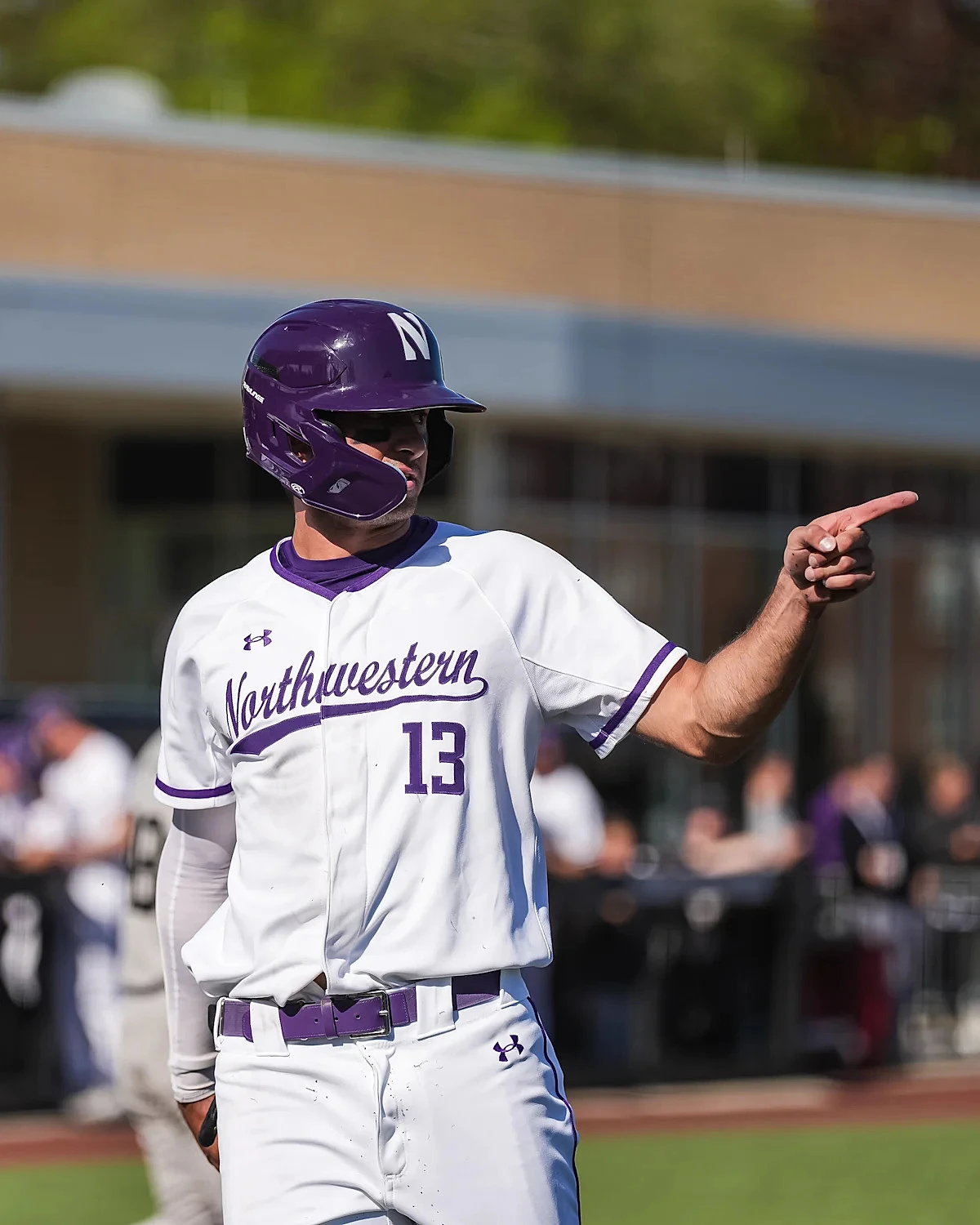


After a rough sweep at the hands of a capable Michigan squad a few weeks ago, I was hoping Northwestern had hit their rock bottom for 2026. I was wrong. The Wildcats played their least competitive conference series of the year over the weekend against a Minnesota squad who previously sat in a tie for last in the Big Ten standings. It was ugly, uncompetitive and eliminated almost any hope for the Wildcats to build momentum entering 2027. As the ‘Cats take a nine game conference losing streak into their final three Big Ten series of the season, the goal has become avoiding unmitigated disaster.
So, what went right, if anything, in the Twin Cities? Well, despite the Golden Gophers plating 27 across three games, Northwestern got some solid starting pitching performances in two games of the series. After a disastrous 13-1 drubbing on Friday, Matt Kouser toed the rubber and spun six effective innings, allowing only two runs and five hits while walking just a single batter. Kouser pitched one of his better games of the season; it was the first time since March 8th that he didn’t walk multiple batters in an outing. Besides a brutal stretch of starts where he allowed 12 runs in 6 ⅓ innings, Kouser has been dependable and he kept it up in Minnesota.
On Saturday, Ryan Weaver thoroughly impressed me through six innings. Granted, he got touched up a bit in the seventh to bring his final line to seven innings, four earned runs, five hits and five strikeouts, but he likely should’ve been pulled as it was clear his command was declining to start the inning. Weaver has some elite put-away stuff when he is around the zone and he has put up the Wildcats most impressive starting pitching lines when he’s mixing pitches well. Of course, we cannot just ignore the worst starts for all Wildcat pitchers, but if you eliminate two starts at Oregon and Portland where he allowed 21 earned runs over 4 ⅓ innings, his season ERA stands at just 3.93. Not too shabby.
Northwestern’s bats simply couldn’t get the job done over the weekend, tallying just six runs and 19 hits. Although they were only egregiously outhit in one of the games, the ‘Cats situational hitting was nowhere to be found. Across three games, they recorded just three RBI hits and an RBI groundout as they stranded 15 runners. This team hardly kills it from a “getting on base” perspective, which makes their hitting with runners in scoring position all the more vital. When you consider the six double plays in just three games, it quickly becomes even easier to see how they couldn’t put together any consistent offense.
This offense continues to kill the ‘Cats, there’s no other way to put it. If it weren’t for Michigan State’s remarkably poor offensive numbers, Northwestern would occupy the gutter for various stats, batting average and on-base percentage among them. The Wildcats don’t get on base and they simply do not steal bases, as they are tied for last in the conference with 24. The burden this squad puts on itself to absolutely mash and come through in the rare instances where there are runners in scoring position is clearly not conducive to winning. It’s not that the Wildcats lack talent all around in the lineup, but they lack the star-power to slug their way to sustainable success.
Individually, no one has stepped up to truly establish themselves as the centerpiece of this lineup. Their leading hitter, Noah Ruiz, holds a .311 batting average, which still only ranks 40th in the Big Ten. Out of the top 75 Big Ten hitters in OPS, only two are Wildcats. So, Northwestern has lacked team-wide competitiveness and the standout individual performances, both of which are required for any successful ball club. Time is running out to flip the script.
It’s obvious now: 2026 didn’t go as planned for Ben Greenspan or anyone associated with Northwestern Baseball. Now, it’s all about ending with some positivity and putting together some performances to hang your hat on. The first of the final three conference series for the kicks of Friday at Wrigley Field against Indiana where the ‘Cats will look to snap a nine game Big Ten losing streak.