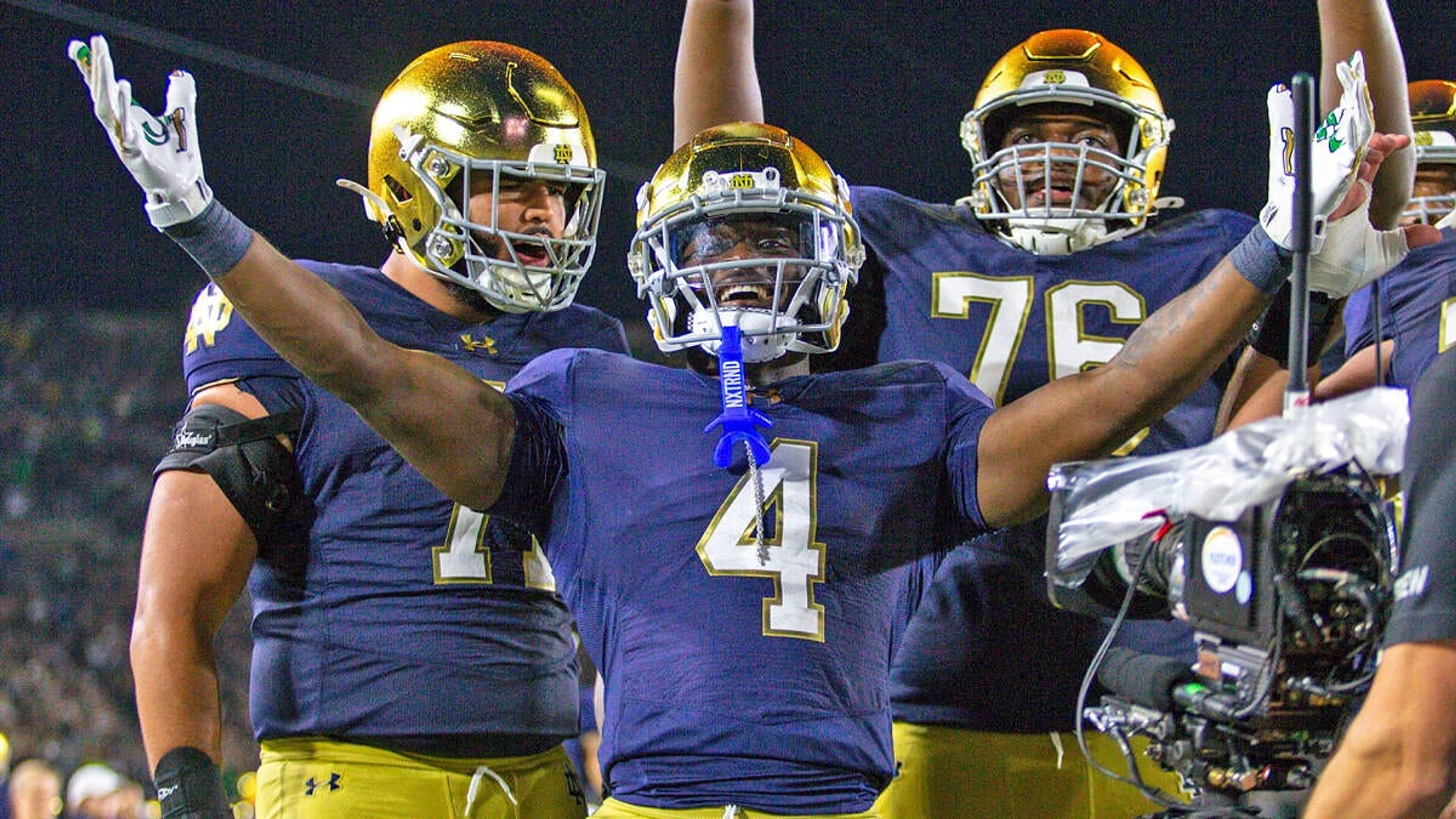
The NFL's relationship with drafting running backs early has cooled dramatically. Since Saquon Barkley went second overall in 2018, no running back has heard his name called in the top five. In fact, only two—Bijan Robinson and Ashton Jeanty—have cracked the top ten in the seven drafts since. That trend, however, faces a serious challenger in the 2026 class: Notre Dame's Jeremiyah Love.
Love isn't just a talented runner; he's a prospect perfectly engineered for today's NFL. Modern defenses are built to absorb methodical ground games, but they fear explosive, chunk plays. With 4.36 speed, Love is a walking explosion. An astounding 44 of his 433 career carries went for 15+ yards, and his 6.9 yards per carry over the last two seasons is elite. He's not just a home-run hitter out of the backfield, either. Love boasts a large catch radius, soft hands, and surprisingly polished route-running, making him a complete dual-threat weapon that offensive coordinators dream about.
So, what's the argument against using a premium pick on such a dynamic talent? It boils down to positional value and scheme dependency. Historically, the success of a running play relies more on the called scheme versus the defensive front and the quality of blocking than on the back's individual talent. Even a generational talent like Saquon Barkley saw the Giants' rushing attack rank just 12th in efficiency during his tenure, highlighting how a back's impact can be limited by his surroundings. Investing a top-five pick in a running back is a massive bet that your offensive line and system can unlock his full potential, a gamble many teams have been unwilling to take.
The 2026 draft will present a fascinating dilemma. In a class that may lack elite quarterbacks or pass rushers at the top, a team with a strong offensive foundation might see Jeremiyah Love not as a luxury, but as the final, game-breaking piece to elevate its entire offense. The tape makes a compelling case that he could be worth bucking the trend.