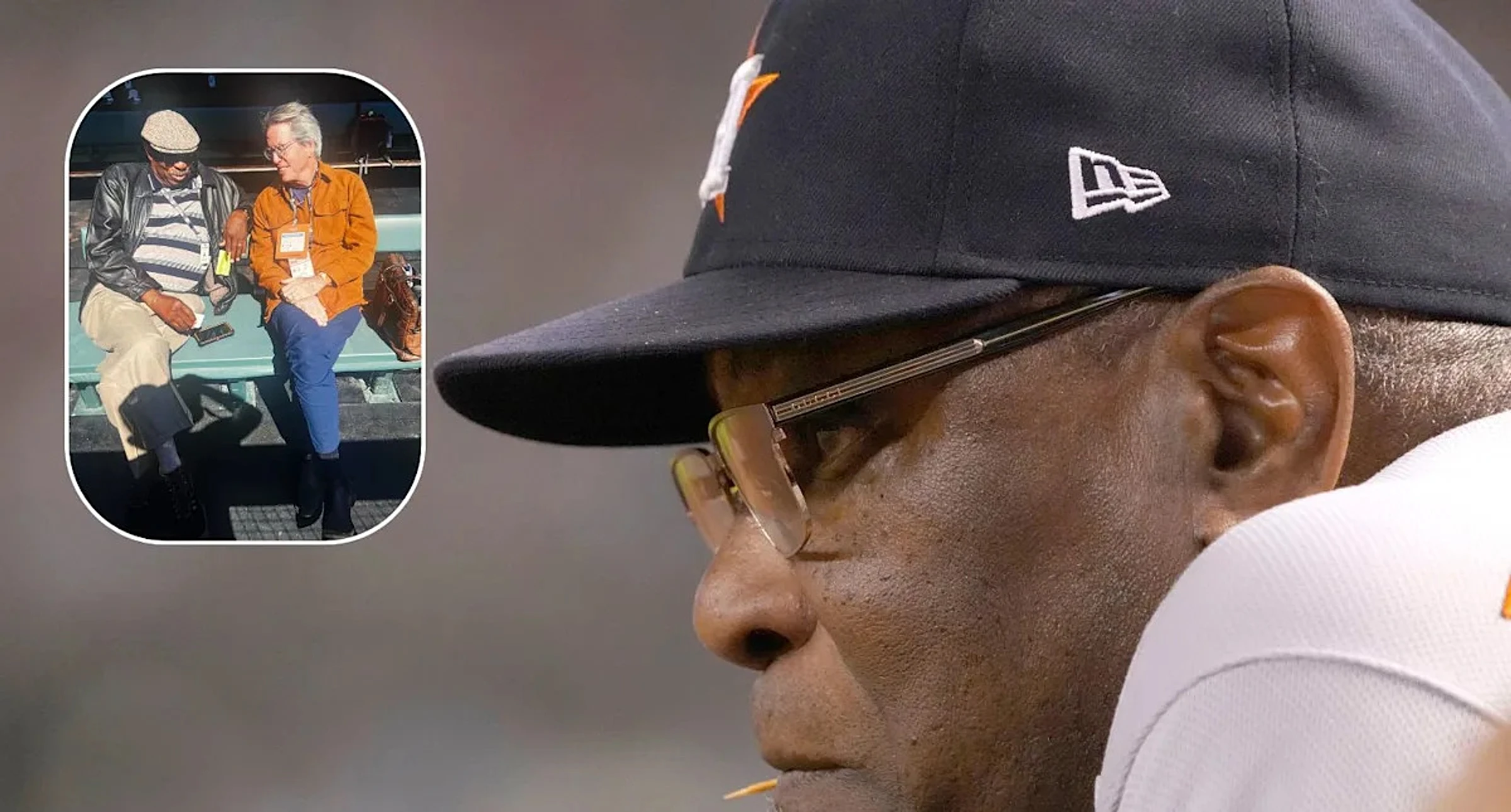


Dusty Baker is a baseball lifer who has been around the game for so long that he is connected to many great players and unforgettable moments.
Baker won a World Series as a player for the Los Angeles Dodgers and another as a manager for the Houston Astros before retiring in October 2023. He’s now ready to share some of his stories and life lessons. The 76-year-old has written his autobiography with Steve Kettman. Crossroads will be available for purchase on June 9 from Crown Publishing.
We recently caught up with Kettmann to discuss what it was like to co-author Baker’s memoir.
Note: This interview has been edited and condensed for length and clarity.
Awful Announcing: How long have you known Dusty Baker?
Steve Kettmann: “Dusty Baker and I have known each other since the 90s, when I was a reporter covering the Oakland A’s for the San Francisco Chronicle. Dusty was the Giants’ manager. In the world of baseball beat writers, if you’re the guy following a team around all the time, even if you’re friendly, you can get on each other’s nerves. I didn’t have that with Dusty since I didn’t cover him. He knew who I was, and we would hang out sometimes.”
This is your second book with him. Can you tell us about the first?
“Dusty and I did a little book called Kiss the Sky. My friend Mark Ulriksen is a New Yorker cover artist who does great stuff. He did an image of Dusty at the Monterey Pop Festival in 1967 when he saw Jimi Hendrix burn his guitar. That moment is captured on the cover of that little book. It was a lot of fun, and people enjoyed it. The New Yorker wrote about it at the time. At some point, we were always going to do a big book.”
Dusty Baker has a new book out, co-authored with @SteveKettmann. I’m looking forward to reading it! You can find it here. https://t.co/hMqkmTfiDb
“It’s Dusty’s book, written by Dusty Baker. I helped him write it. I’ve ghostwritten books. Being a ghostwriter is different. With Jose Canseco, we did a book called Juiced about steroids, and that one was ghostwritten, where you’re telling the story but not working together in a collaborative way like Dusty and I did. It’s just different. It’s a greater degree of involvement and really thinking through all the elements of storytelling.”
“Stamina. The book is 162,000 words. My first book, One Day at Fenway, was probably about 81,000 words. I think Juiced was about 80,000 words. Baseball Maverick, about Sandy Alderson, was about 100,000 words. In general, books are getting shorter, and our publisher definitely didn’t want us to go over 100,000 words. This book is like a double album.
“It’s not just writing. It takes longer to develop chapters, edit, and review. Dusty and I both got pretty exhausted, to be honest. You want to maintain attention to detail, accuracy, and thinking things through.”
What might people be surprised to learn about Dusty Baker?
“His favorite sport was basketball, and his second-favorite was football. I think the third might’ve been track. He did not love baseball, not by a long shot. He wanted to go to Santa Clara University or maybe San Jose State. He had scholarship offers to play basketball, but he decided to enter the baseball draft. That’s the famous story about him praying the night before the draft, saying, “Anywhere but the South,” and then being drafted by the Atlanta Braves. Hank Aaron took him under his wing, which was an amazing experience for him.”
“I wouldn’t be standing here right now talking to you if it wasn’t for Hank Aaron.”On the 50th anniversary of Aaron’s 715th HR, we hear from former teammate Dusty Baker and @Braves manager Brian Snitker on their relationship with the baseball icon. pic.twitter.com/hz9bSDDKkY
Could you tell us about the tension between Dusty Baker and his father?
“His dad took him to court to try to nullify the contract because Dusty signed with the Braves without his dad’s consent. He was 18, and his mother was working with him, but his dad was in the dark. So his dad sued him and won. Under the terms of the Jackie Coogan Child Labor Act, the state of California controlled Dusty’s assets and invested his money from the Braves in stocks. Dusty was so mad at his dad that he didn’t talk to him for three years.”
Does Crossroads address any racism he encountered?
“It is not the overarching theme of the book, and Dusty wanted to be very clear about that. If you’re a Black man growing up in a country where racism is going to rear its head, it creates some very ugly moments. You can react by becoming very angry, and that anger can take you over. It can eat you up. And Dusty was never that man. He was never a man overcome by anger…
“It’s very important for people to understand that there’s a bit of danger in telling a story or two. All of a sudden, people think you’re an angry Black man. Dusty is not an angry Black man. So, it’s a very interesting thing to contemplate… being pulled over by a racist cop in the South and having a teammate in the minor leagues tell him not to get off the bus, saying the white players would get them food and bring it back because it was too dangerous.”