

The intrigue surrounding the Steelers in this year’s NFL Draft feels different – and not just because the event is coming to their doorstep. For the first time, the franchise enters draft weekend under the direction of Mike McCarthy, ushering a new voice, and potentially a new identity.
With 12 total selections, including multiple picks in the top 100, the Steelers have the flexibility to be aggressive. And if there’s one thing GM Omar Khan has shown historically it’s a willingness to take some risks. That’s reflected here.
While much of the pre-draft buzz has centered around wide receiver, the more realistic expectation is that whoever Pittsburgh selects at the position would enter as the third option behind DK Metcalf and Michael Pittman Jr. That alone makes it difficult to justify using premium draft capital there—especially given the team’s more immediate needs in the trenches.
On the offensive line, the situation is far more urgent. Any lineman selected early would be expected to contribute immediately, particularly on the left side. Unlike receiver, this is a true “plug-and-play” scenario—an overused phrase, but one that legitimately applies here.
One prospect drawing that level of confidence is Vega, who reminds me of the David DeCastro selection. The expectation is simple: step in, stabilize the unit, and provide above-average guard play from day one. In that sense, he would serve as an immediate replacement for Isaac Seumalo, with minimal transition time needed.
I think the debate will come down to Vega versus Washington wideout Denzel Boston. A trade up here is also possible, especially if one of the top three wideouts begin to slide.
Seahawks receive: No. 53, No. 121, and No. 145 picks
If Pittsburgh is going to put a bow on draft night in front of its home crowd, it may not come in the way most expect.
There is a growing sense the Seahawks could look to move out of the first round, and who better than the Steelers to close out the night with an aggressive move. But rather than addressing wide receiver, this pick might be a surprise.
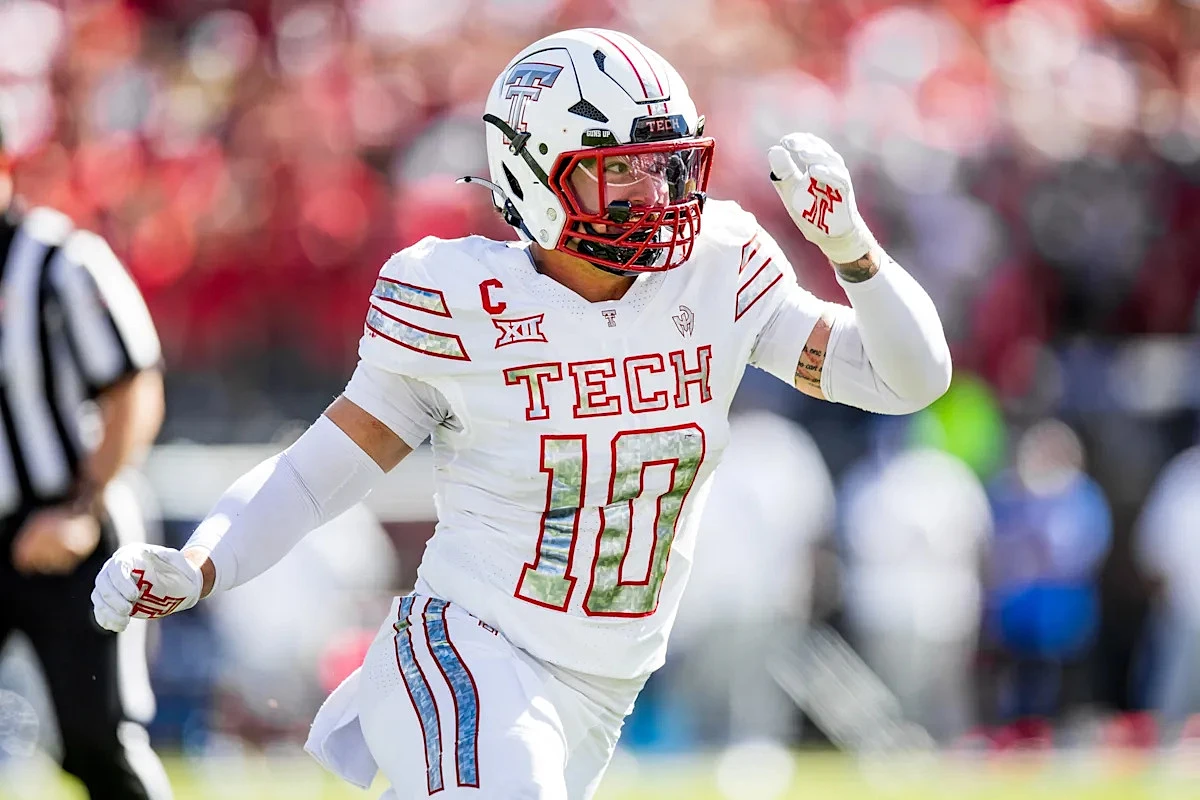
Rodriguez has quietly built one of the more complete linebacker profiles in this class. A highly productive defender, he emerged as the leader of Texas Tech’s defense, showcasing strong instincts, sideline-to-sideline range, and a physical edge against the run. He’s particularly effective diagnosing plays early, slipping blocks, and finishing tackles in space—traits that translate well to early-down responsibilities at the next level.
In coverage, Rodriguez has shown enough fluidity to stay on the field in multiple packages, though his calling card is his reliability against the run and overall defensive awareness. His motor and leadership have also drawn praise, making him a potential tone-setter in the middle of an NFL defense.
From Pittsburgh’s perspective, the fit becomes more logical when looking beyond 2026. Patrick Queen is set to hit free agency, and his name has already surfaced in trade speculation. Whether or not a move materializes, there is little indication the organization is fully committed to him as a long-term piece.
At the same time, last season offered insight into how the former coaching staff views Payton Wilson. While Wilson flashed in limited opportunities, he was rarely trusted in early-down, run-heavy situations—suggesting the team may not view him as a true every-down solution, at least not yet. That could change under a new regime.
With 12 picks and plenty of ammunition, Pittsburgh will trade up at some point. It’s a matter of when, not if.
"I wouldn't be surprised at all if he ended up on Thursday night."@dpbrugler on the possibility of Jacob Rodriguez getting selected in the first round of the 2026 NFL Draft. pic.twitter.com/Fj5KaPkku8
— The Athletic Football Show (@TA_FootballShow) April 15, 2026
Sarratt fits the mold of a bigger receiver who can move the chains and provide a reliable target in high-leverage situations, which is what McCarthy loves. He thrives in contested catch scenarios, uses his frame well to shield defenders, and has shown a knack for finding space in the red zone. While he may not possess elite top-end speed, his physicality and body control make him a quarterback-friendly option.
It wouldn’t be the splashiest selection, but it would be a good one. Adding a dependable, big-bodied target like Sarratt would allow them to target a speedster later in the draft.
Clark’s biggest strength is his versatility. At TCU, he lined up at safety, nickel, and even rotated into more hybrid roles depending on the defensive look. That kind of positional flexibility is something the Steelers have consistently valued, particularly in a league that demands matchup-specific adjustments week to week.
He’s an instinctive defender with good ball skills, highlighted by his ability to read quarterbacks and make plays on the football. Clark shows solid range in coverage and isn’t afraid to step up against the run, giving him a well-rounded profile as a defensive back who can contribute in multiple phases.