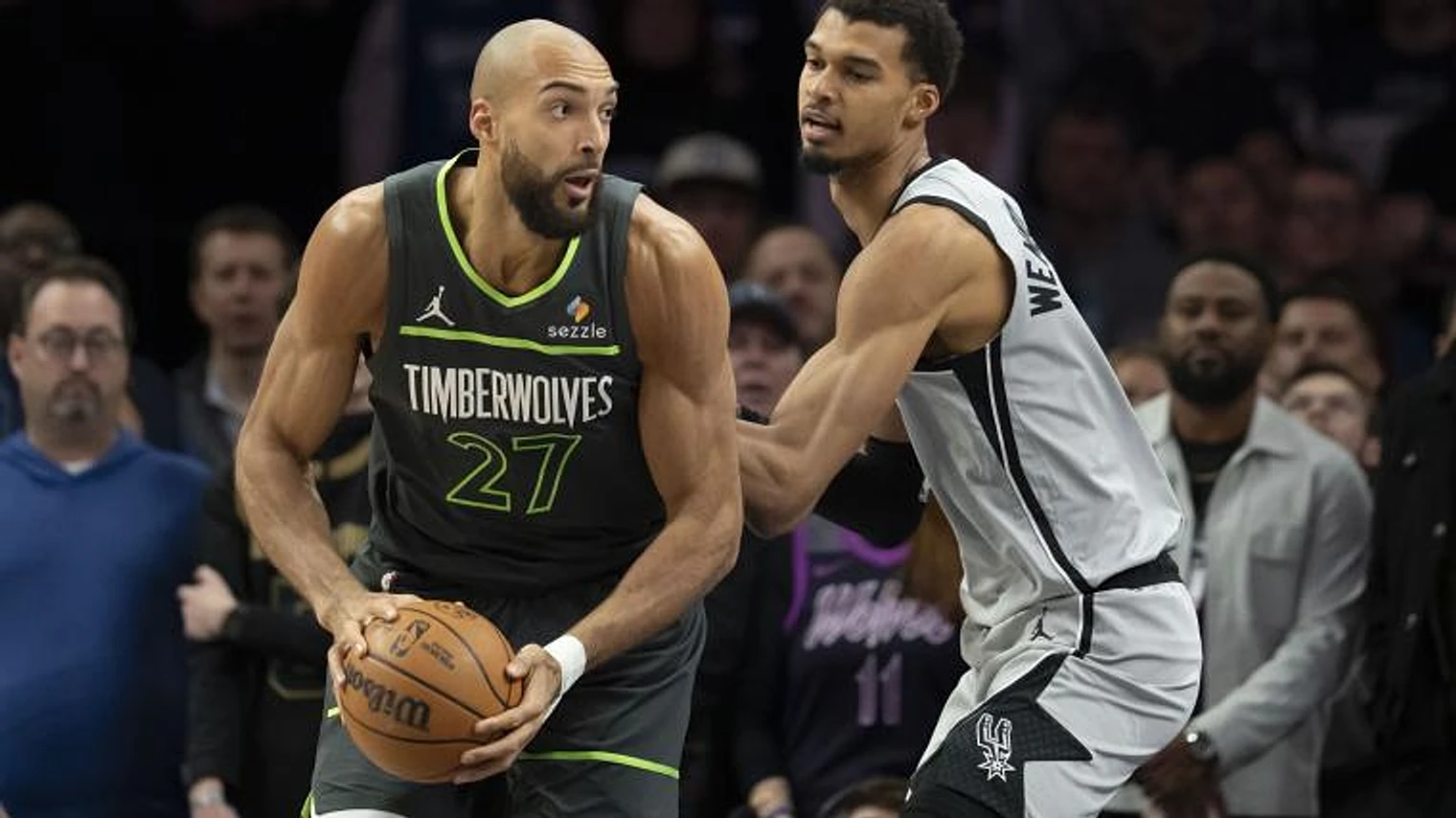
Victor Wembanyama entered the Western Conference semifinals with sky-high expectations, but Game 1 against the Minnesota Timberwolves served as a stark reminder that playoff basketball is a different beast entirely. The San Antonio Spurs' phenom was held to just 11 points in 40 minutes, shooting 5-of-17 from the field and missing all eight of his three-point attempts. It was a night where the rookie's offensive rhythm simply never got off the ground.
The primary architect of Wembanyama's struggles? Two-time NBA Defensive Player of the Year Rudy Gobert. The Timberwolves' center has built a career on disrupting elite scorers, and Game 1 was no exception. When guarded by Gobert, Wembanyama managed just eight points on 4-of-10 shooting, including an 0-for-4 mark from beyond the arc. Gobert's length, timing, and discipline turned the paint into a no-fly zone for the Spurs' star.
This isn't a new phenomenon for Gobert, who has made a habit of stifling top-tier big men in the playoffs. He has held both Wembanyama and Denver's Nikola Jokic to a combined 36-of-86 (41.9%) shooting from the field when matched up against them. For a player of Wembanyama's caliber, that's a challenge that demands adaptation.
Game 2 tips off Wednesday night at Frost Bank Center, and the Spurs will need their young star to find answers. Wembanyama's defensive impact has been undeniable—he's averaging 19 points, 10 rebounds, and a staggering 5.6 blocks per game this postseason on 50.8% shooting. But to unlock his offense against Gobert, he may need to change his approach entirely. Drawing early fouls on the Timberwolves' anchor could be the key. By using pump fakes, attacking the rim with purpose, and forcing Gobert into aggressive defensive decisions, Wembanyama can put the veteran on his heels and open up the floor for himself and his teammates.
For a player who spent his offseason training with Hall of Famer Hakeem Olajuwon, Game 2 is the perfect stage to showcase that growth. The basketball world will be watching to see if Wembanyama can solve the Gobert problem and even the series.