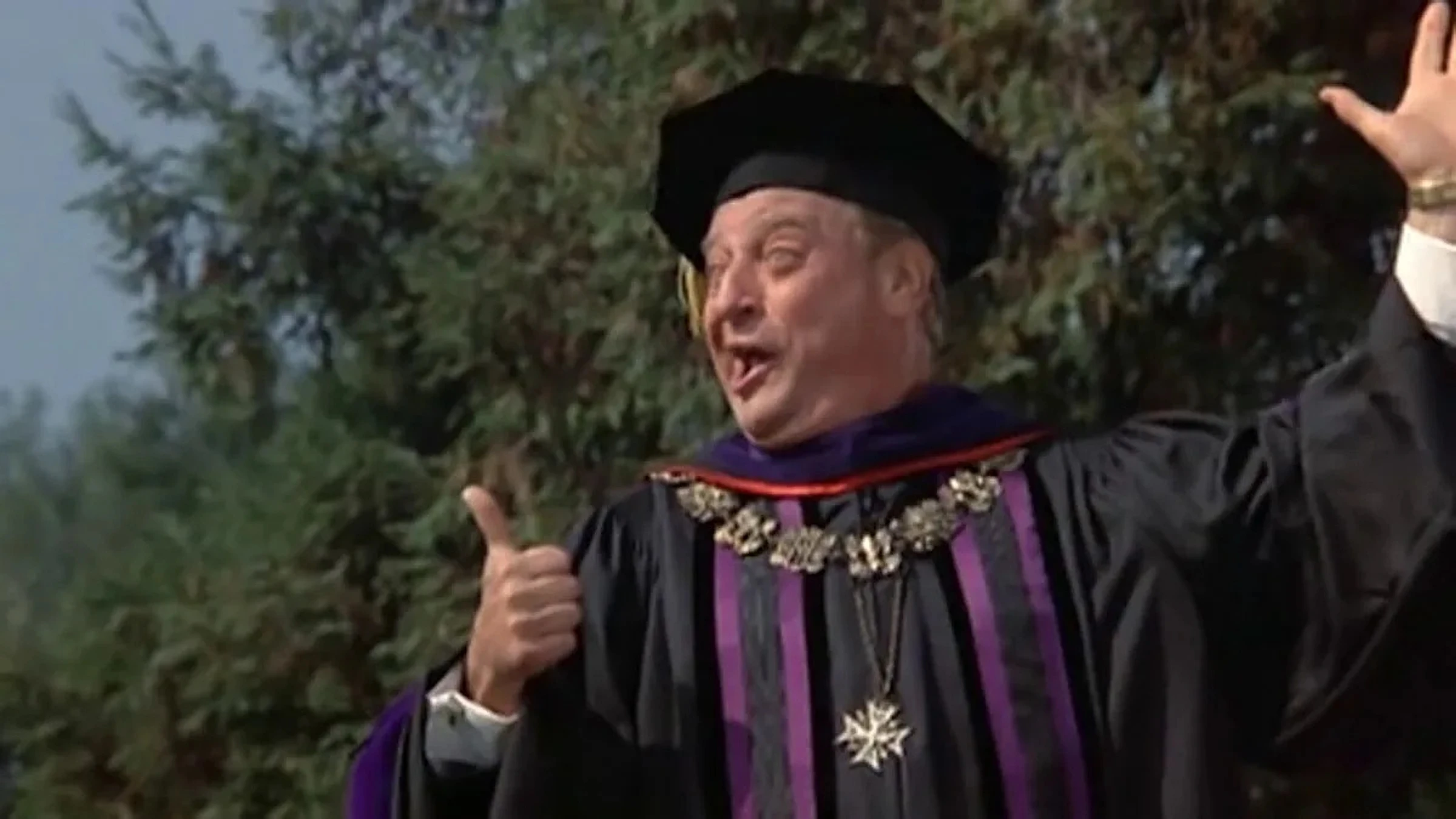

It's just a matter of time before the NFL draft produces its own Thornton Melon.
The implosion of the various antitrust violations masquerading as NCAA rules has made it easier than ever for players with remaining eligibility to return to college. Last year, the NCAA gave James Nnaji four years of eligibility even though he’d been selected in the first round of the NBA draft.
At some point, a drafted NFL player will make the business decision to go back to school.
Unless and until the fat cats get the federal government to throw them an undeserved lifeline, college players will enjoy maximum earning potential and mobility. The current climate creates an opportunity for a drafted player with options at the college level to choose to return to a level of football that is just as professional as the NFL.
Last year, as Shedeur Sanders plummeted through Day 2 of the draft, we explained that — at some point — it made sense for him to tap out of the process and return to Colorado (or another program). It became one of the most-read articles in the 24-year history of the platform.
There was also a question as to whether Quinn Ewers would do the same thing, once he fell to round seven.
In the end, neither tried. But that was before it became even more clear that a viable path exists.
This year, the player to watch is quarterback Ty Simpson. He recently said he could have made $6.5 million for another year of college football. That's roughly equal to the average annual pay for the sixth overall pick in the draft.
Simpson is regarded as a possible first-round pick. If he isn't taken in round one, he has 18 hours to consider his situation. And while most college programs have already lined up their players for 2026, someone will surely want him if he decides to go back. And while $6.5 million would be hard to get back on the table, Simpson could get a lot more than he'd receive as a second-round pick. (Last year, the contract signed by the first player taken in round two averaged $2.1 million per year.)
The key for Simpson would be to make a clear and loud declaration that he's exiting the draft process. If he's drafted and returns to school, that team will continue to hold his rights in the spot where he was picked, once he comes to the NFL. If he's going to tap out, he needs to do so in a way that prompts no one to draft him.
The problem is that, the longer he lingers, the more attractive it will become financially to squat on his rights and hold them for 2027.
Regardless, a Triple Lindy into the college football pool remains possible. It was for Sanders and Ewers. It is for Simpson. And it will continue to be one for any player who slides farther in the draft than he expected.