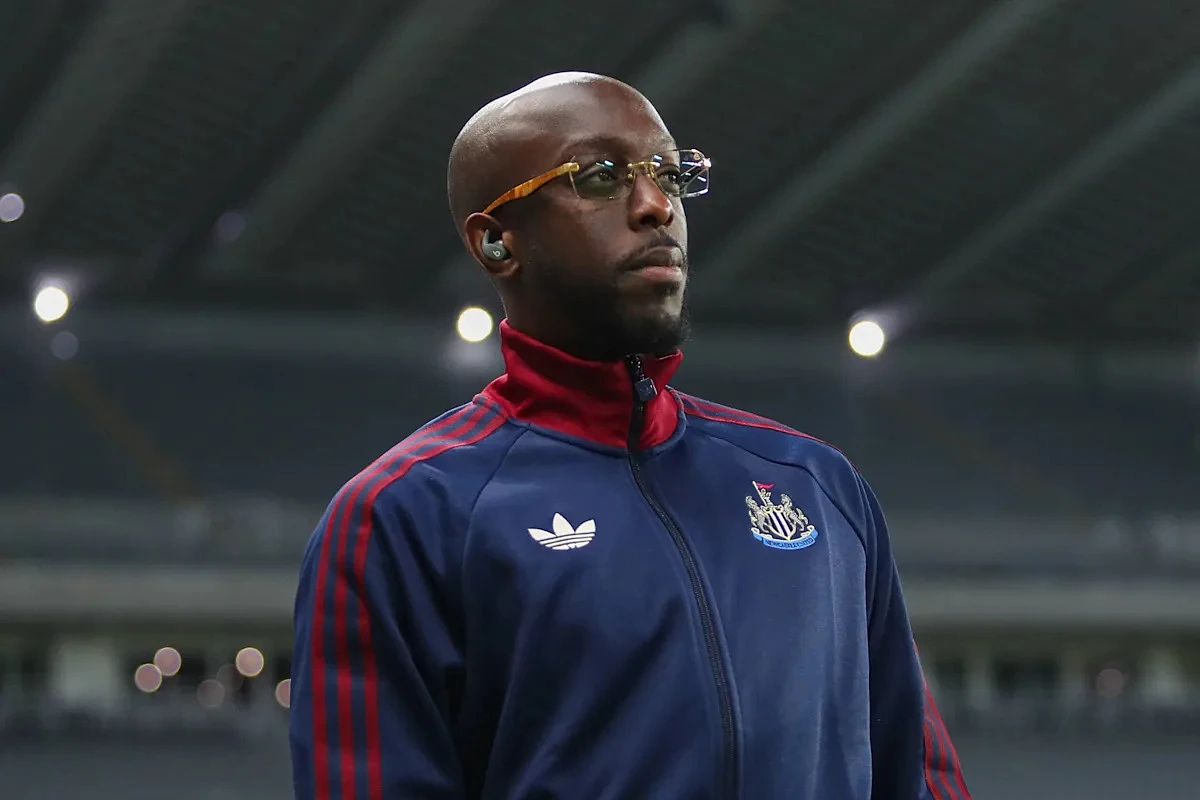


Newcastle United Transfer Plan: Yoane Wissa Future Under ScrutinyNewcastle United’s summer rebuild is already shaping into a defining chapter for the club’s modern era, and the situation surrounding Yoane Wissa captures the tension between ambition and execution. As reported by The Athletic, the club are now open to selling the forward less than a year after committing a fee rising to £55 million. It is a development that speaks volumes about both urgency and accountability within the hierarchy.
Wissa’s arrival on September 1 was framed as necessity rather than luxury, a late-window decision made amid the emotional and tactical fallout of Alexander Isak’s departure. Yet, less than a season on, Newcastle find themselves reassessing that call with remarkable candour.
Wissa’s first campaign on Tyneside has been turbulent. Signed with the expectation of delivering immediate impact, he instead endured a campaign punctuated by disruption. The knee injury sustained before his first training session robbed him of rhythm and delayed his integration into Newcastle United’s demanding system.
Appearances have been sporadic, with only 24 outings and just one start across the last 16 matches. That lack of continuity is central to understanding his struggles. Fitness, timing and confidence often operate in tandem for forwards, and Wissa has rarely had the platform to build any of them.
Eddie Howe acknowledged those difficulties candidly. “The most difficult part for Yoane is that he got back fit, there was a huge feeling inside of him that he wanted to rush back and show everybody how good he is, but we haven’t been able to train him in the way we normally would,” he said.
“It was very stop-start and we didn’t see the best of him. We probably have in training this week. There’s so much more to come. I think a pre-season would really show the best of him.”
Those words carry both reassurance and realism. Howe sees potential, yet Newcastle’s broader planning appears less sentimental.
The deeper narrative is one of recruitment recalibration. Wissa was not the primary target to replace Callum Wilson. Newcastle’s pursuit list included Joao Pedro, Hugo Ekitike and Jorgen Strand Larsen, all of whom eluded them during a drawn-out summer.
By the time Wissa arrived, the process had shifted from strategic to reactive. The club met Brentford’s demands in what can only be described as a pressured conclusion to their transfer business. The result, as now widely accepted internally, has been underwhelming.
There is honesty in Newcastle’s willingness to revisit those decisions. With David Hopkinson and Ross Wilson now installed in senior roles, there is a clear appetite to refine the squad without being bound by previous misjudgements.
Selling Wissa, even at a financial loss, reflects that approach. It is not an easy call, particularly with a reported 25 percent sell-on clause embedded in the deal, but it signals a club prioritising long-term clarity over short-term optics.
Newcastle’s position in 14th place in the Premier League underlines the scale of the challenge. A season that began with hope has drifted into one of consolidation, and the need for attacking reinforcements has become increasingly urgent.
The search for a new striker has accelerated in recent weeks. It is a complicated market, shaped by inflated valuations and limited availability, but Newcastle’s intent is unmistakable. They require reliability, durability and a sharper edge in front of goal.
Wissa’s profile once ticked those boxes. He was viewed as experienced, adaptable and capable of slotting seamlessly into Howe’s tactical framework. That vision has yet to materialise, leaving the club at a crossroads.
As one internal perspective suggests, “better to correct quickly than persist with uncertainty.” It is a philosophy that may define Newcastle’s summer.
There remains a possibility that Wissa stays. His desire to remain at St James’ Park is genuine, and there have been encouraging signs in training. He even featured ahead of Nick Woltemade in the recent 1-0 defeat to Arsenal, although a late missed chance summed up his season.
The underlying question is whether patience represents prudence or risk. The version of Wissa Newcastle believed they were acquiring would still offer value, particularly as a rotational option. Yet, evidence on the pitch has pointed in the opposite direction.
Keeping him now, as The Athletic insightfully noted, “feels like the bigger risk than letting him go.”
That sentiment encapsulates Newcastle’s current reality. Decisions must be decisive, even when they are uncomfortable.
There is frustration, not necessarily directed at Yoane Wissa himself, but at the chain of decisions that led to this point. Fans understand injuries can derail momentum, and many will sympathise with a player who never truly found his footing.