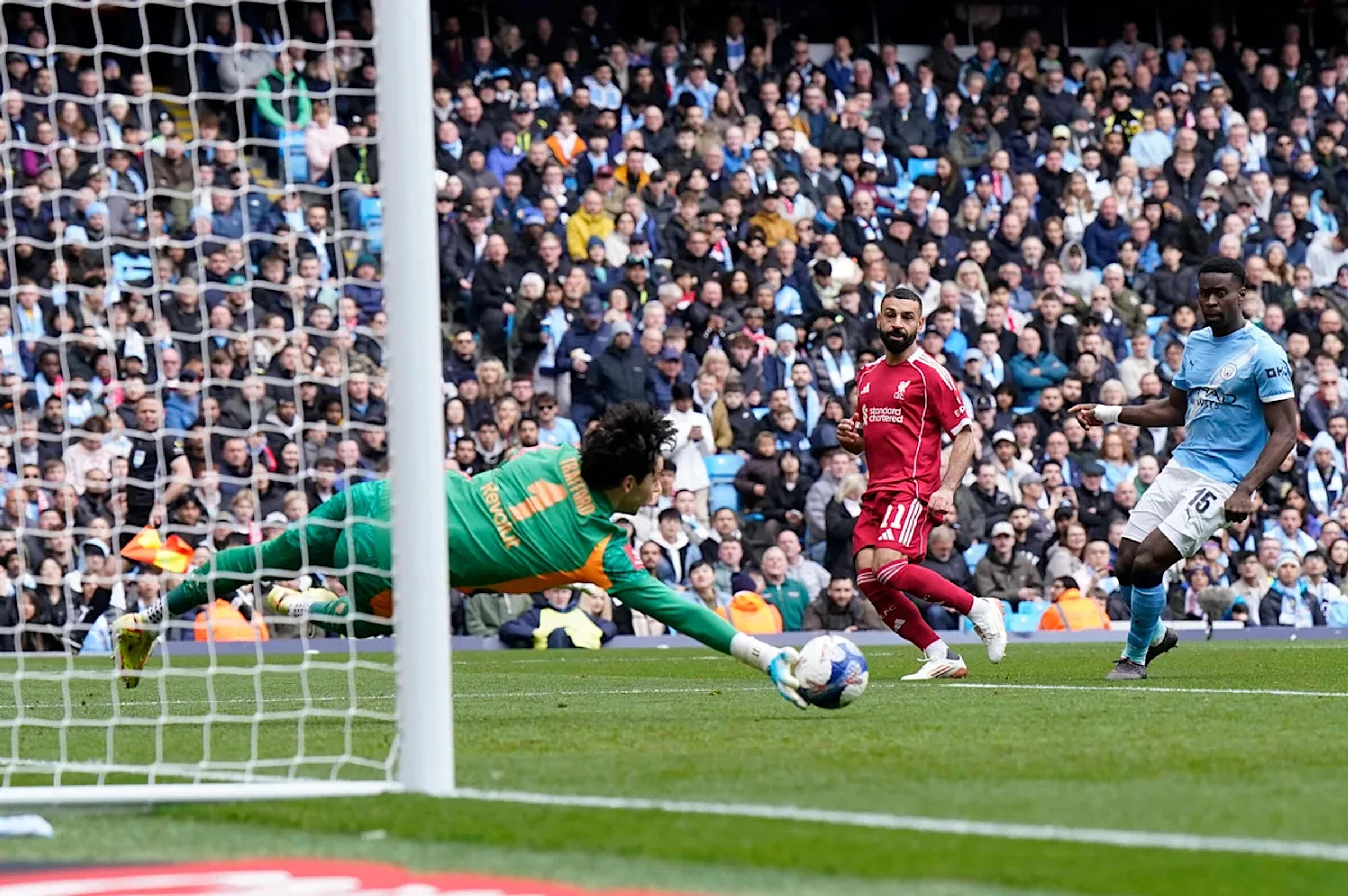


James Trafford Transfer Race Signals Goalkeeping Shift Across Premier LeagueRising interest from elite clubsCredit to GOAL for bringing clarity to a developing situation that feels quietly significant. Liverpool and Chelsea are circling James Trafford, a goalkeeper caught between promise and patience at Manchester City.
At 23, Trafford represents a modern profile, composed, technically assured, and shaped by elite coaching. His performances in domestic cup competitions, particularly the Carabao Cup final, have reinforced the sense that he is ready for more than a supporting role. Yet his pathway has been blocked, not by failure, but by circumstance.
“I didn’t expect the situation [with Donnarumma] to happen, but it happened, so just get on with it,” Trafford said in February. “It’s happened so I work very hard every day and see what happens, give it my best shot. It’s football, it is what it is, you’ve got to keep grafting every day and the games that come, play as hard as you can. It’s just another experience to add to my career and it has been good learning.”
The arrival of Gianluigi Donnarumma altered Trafford’s trajectory almost overnight. What had seemed like a gradual succession plan became an abrupt recalibration. Trafford, once positioned as the future, now finds himself learning from the sidelines.
There is no obvious fault line in his performances. Instead, this is a story of timing, recruitment, and the ruthless logic of elite squads. Manchester City did not misjudge Trafford, they simply seized an opportunity to sign one of Europe’s most decorated goalkeepers.
For Liverpool, the context is particularly intriguing. Alisson Becker appears set to move on, signalling the end of a defining era between the posts. The club has already invested in Giorgi Mamardashvili, yet Trafford’s availability introduces a different profile, younger, homegrown, and already acclimatised to the Premier League’s tempo.
Chelsea’s interest feels more urgent. Their instability in goal has been costly, and Trafford’s composure may appeal as a corrective measure. Elsewhere, clubs such as Newcastle United and Tottenham Hotspur are searching for long-term solutions, adding further layers to what is becoming a competitive market.
Trafford’s situation reflects a familiar dilemma for emerging players at dominant clubs. Development requires minutes, and minutes are rarely guaranteed at the summit. His Wembley performances, including that remarkable triple save against Arsenal, have offered glimpses of his ceiling.
What follows now feels decisive. Another season in rotation may stall momentum, while a move could accelerate his trajectory. As one observer might note, “goalkeepers do not mature through observation alone, they require exposure, pressure, and consequence.”
The summer window, then, may define not only Trafford’s future, but also the evolving landscape of goalkeeping across England’s elite.
From a Liverpool perspective, this report lands at an interesting moment. The potential departure of Alisson would leave a void that is both technical and emotional. He has been one of the most reliable performers of the modern era, and replacing that presence is not straightforward.
James Trafford, however, offers a different kind of solution. He is not the finished article, but he may align more closely with a long-term rebuild. Liverpool already have Giorgi Mamardashvili lined up, which complicates the picture. Do the club commit fully to that plan, or hedge their bets with another elite young goalkeeper?
There is also a stylistic question. Trafford looks comfortable in possession, quick off his line, and mentally resilient. Those traits fit the demands of a side that expects to dominate the ball. Yet he has not faced the week to week scrutiny of being a Premier League number one.
A Liverpool fan might reasonably ask whether this is a market opportunity too good to ignore. If Trafford is available, and at a manageable fee, the upside could be significant. At the same time, doubling down on young goalkeepers carries risk.
Ultimately, this feels like a decision that will reveal the club’s direction. Are Liverpool planning for immediate continuity, or are they preparing for a new cycle built on potential and development?