

The 2026 NFL Draft class is nothing if not unique. I've referred to it as an evaluators draft throughout the spring because almost no prospect comes without red flags in his profile. To top it off, the strongest position group in the class, linebacker, is one that's been devalued at the NFL level and rarely goes early anymore.
I'm not even going to try to act like I know how this draft is going to play out, but that's exactly what makes it one of the most interesting drafts I can remember. No one has any clue what's going to happen this year.
Your favorite edge rusher in this class probably has a glaring red flag that could limit his success at the next level. With Rueben Bain Jr. and Cashius Howell, it's obviously the sub-31-inch arms. With Arvell Reese, it's the lack of reps. With David Bailey, it's his bend and play vs. the run. With Keldric Faulk, it's his production. With R Mason Thomas, it's his size. With Akheem Mesidor, it's his age and modest tools. And that goes on down the line.
If they are all flawed, how do we stack them up? As I do with every position in the NFL draft, I prefer the prospects who still produced despite their flaws. That's why Bain tops my list. His 30 30 ⅞-inch arms were such weapons on tape at Miami that it's hard to see them suddenly becoming a huge issue in the NFL.
Reese checks in next because he produced when called upon as a pass rusher, and he never even got practice reps doing it. He was so freaky that it didn't matter. That bodes well for what will happen when the 20-year-old gets a full workload rushing the passer.
After those two, Bailey and Mesidor are the only other edge rushers in my top 32. There's no doubt when you watch their tape that they produced. While I think they have more worrisome athletic limitations than Bain and Reese, they are both more than capable athletes who can get the job done in the NFL.
There's a real chance the 2026 draft ties the 2024 draft for the modern record with nine offensive linemen coming off the board in the first round. Whether we see seven offensive tackles taken in Round 1, though, will come down to how you categorize them. Three of the top offensive linemen in this draft, and potentially the top three off the board, all come with questions about whether they project best at tackle or guard in the NFL.
At nearly 6-foot-7 with 33⅜-inch arms, there's nothing from a frame perspective that suggests Kadyn Proctor would be better suited at guard than tackle besides his listed weight. While the recent track record of Alabama tackles drafted in the top 10 -- J.C. Latham, Evan Neal and Jedrick Wills -- isn't helping him in evaluators' eyes, it's worth noting that coach Kalen DeBoer brought a much more pass-happy attack to Tuscaloosa. In fact, Proctor had the second-most true pass sets of any tackle in college football last year.
From a performance perspective, most of his worrisome reps in the pass game came early in the season, when he admittedly was playing heavier than he should have been. Later in the season, that was no issue. He handled Oklahoma speed-rusher R Mason Thomas in their matchup, which is a great litmus test to me for whether he'd need to kick inside. Because of that, he's sticking at tackle until I'm shown otherwise in the NFL.
While Proctor's potential move to guard was tied to athleticism, Spencer Fano's decidedly is not. For my money, he's the single best mover in the offensive line class. His 4.91-second 40-yard dash and 7.34-second 3-cone at the NFL Scouting Combine back that up.
Fano's move to the interior revolves entirely around his hotly contested arm length. He went from measuring 32⅛-inch arms -- which would be the shortest of any tackle in the NFL -- at the combine to 32⅞-inch arms -- which are in range with numerous current starting tackles -- at his pro day. We may never know his true arm length, but there's another data point that makes me think he won't be a Will Campbell situation. Fano's wingspan measured 80¼ inches at the combine. That's nearly 3 inches longer than Campbell's and even longer than All-Pro tackle Rashawn Slater.
Given how well Fano can mitigate his length issues with his quickness, there's little reason to think he has to move inside in the NFL.
From a purely aesthetic standpoint, Francis Mauigoa presents as the most guard-like. He carries most of his 329 pounds in his lower half, and it shows in the run game. While his foot speed is more than adequate to stay at tackle, locating in space is easily one of the weakest parts of his game. On the flip side, his biggest strength is his ability to end reps early when he gets his vise-grip hands on defenders.
That combination makes me think his ceiling is clearly higher at guard, and that's where I'd start him early on. He can certainly be a starting tackle, but I don't think his ceiling would be nearly as high there.
This class, more than any I can remember, will test how well the NFL can project developmental curves. That's because there's a healthy share of 20-year-olds as well as 24-plus-year-olds among the top 50 picks. The top prospects who won't be able to legally drink on draft day are as follows:
No, those aren't typos. Mauigoa and Proctor share the same birthday (June 4), as do Lew and Reese (Aug. 30).
On the flip side, here's a list of potential top 100 picks who are close to or already able to legally rent a car:
That's 10 guys, with a handful more who should come off the board early on Day 3. When evaluating 20-year-olds compared with 24-plus-year-olds, it's important to remember it's not apples to apples. The skill and physical development from someone's redshirt sophomore year to his redshirt senior year is typically substantial. With guys like Pregnon or Stukes, we got to see the more finished product in a way we didn't with Lew and Cisse.
For me, the finished product for players like Mesidor and Stukes already looks like a plus NFL starter, so I don't worry too much about what's left in their development. But when I still have questions about how someone's game will translate and he is already five or six years into his college career, I'll err on the side of youth.
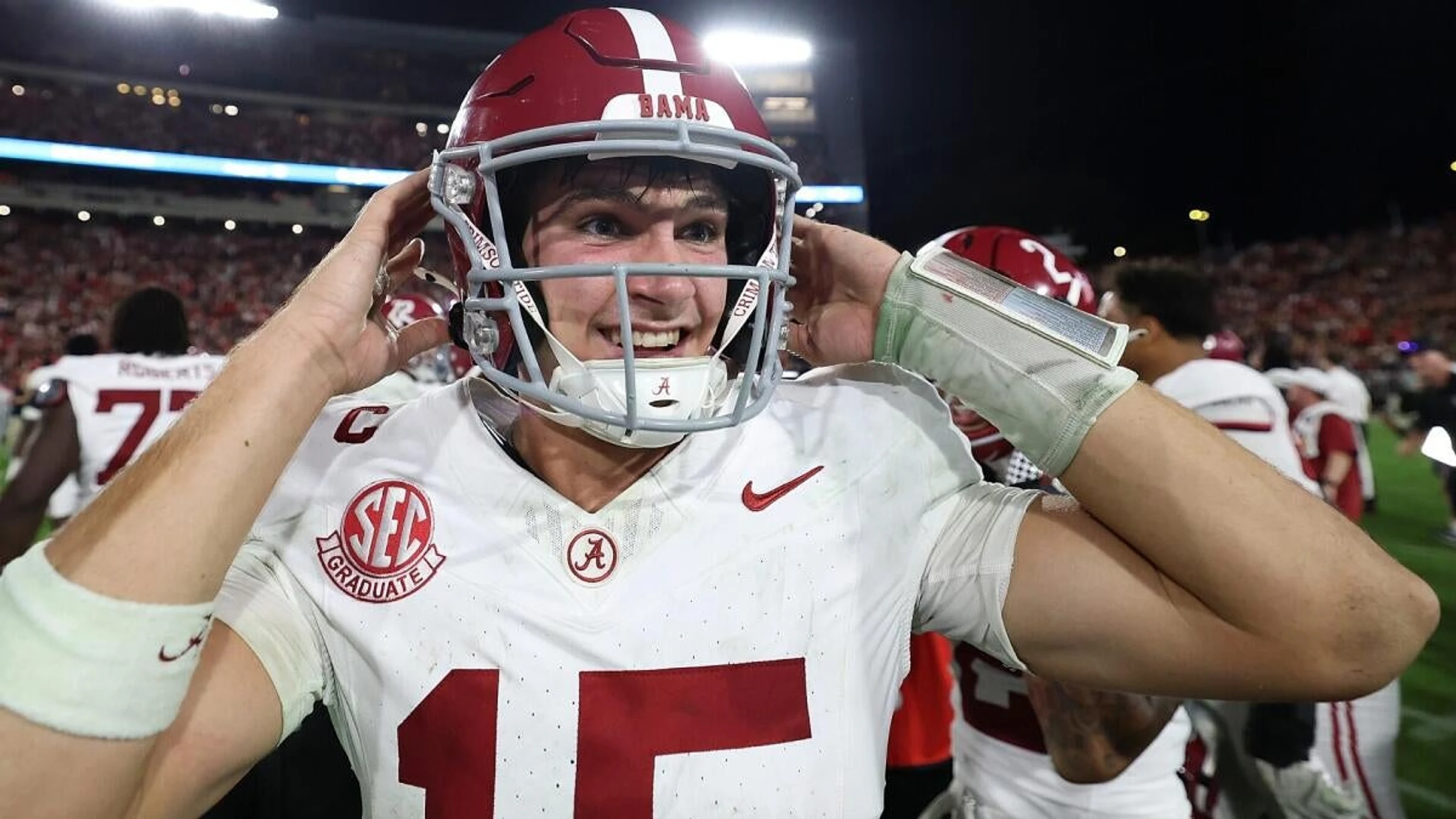
With the Ty Simpson buzz reaching a crescendo, along with some interesting takes in the national media earlier this month, his draft range seems to have the widest spread of anyone heading into Round 1. That's because so many people differ on what to make of a quarterback who only impressed for one year (really more like nine games).