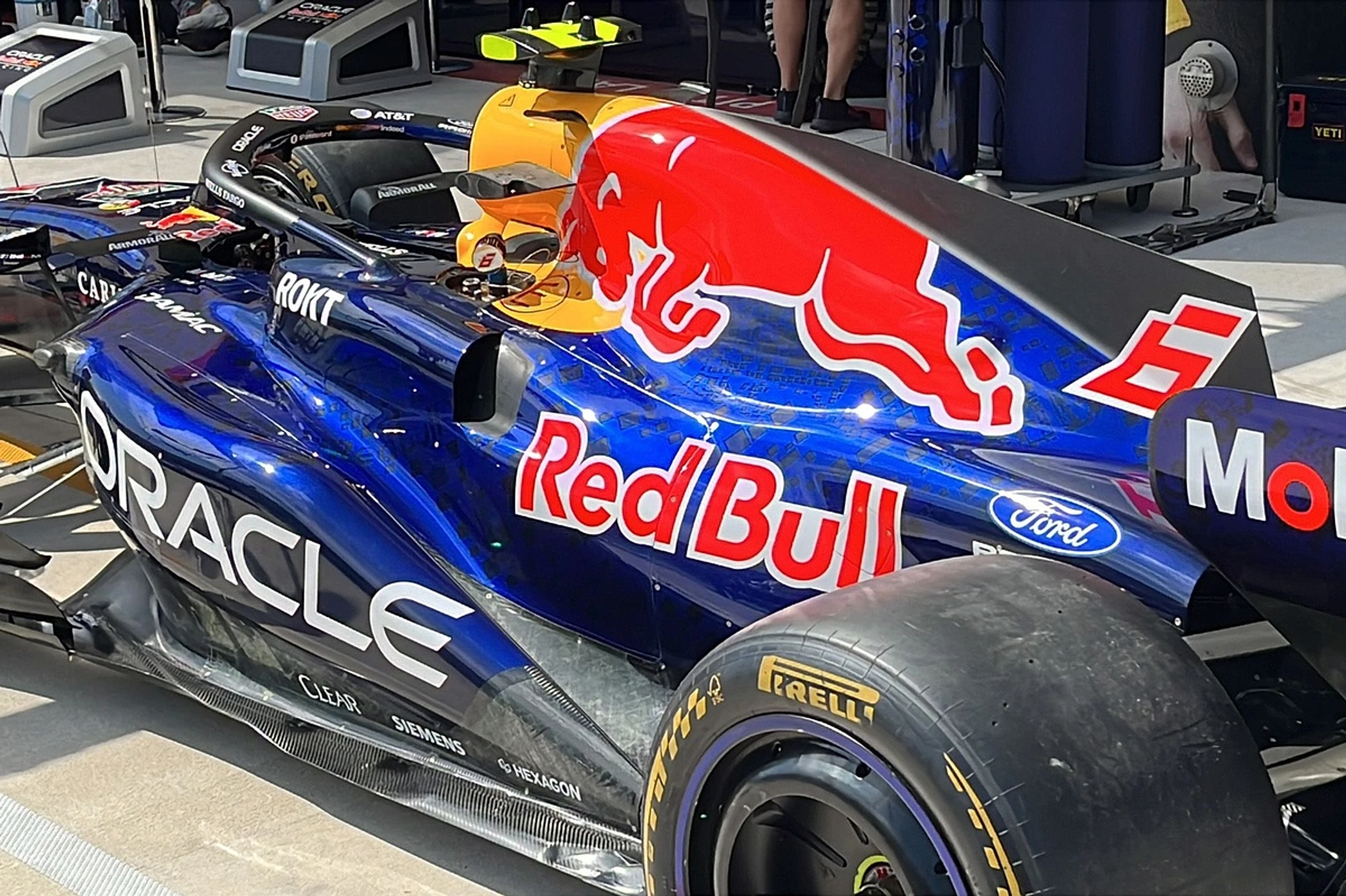
Red Bull has arrived in Miami with one of the most talked-about upgrade packages of the season—and at the center of it all is a rear wing that's already earned a catchy nickname in the paddock: the "Macarena wing."
As expected, the Miami Grand Prix weekend is a showcase of innovation, with the FIA's technical document revealing that 10 out of 11 Formula 1 teams have brought new parts to Florida. While some teams like Aston Martin focused solely on reliability and weight reduction, and others like Audi, Haas, and Mercedes introduced only modest updates, Red Bull went all-in with a substantial seven-item upgrade package for its 2026 challenger.
The most eye-catching change? A rotating rear wing design for active aerodynamics—similar in concept to what Ferrari introduced earlier. But Red Bull is quick to clarify: this isn't a copycat move. According to the team, the Milton Keynes outfit had been developing this concept for much longer and even submitted initial ideas to the FIA last year, just after Ferrari did. The only reason it's debuting now in Miami, rather than earlier in the season, is that Red Bull couldn't bring its version to the track in time for the first three race weekends. A successful test at Silverstone paved the way for its grand entrance.
While many teams were caught off guard by Ferrari's Macarena wing, Red Bull was already deep in its own development. And there's a key difference: Ferrari's wing can rotate up to 270 degrees, while Red Bull's version rotates about 160 degrees in the opposite direction. The goal, however, remains the same—reducing drag and optimizing lift for better straight-line speed and cornering performance.
"To allow more travel, the mechanism and attachments to the elements has been revised, necessitating a subtle altering of the third profile near centerline," Red Bull explained in a statement.
But the rear wing is just one piece of the puzzle. The RB22 also features revised sidepods, a lighter overall weight, and subtle modifications to the front wing and front corner inlets. These changes are designed to "draw inlet air from the highest pressure source available," helping the car breathe better and perform more efficiently on track.
For fans and fashion-forward motorsport enthusiasts alike, this upgrade package is a reminder that even the smallest aerodynamic tweaks can make a big difference—both on the circuit and in the engineering race that defines Formula 1. And with a name like "Macarena," this wing is sure to get everyone talking, dancing, and watching closely in Miami.