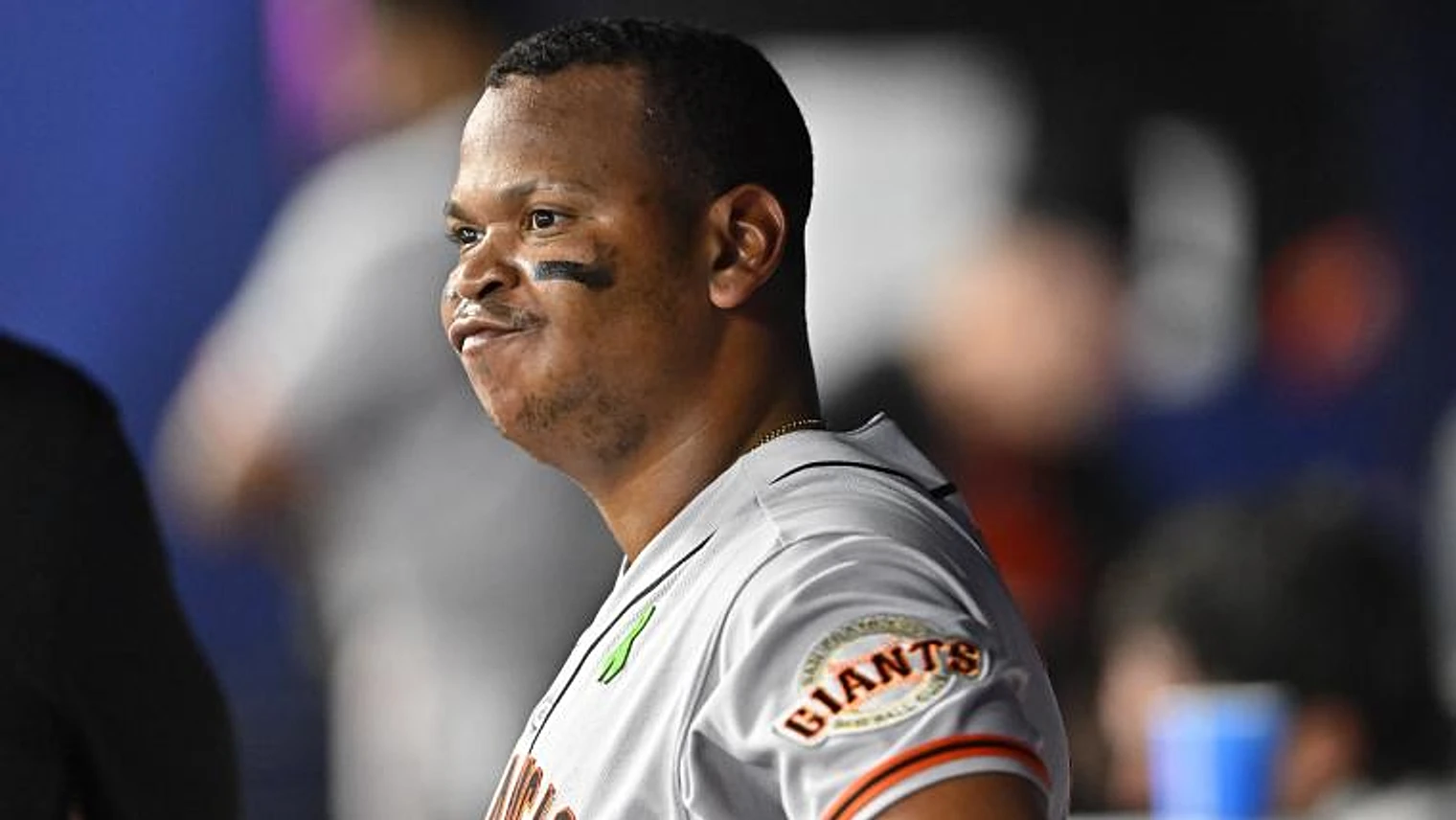
When the San Francisco Giants acquired Rafael Devers from the Boston Red Sox, expectations were sky-high. The left-handed slugger was supposed to anchor their lineup for the next decade—a cornerstone bat capable of carrying a franchise. But roughly a year after that blockbuster trade, something has gone terribly wrong.
Devers isn't just struggling; he's in the midst of one of the worst stretches of his career. And if you dig into the numbers, one problem stands out above all others: he simply can't hit fastballs anymore.
In today's game, fastballs are thrown harder and move more than ever before. Yet they remain the pitches that hitters absolutely must handle to succeed. Devers, however, has become one of baseball's worst against heaters. According to MLB.com's Thomas Harrigan, the numbers are alarming: Devers is hitting just .146 (6-for-41) on four-seam fastballs this season, with a staggering 51.1% whiff rate and a 59.5% strikeout rate on those pitches.
But the struggles don't stop there. Through 32 games, Devers has posted a .540 OPS—a far cry from the elite production the Giants envisioned. His barrel rate has dropped by nearly nine points, the fourth-largest decline in MLB. Even more concerning, his walk rate has plummeted by over 10 points, the biggest drop of any player in the league. Meanwhile, his strikeout rate has jumped from around 21% with the Red Sox to nearly 30% in a Giants uniform.
Is this the beginning of a steep decline for a once-dominant hitter? Or is Devers simply trapped in a massive, temporary funk? The answer likely depends on one thing: his ability to catch up to fastballs. If he can't solve that problem, the Giants' blockbuster investment may not pay off anytime soon. For now, all eyes are on Devers as he tries to rediscover the swing that made him one of the game's most feared hitters.