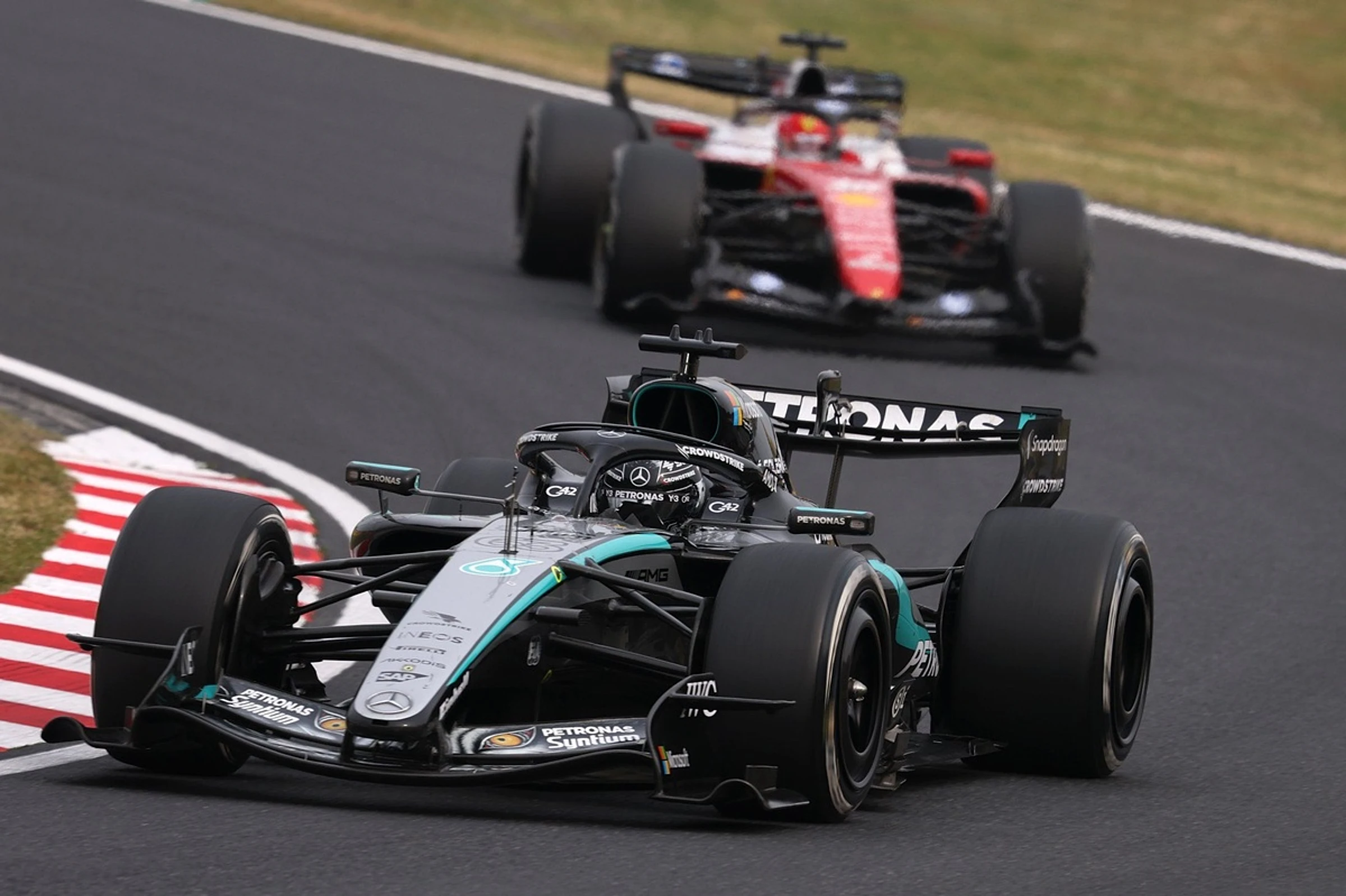

Ahead of the Miami Grand Prix, the FIA has introduced targeted tweaks to the 2026 regulations, focused primarily on improving qualifying, where heavy energy management had prevented drivers from pushing flat-out. The governing body has also addressed safety concerns raised after the opening races, particularly around large speed differentials, and introduced adjustments to start procedures to minimise the risk of incident.
As expected, no major tweaks have been made, as the sport’s chiefs are satisfied with the quality of racing delivered in the first grands prix of the season – despite some concerns raised by several drivers and fans on social media.
FIA confirms 2026 F1 rule changes ahead of Miami Grand Prix
Will these changes be enough? Our international panel of journalists offer their views.
If Formula 1’s 2026 regulations are already being “fixed” before they’ve properly settled in, that in itself tells a story – but not necessarily the one it might seem at first glance. The FIA’s latest round of adjustments is, on paper, exactly how the championship should function: identify early weaknesses, respond quickly, and refine rather than panic. In that sense, it is a system working as intended.
And yet, there is an uncomfortable tension beneath that logic. Because while these tweaks may reduce the most visible problems – excessive lift-and-coast, extreme closing speeds, and drivers forced into energy saving rather than flat-out racing – they do little to address the deeper philosophical question at the heart of the 2026 concept. If the cars are fundamentally designed around energy management, then the racing will inevitably orbit around that constraint. You can recalibrate the numbers, but you cannot entirely recalibrate the behaviour they incentivise.
That is why it increasingly feels as though Formula 1 is treating symptoms rather than the disease. The direction – electrification, efficiency, manufacturer relevance – was always going to come with trade-offs, much like the hybrid transition of 2014, the turbo-engine transition of the early 1980s, or even the engine formula modifications in 1961. A messy early phase is not unprecedented. But acknowledging that does not automatically make the outcome satisfactory from a sporting perspective.
There is also the matter of perception. When drivers, teams and fans openly describe the cars in such negative terms so early in a regulation cycle, the narrative hardens quickly – and narratives are far harder to rewrite than rulebooks.
Ultimately, the real verdict will not come from data traces or revised kilowatt figures, but from the cockpit. If drivers still feel they are managing systems more than racing each other, then no amount of fine-tuning will convincingly argue that 2026 has been “fixed” – for now.
From Stefano Domenicali’s perspective, judging by the comments he made in his exclusive interview with Motorsport.com last week, the changes announced by the FIA on Monday will probably be enough. In fact, I’d go as far as to say he will be hoping they help draw a line under the negative narrative surrounding the problems caused by Formula 1’s new rules, regardless of his insistence that the data gathered by the championship so far this season has been more positive than negative.
The big Stefano Domenicali interview – on the 2026 rules, Max Verstappen and F1’s future
Whether they will be enough for drivers and old-school F1 fans, however, is another matter entirely.
One thing is certain: with the cars set to return to the track next week after April’s enforced break, what was announced on Monday appears to be a step in the right direction.
No one expected those meetings to produce a revolution, as that would have required hardware changes – something impossible at this stage. But these tweaks look like logical adjustments within the scope of what can realistically be done now that the regulations are already in force.
A couple of weeks ago, in a previous edition of this feature, when asked what F1 should change within the current rules, I wrote that safety had to be the first priority, ahead of qualifying laps, lift and coast, and everything else. It was simply unacceptable for the series to allow situations like the one involving Oliver Bearman and Franco Colapinto at Suzuka, which ended with the Haas driver limping away after climbing out of the car.
In that regard, I particularly welcome the measures introduced to reduce closing speeds between cars, as well as the decisions taken to mitigate the issues at race starts – another key area that needed to be addressed.
All in all, this is unlikely to satisfy everyone when it comes to F1’s new era, but it does show that those concerns were heard. Now, the changes need to be given a little time to show their true impact on track.
Safety is, of course, of paramount importance. Even in a category as fast as Formula 1, there is no doubt that it must always come first. Therefore, any regulation changes made in the interest of safety are entirely justified.
However, there is one aspect that raises questions. It concerns the adjustments aimed at ensuring cars can run at full throttle in qualifying. Under the latest changes, the per-lap energy harvesting limit will be reduced from 8MJ to 7MJ. This effectively means that the amount of electrical energy available per lap is reduced – and that, in turn, means slower lap times. Is that really what we want?
It is worth asking what kind of Formula 1 we want to see. Opinions may differ.