
The Wimbledon team of the late 80s and early 90s was something you had to see to believe. Folklore has painted the ‘Crazy Gang’ as a loveable bunch of rogues who played on the edge and upset the big boys. And look, some of that’s true.
But the reality is they were often a thuggish, overly physical team that redefined ‘the dark arts’ and were brutal, hard opponents.
The highlights, of course, were their fairy tale rise from non-league to the top flight, winning the FA Cup in 1988 on their way. The lowlights were Spurs skipper Gary Mabbutt’s fractured cheekbone and Vinny Jones’s challenge on Tottenham’s Gary Stevens that forced the full back to retire.
Dave Bassett had been the manager of Wimbledon for the early part of their rise – Bobby Gould had replaced him in the dugout and guided them to their famous Wembley win, and Ray Harford was now in charge – but the ethos of the ‘Crazy Gang’ still remained very much intact.
And it was getting results. While Sunderland were struggling to secure their top flight status after a somewhat fortunate promotion, the Dons had third place in their sights.
Denis Smith’s team’s survival hopes had been boosted by a 2-1 win the previous Saturday, away at fellow relegation candidates Luton Town, and the lads went into a Tuesday night fixture at Roker Park against Wimbledon intent on getting another three points that would lift them out of the two-team relegation zone and put them in control of their own destiny.
This was a huge, huge game of massive importance, and the manager knew it.
We have given ourselves a chance It would have been all over if we had lost at Luton, but we have guaranteed ourselves excitement until the end of the season.
The players will be well prepared again as they know they can’t expect any favours from Wimbledon.
Their players are professionals and they will want to finish the season in the club’s highest-ever position.
The atmosphere should be something special, but we must make sure we use it to our advantage.
Sunderland made two changes to the team that beat Luton – Marco Gabbiadini was fit enough to start after a sub outing at Kenilworth Road, replacing Brian Mooney who’d fractured his foot. Peter Davenport was also recalled after injury, replacing the injured John Kay, with Gary Owers dropping to fullback.
More than 24,000 supporters were in Roker that night – Wimbledon’s travelling support wasn’t much to speak of – and a white hot atmosphere ensued with the crowd knowing just how big a game it was.
And from the off, Wimbledon were intent on disrupting the play, with the game a tremendously physical contest from the off.
German striker Thomas Hauser, who partnered Gabbiadini up front with Davenport playing off the pair, said:
I knew we were in for a hard, physical match. But I have never experienced anything like that before.
I complained to the referee after only five minutes that I had been punched in the ribs by John Fashanu, but he told me just to get on with the game.
There was so many unfair things that went on. My shirt was being pulled all the time and they were stamping on my feet, especially from corners.
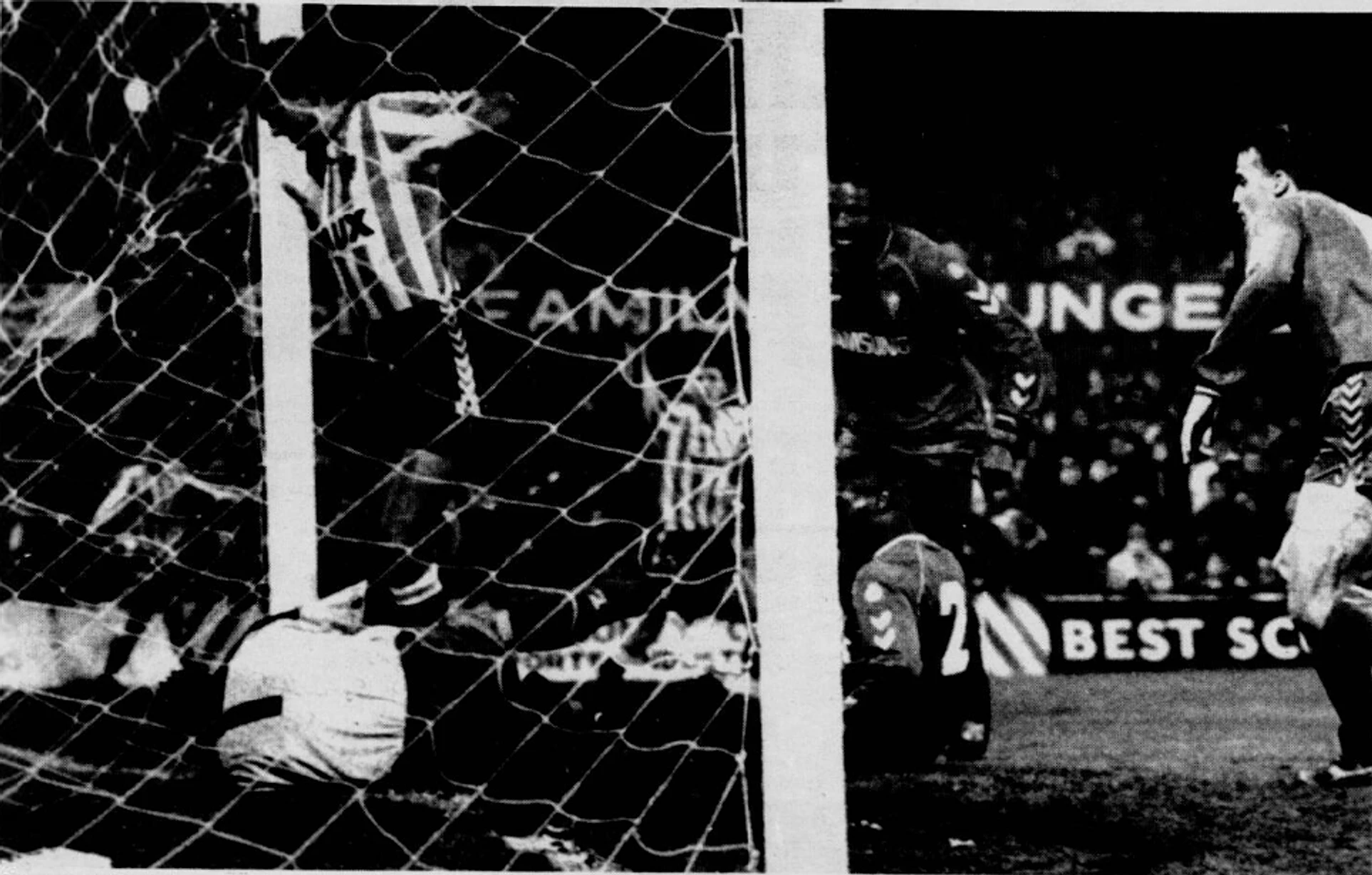
As a contest, the game was a stop-start affair, marred by numerous tactical fouls and Wimbledon’s offside trap, which Sunderland frequently fell into, and a number of confrontations that referee Paul Harrison failed to punish. Sunderland did have the best opportunity – Hauser’s effort was pushed onto the woodwork by Wimbledon keeper Hans Segers, before Davenport inexplicably missed the follow up.
But, just before half time, the match erupted – and it was Sunderland that came off the worst.