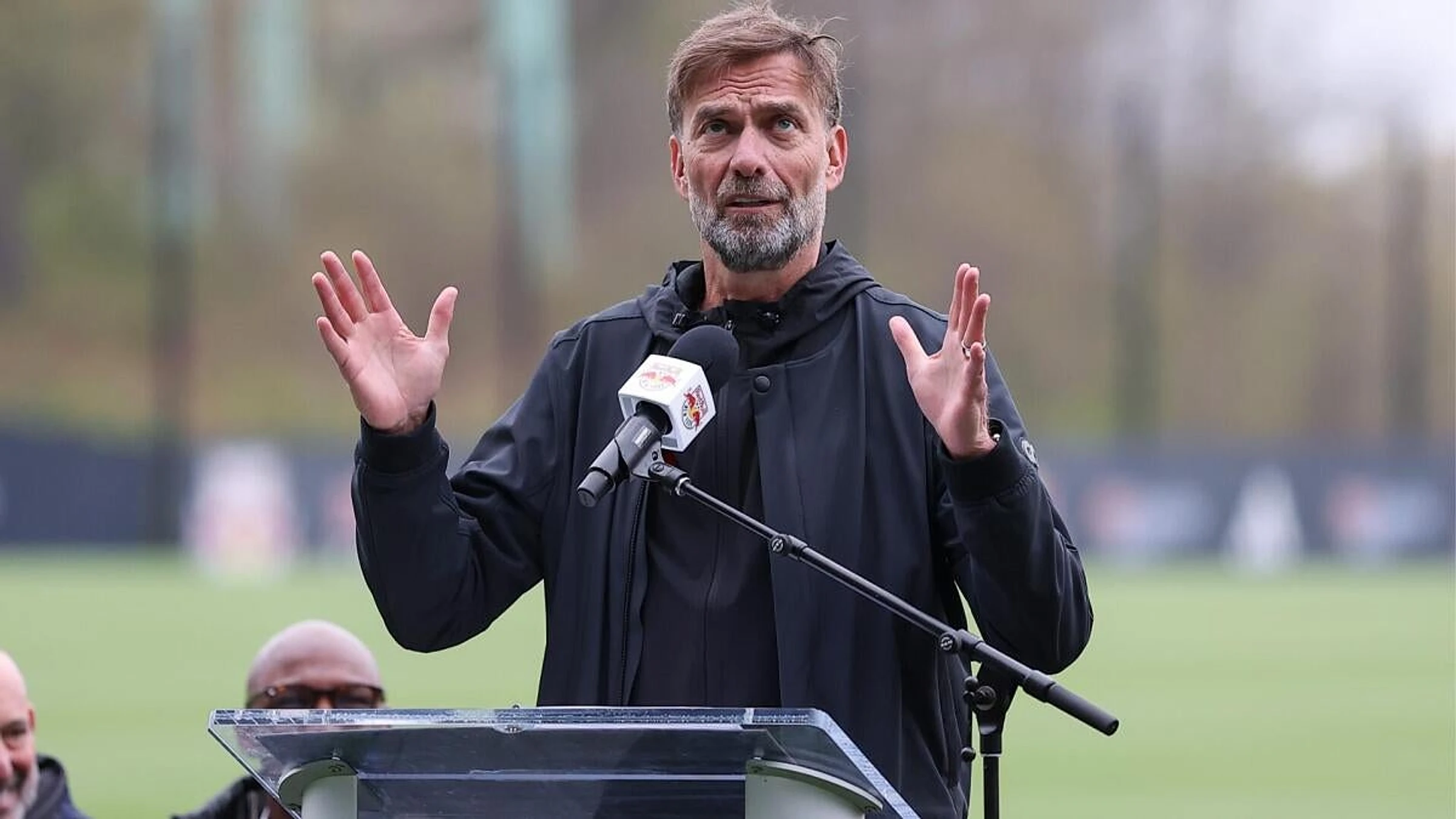
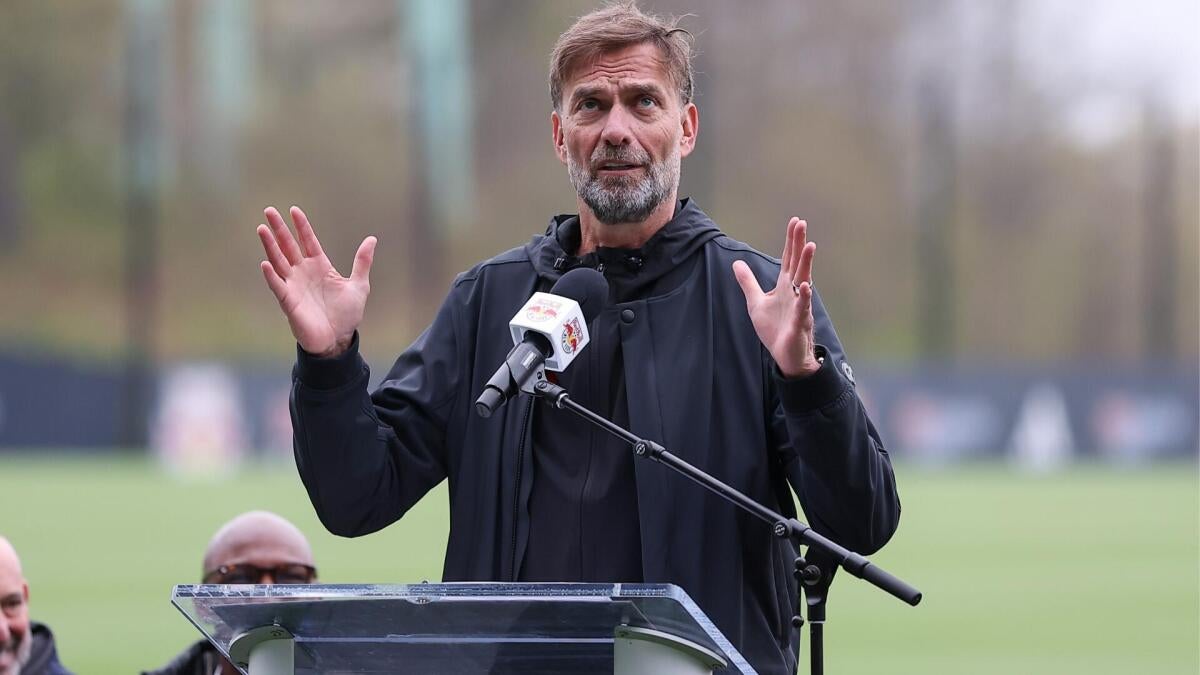
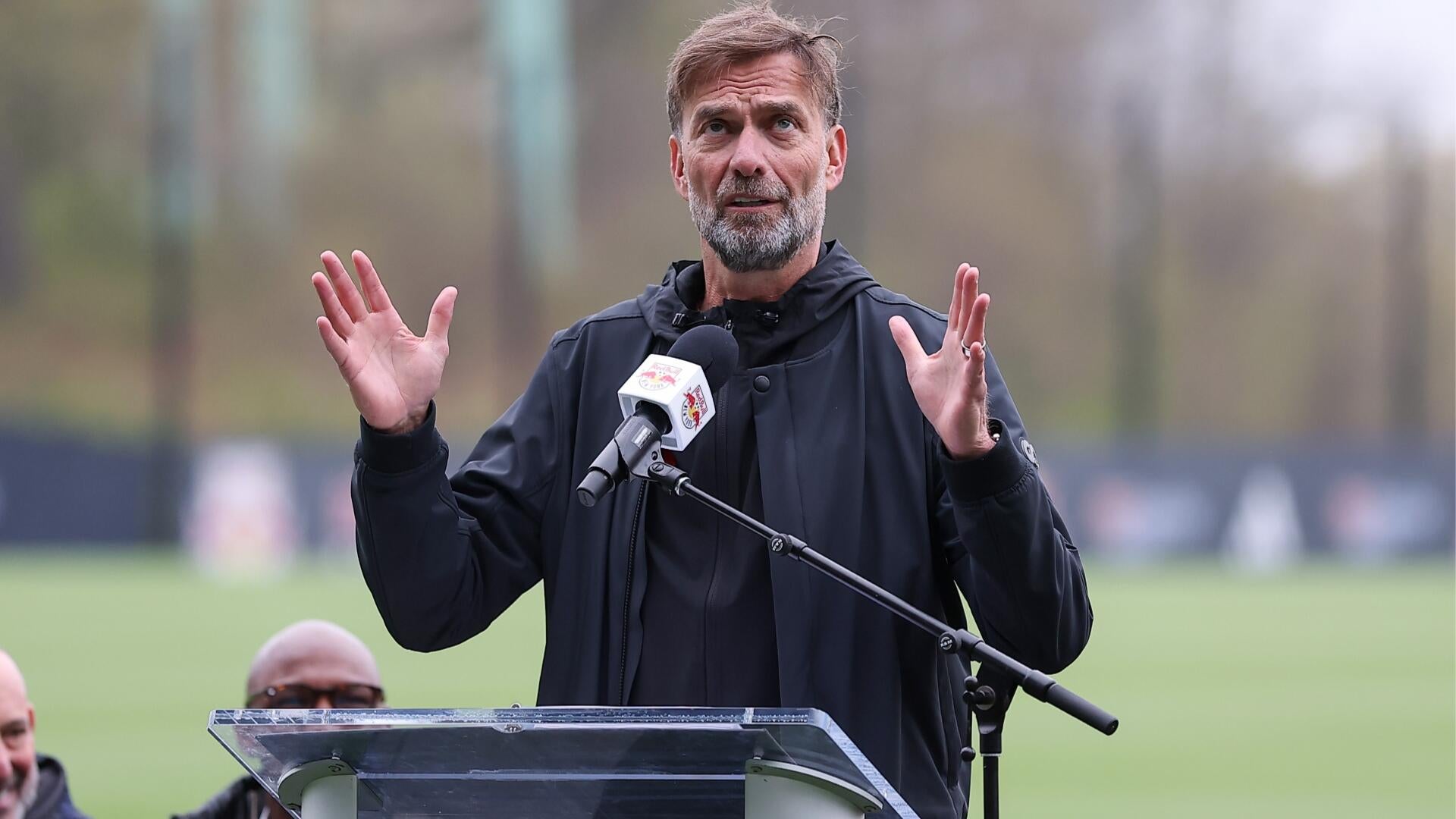
MORRISTOWN, N.J. – Tucked into an inner pocket of north New Jersey on a gray and windy Wednesday morning, Jurgen Klopp had an instinct he had not felt in quite some time.
"Honestly, this morning was a moment where I walked in," he recalled while perched under a Red Bull-branded umbrella, itching to go inside a building mere feet away. "Oh, okay. That's something I could miss because so far, I didn't miss anything since I stepped down as a manager, but this, going into a building like that on a good weather day – thank God the weather was not great because otherwise maybe I would've gone back."
After a year and change of insisting he has no imminent plans to return to the touchline following his appointment as Red Bull's head of global soccer, it was the nicest compliment Klopp could offer to the facilities in his backdrop. He was the headlining act at the ribbon cutting for the RWJ Barnabas Health Red Bulls Performance Center, the site of a unique collection of soccer's most notable people – former Red Bulls players like Thierry Henry were mixed in with local political figures like ex-New Jersey first lady Tammy Murphy, now the chair of the New York New Jersey World Cup host committee. Red Bull soccer technical director and ex-Germany international Mario Gomez was spotted chatting in the lobby for some time with ex-U.S. men's national team member Michael Bradley, who earned heaps of praise in an opening ceremony from MLS commissioner Don Garber.
Bradley, in Garber's eyes, is the prime example of the existence of a facility like this one. He went from an MLS rookie at the club to an eventual World Cup veteran and USMNT captain and is now in the early months of his first-ever head coaching role with the Red Bulls. It took the Red Bulls a decade to build a facility that would house the first team, an MLS Next Pro team and an academy with no resource spared. There are eight full-size pitches, high-end recovery rooms, personal spaces for players and plenty of education-focused rooms for academy players. It fits right in with the Red Bull vision Klopp has been busy trying to lay out since assuming his new role in January 2025.
"To build something special, you need a kind of stability," Klopp said. "You need a place where everybody wants to go. You need a place which you call home. You need a place where everything can start growing and in sports, in soccer, it's no different. You need a kind of place like that. I said the building is wonderful but it's about the people who are in the building and we have to make sure we use that in the right way."
The new performance center is a place where players and staff have "no excuses," in Klopp's words, the close proximity between the academy building and the spaces used by the MLS team and the MLS Next Pro side underscoring the project in New York perfectly. Under the leadership of Bradley and new sporting director Julian de Guzman, the Red Bulls have gone aggressively young – U.S. youth internationals Julian Hall and Adri Mehmeti have been thrust into the spotlight, earning the platform they have received so far this season. The 18-year-old Hall has five goals and two assists to start the campaign and the 17-year-old Mehmeti has one goal and two assists, the latter doing so in his first professional season. It is a stark reminder that youth development remains at the core of Red Bull's soccer project – as is entertainment value.
"We want to be as successful as possible but with our way," Klopp said. "You cannot be the best immediately so try to be the most exciting. That's what we try. You can see that this is a very young team we have now. From time to time, we will get smashed. That happened already but in other moments, we will be surprisingly good because the boys are extremely talented and this is only the start, together with Michael and Julian [de Guzman]."
The multiclub ownership model these days, Klopp said, is less blatant about shipping young players from Red Bull's various teams to those in Salzburg and Leipzig but rather about creating solid foundations for youth prospects, as well as proving to them that places like New York are ideal destinations for them as they start their careers.
"I think MLS is a really good league," Klopp said, though he admitted that he does not understand some of the roster construction rules. "It's good for young players and it's not like they are not tested enough. No, no, no, not at all. It's a tough one for different reasons – traveling, pitches, stuff like that – so I really like that way [to] learn but of course, it's the idea that we work close together and if there's a player that we want to keep him but it's a free world. How do we do that? You go there. What if he doesn't want? So we have to make sure that the players think we are the right place for them. That's how it works, so they make their own decisions. We just can create the platform and that's what we did."
As the Red Bulls and their various teams get acclimated with their new surroundings, they will do so months before Carlo Ancelotti's Brazil team makes it their base camp for the World Cup. The team will have access to some of the facility, which will still house the Red Bulls' teams during this summer's tournament but is big enough to accommodate both.
Brazil will train on pitches that will eventually host academy matches, two full-size fields that are the first thing one sees upon entering the grounds. They will enjoy access to some facilities but the Red Bulls will still have many of their own spaces, including their own locker rooms. First team players will see the famed "Man in the Arena" passage from President Theodore Roosevelt's Citizenship in a Republic speech from 1910 upon entry into their locker room every single time, a choice made by Bradley and his coaching staff. Many of the building's rooms, including the gym, dining hall and player lounge overlook a long stretch of grass that includes four different training pitches that the Red Bulls will maintain access to throughout the World Cup.
The academy building includes classrooms but there is another one tucked into the main building, too – a test kitchen where the young-skewing Red Bulls players will receive cooking lessons they can take home with them. The facilities were a decade in the making but Klopp had his say after a tour of the under-constrcution site last September, albeit a small one.
"Some offices, where they are and stuff like that," he said. "If you don't work every day in a building like that, then you cannot know it. My whole life, I was in buildings like that. I started with a chair in a small room and with Liverpool in the end, we had a proper academy, too, so that's it."
Klopp's influence, though, did not extend to Brazil's selection of the site as their base camp. If these are the types of facilities that almost made Klopp long for his managing days, if not for the New York area's sometimes fraudulent spring weather, they are also the type that do not need one storied coach to put in a good word with another.
"I didn't have to convince Brazil to come here. They saw it and wanted to be here. We had to make sure they don't use the full building because we have a football team ourselves – a soccer team ourselves," he said, reminding himself that the word soccer is in his job title. "That situation, I didn't have to convince anybody and Carlo, definitely not. He knows. He knows what's good when he sees it. He saw it."