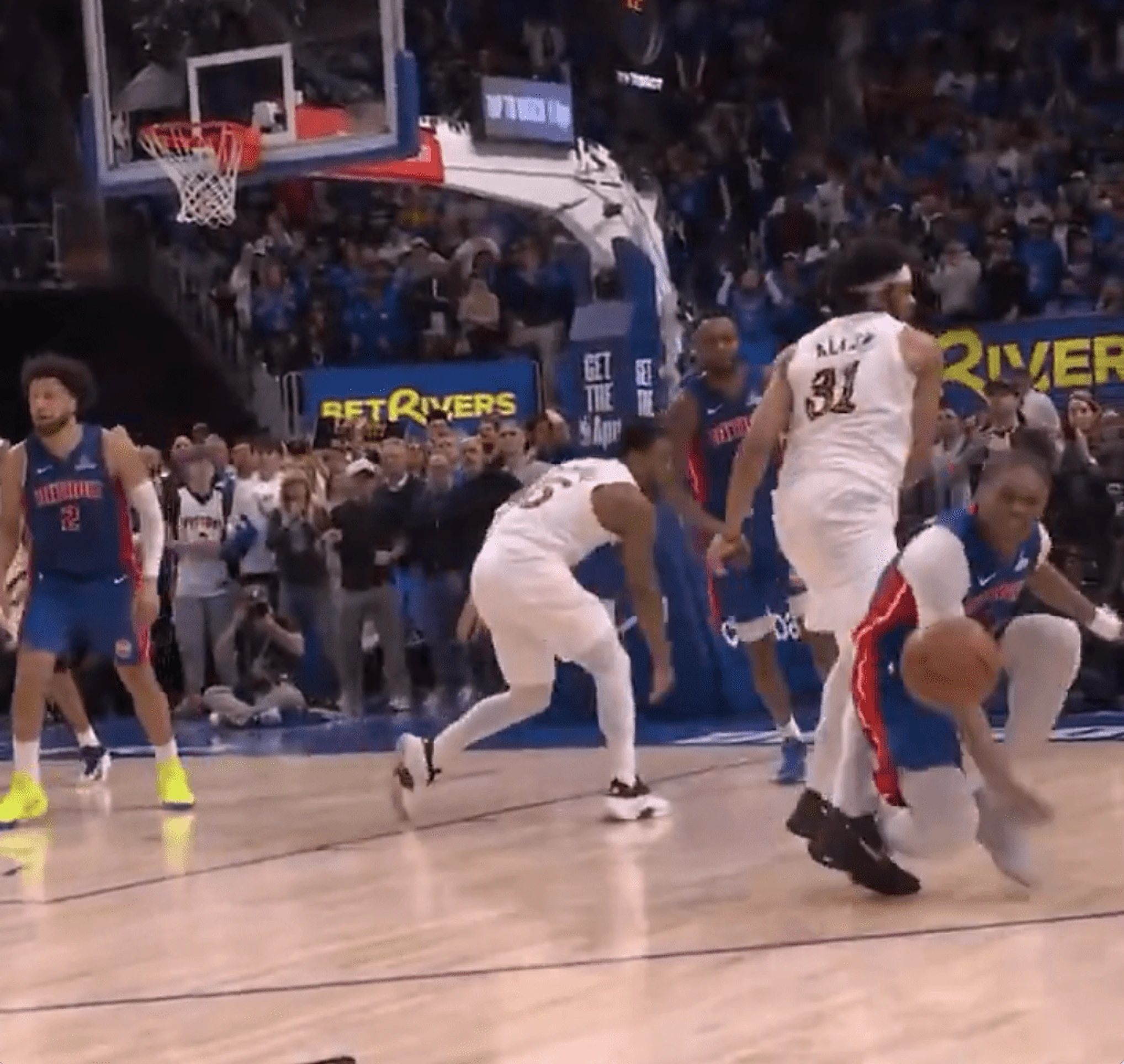
The NBA Playoffs delivered another instant classic on Wednesday night, as the Detroit Pistons and Cleveland Cavaliers battled in a pivotal Game 5 that had fans on the edge of their seats. With the series tied 2-2, the stakes couldn't have been higher, and the intensity lived up to the billing. In the end, the Cavaliers outlasted the Pistons 117-113 in overtime, moving one win away from the Eastern Conference Finals. But the real drama? It all came down to a controversial no-call in the final seconds of regulation.
Here's how it went down: With the game tied, Cavs star Donovan Mitchell held the ball for the last shot, driving to the basket with the clock winding down. Pistons wing Ausar Thompson made a spectacular defensive play, stripping Mitchell and sending the ball loose. As Thompson scrambled to recover it, he was knocked to the floor by Cavaliers big man Jarrett Allen. Detroit was in the bonus, meaning a foul would have sent Thompson to the free-throw line for a chance to win the game. But the referees swallowed their whistles, letting play continue. The game went to overtime, and the Cavs took control from there.
Should it have been a foul? The replays tell a compelling story. One angle shows Allen making contact with Thompson's legs as he runs for the ball, causing him to trip. Another angle shows the contact clearly, with Thompson losing his balance and hitting the floor. It's the kind of play that often draws a whistle in the regular flow of the game, but in the high-pressure final seconds of a playoff contest, the refs opted to let the players decide. For Pistons fans and players, that decision was a gut punch.
Social media erupted in disbelief, with fans and analysts alike questioning the no-call. Pistons head coach J.B. Bickerstaff didn't hold back in his postgame press conference. "He fouled Ausar. It was clear. He tripped him going for a loose ball," Bickerstaff said, his frustration evident. "End of game situation, that's tough." His star guard, Cade Cunningham, echoed the sentiment. "We all saw the play, I think it's pretty clear it was a foul. (Ausar) has the ball in his possession, he's running forward, he gets tripped up. It's a foul, it's been a foul the whole rest of the game. Wasn't a foul that time."
Even neutral observers weighed in, with ESPN's Brian Windhorst noting the difficulty of officiating in such high-stakes moments. But for Pistons fans, the no-call stings even more because of what it cost them: a chance to take a 3-2 series lead and put the pressure back on Cleveland. Instead, the Cavs now have a chance to close out the series at home.
From a basketball perspective, the no-call was a textbook example of the "let them play" philosophy that often takes over in the playoffs. But for a team fighting for its postseason life, it's a painful reminder that the game's biggest moments can hinge on the smallest decisions. As the series shifts back to Cleveland, the Pistons will have to channel that frustration into focus. Game 6 is a must-win, and they'll need every bit of their resilience to keep their season alive.