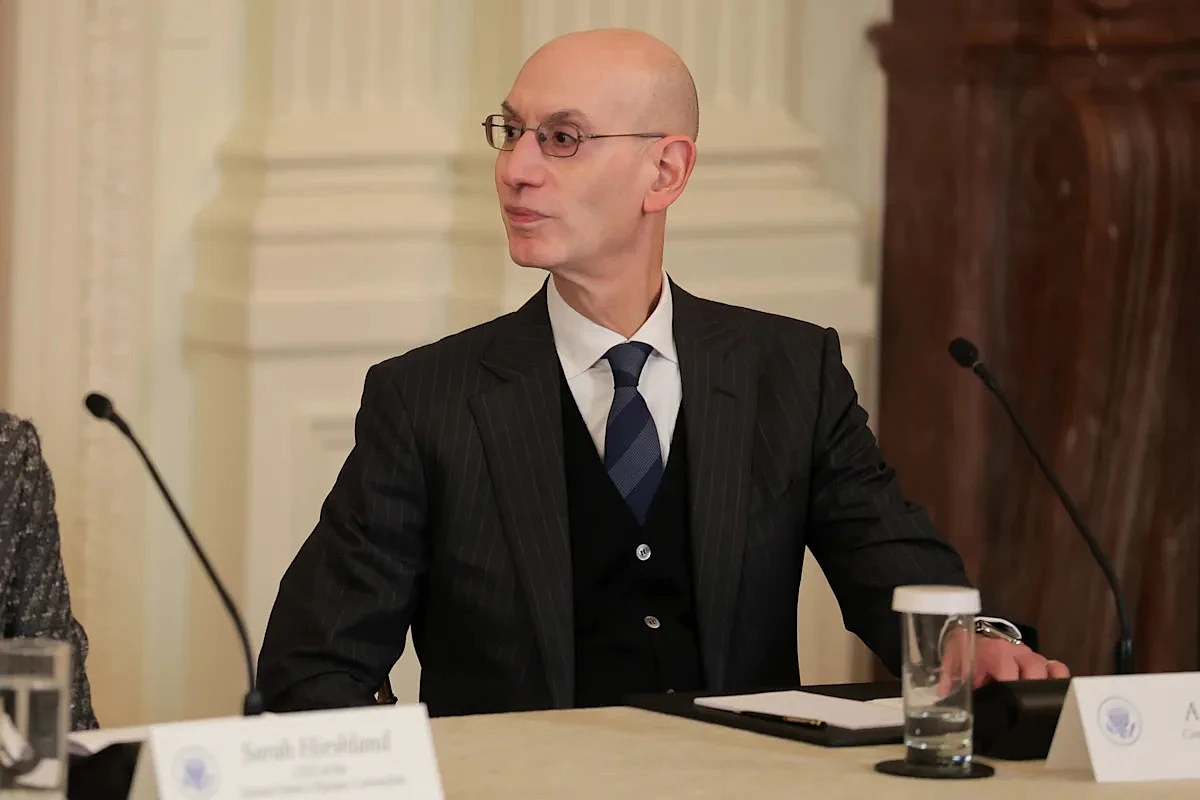


Adam Silver heard the outcry over tanking ahead of a loaded 2026 NBA Draft and was determined to find a solution. The league has now settled on its preferred system of lottery reform, and it essentially reduces the distribution of top young talent entering the league to complete randomness.
ESPN insider Shams Charania revealed the NBA’s new “3-2-1” lottery system on Tuesday night. Here’s what you need to know:
The three worst teams in the league are in the “relegation zone,” which means they lose ping-pong balls.
Teams that finish 4th through 10th in the reverse standings get three lottery balls in the drawing.
Teams in the “relegation zone” get two lottery balls, and can’t fall further than the 12th pick
“The Nos. 9 and 10 play-in seeds in each conference receive two lottery balls each, and the losers of the 7-8 play-in games receive one lottery ball each.”
Under the current system, lottery balls are only drawn for the top-4 picks. Now, the first 16 spots in the draft will be up for grabs in the drawing.
Teams can’t land the No. 1 pick in back-to-back years, and they can’t pick in the top-5 three times in a row.
Got all that? Probably not, because it’s pretty complicated. When Adam Silver was weighing multiple options to reform the NBA Draft lottery last month, I wrote “in rushing to find a medicine to cure tanking, the NBA risks giving itself bigger problems from the side effects.” While this system likely will curb tanking to some extent, it opens up a ton of new problems for the league.
It’s pretty wild that Silver rushed this system through so hastily with it slated to take effect for the 2027 NBA Draft. Teams already made long-term roster decisions based on the incentives of the old rules. The Chicago Bulls traded Ayo Dosunmu and Coby White at the deadline after years of floundering in mediocrity to increase their chances at finding a star. This system rewards mediocrity. It would have been nice if Chicago actually knew the rules before making its February deals. The Memphis Grizzlies traded away Jaren Jackson Jr. and Desmond Bane because they felt like they couldn’t get out of the middle of the Western Conference standings. Would Memphis had made the same decisions if they knew the lottery format would change like this?
It’s no surprise the league is giving itself the option to opt out of this plan after the 2029 NBA Draft, per Charania’s report. This lottery format feels like an extremely slippery slope for a few reasons. Let’s get into it.
Teams had the ability to go from worst-to-first under the current lottery system despite the fact that the worst team in the league literally never won the lottery since the last round of reform went into effect in 2019. The Detroit Pistons, San Antonio Spurs, Oklahoma City Thunder, and Minnesota Timberwolves all made the worst-to-first jump in the 2020s.
Those are all small market teams who used the draft to land their franchise player. They still had to get lucky to land the top pick. It’s just going to require way more luck for bad teams to get good under this system.
The risk of this system is that it creates a permanent NBA underclass. Now the worst team in the league can fall to the 12th pick. Given how rarely good players change hands in free agency these days (more on that later), it feels like bad teams could get stuck in a cycle of being bad for a long, long time.
If teams can’t sell wins, they need to sell hope. What hope would fans of bad teams have now knowing they could fall out of the top-10 in the draft? The risk here is that diehard fans of bad teams just choose to give up because there’s no path forward.
How are bad teams supposed to get good players if they can’t do it through the draft? Free agency and trades are the only other options, but the prospect of bad teams overpaying free agents to land them only offers more downside, especially in this more punitive CBA.
It feels like the league needs more good young players to hit free agency if it doesn’t want teams to tank for the draft. One idea I saw elsewhere that I liked was eliminating restricted free agency. Under the current system, the Pistons still have the ability to match any contract offer to Jalen Duren even after failing to reach an extension with him. What if Duren was just an unrestricted free agent this year, and could be had for any team?
Something like that would open up more avenues for talent acquisition outside of the draft. For now, it feels like bad teams that don’t get lottery luck are simply screwed.
Silver heard the outcry over Kevin Durant signing with the Golden State Warriors, and essentially made rule changes that kept superstars away from free agency. The last true superstar to change teams in free agency was Kawhi Leonard signing with the Los Angeles Clippers in 2019. Since then, the biggest player to change teams in free agency is … washed Paul George in 2024?
The NBA gets a lot of attention from offseason player movement. I wonder if these changes will make teams more reluctant to trade their future first-round picks, thus diminishing the trade market, too.