The 2026 MLB regular season is four weeks old and you have my permission to say "it's still early" if things aren't going your favorite team's or your favorite player's way. It is early! It is so, so, early. If the 162-game season were a nine-inning game, there would be one out in the top of the second inning right now. It is a long season, folks. A very long season.
That said, there are a few things we can glean from the little bit of baseball that has been played. Here now are three trends worth knowing four weeks into the new season.
On the surface, there is nothing spectacular about Yankees righty Will Warren. He had a 4.44 ERA in 33 starts last season, the most by a rookie since 2008. Warren will snap off sweepers with a spin rate north of 3,000 rpm, but he won't wow you with huge velocity or big strikeout totals. He's a perfectly cromulent No. 4-5 starter, and hey, teams need those guys too.
What Warren does excel at is getting hitters to take strikes, even in two-strike counts. He leads baseball with 72 strikeouts looking since the start of last season despite ranking 25th in total strikeouts and 42nd in innings. This past weekend, Warren tied a career high with 11 strikeouts against the Royals. Five of the 11 were looking, all on fastballs (four-seamers or sinkers).
This season, 31.7% of Warren's strikes are looking, the most among pitchers who've thrown 25 innings and well above the 26.2% league average. That's up from his 30.9% last year. Warren has gotten a called strike on 20.1% of his total pitches this year, second only to teammate Ryan Weathers (20.4%). The MLB average is down at 16.5%.
There are times a hitter gets caught guessing and takes a hittable pitch, absolutely, and it helps that Warren pitches to two of the best framing catchers in the game (J.C. Escarra and Austin Wells). There is a skill to getting called strikes though. It stems from being in the zone, first and foremost, and also tunneling pitches well. Everything looks similar out of Warren's hand.
This overlay from last May shows how Warren's sinker and sweeper play off each other, and why hitters can get caught taking a pitch for a strike that otherwise looks hittable.
Will Warren, Two Seamer and Sweeper Overlay.Look how far apart these pitches are...and then cross. pic.twitter.com/3dU4lLAOSM
"When he's in the zone, he's lights-out," Escarra, who caught Warren during his 11-strikeout performance against the Royals, said after the game (via MLB.com). "It makes my job easy."
The Yankees as a team have the second-highest rate of called strikes and strikeouts looking, so this is something their entire staff does well. Warren stands out from the pack though. He's becoming the game's best at getting hitters to keep the bat on their shoulder and take a pitch in the zone for a strike, even when they're facing a two-strike count.
As has been covered in this space plenty, the Mets have struggled badly over the last few weeks, particularly offensively. Juan Soto is expected to rejoin the team on Wednesday after missing 15 games with a calf strain and he will give the offense a big lift, but Soto is only one player. There are underperformers up and down the roster.
New York's issues on offense boil down to their inability to punish fastballs as much as anything. The fastball is foundational to this game. If you can hit it, you have a chance. If you can locate it, you have a chance. To date, the Mets haven't hit it. They're one of the worst teams against four-seamers and sinkers this season. These were their MLB ranks vs. fastballs going into Tuesday's game:
Inevitably, the best offenses in baseball are the best teams against fastballs. The Dodgers, the Braves, etc. They all excel against the ol' No. 1. The Mets are really struggling here though. That .325 slugging percentage against fastballs was 21 points lower than any other team. They miss with 19.6% of their swings against heaters, and, when they make contact, they don't hit them hard.
Soto's absence has certainly contributed to the Mets' inability to handle the heat. He has been one of the game's best fastball hitters his entire career. In the eight games with Soto, the Mets collectively hit .233 with a .346 slugging percentage against fastballs. Since his injury, those numbers are .222 and .312, respectively. Ghastly, in other words.
Francisco Alvarez (.273 AVG and .409 SLG) and 35-year-old Marcus Semien (.275 AVG and .400 SLG) have been the team's best fastball hitters behind Soto. Francisco Lindor has been dreadful (.156 AVG and .222 SLG), though he has the hamate injury excuse. Bo Bichette's been bad against fastballs (.186 AVG and .276 SLG), ditto Luis Robert Jr. (.243 AVG and .270 SLG), Mark Vientos (.148 AVG and .296 SLG), and Jorge Polanco (.083 AVG and .083 AVG). On and it on it goes.
Last year, the Mets slugged .464 against fastballs, the fourth best in baseball, and they had very strong underlying numbers. This offense is not that offense. The Mets moved on from Pete Alonso, Jeff McNeil, Brandon Nimmo, and others over the winter. The change in personnel has hurt their fastball production, but still, it shouldn't be this bad with these names.
It's very simple: Either the Mets start hitting fastballs and their offense will be good enough to contend, or they won't and it won't. One or two teams a year sneak into the postseason slugging under .400 against heaters (the Guardians and Padres did it in 2025), but it is not a recipe for success. Being this ineffective against fastballs is a bad, bad sign for the Mets offense.
Few things in this game are more aesthetically pleasing than a well-placed bunt. Bunting for a hit is great, bunting to move a runner less so (depending on the situation), but every bunt makes for an enjoyable watch when executed well. It's a seldom-used skill, especially these days with the universal DH and the emphasis on driving the baseball for extra-base damage.
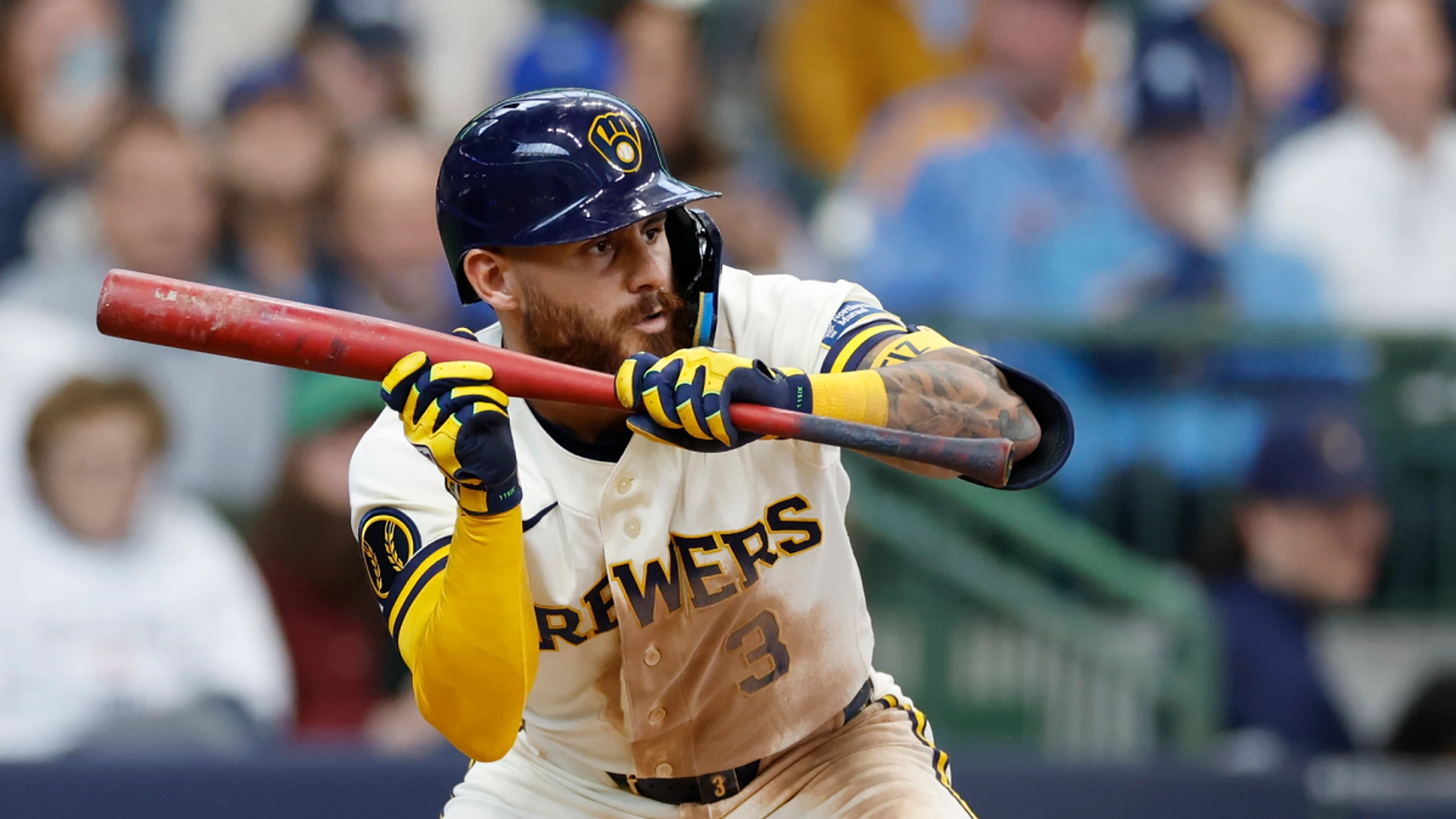
In an expert display of small ball, the Brewers used three straight bunts to push across what proved to be the game-winning run against the Blue Jays last week:
"Once we got the leadoff runner on, we knew we had to get him around the bases," utility man Greg Jones told MLB.com after the three-bunt inning. "We weren't swinging the bats the best, so getting the ball on the ground, moving the baseball, is an easy way to get the guy to the next base."