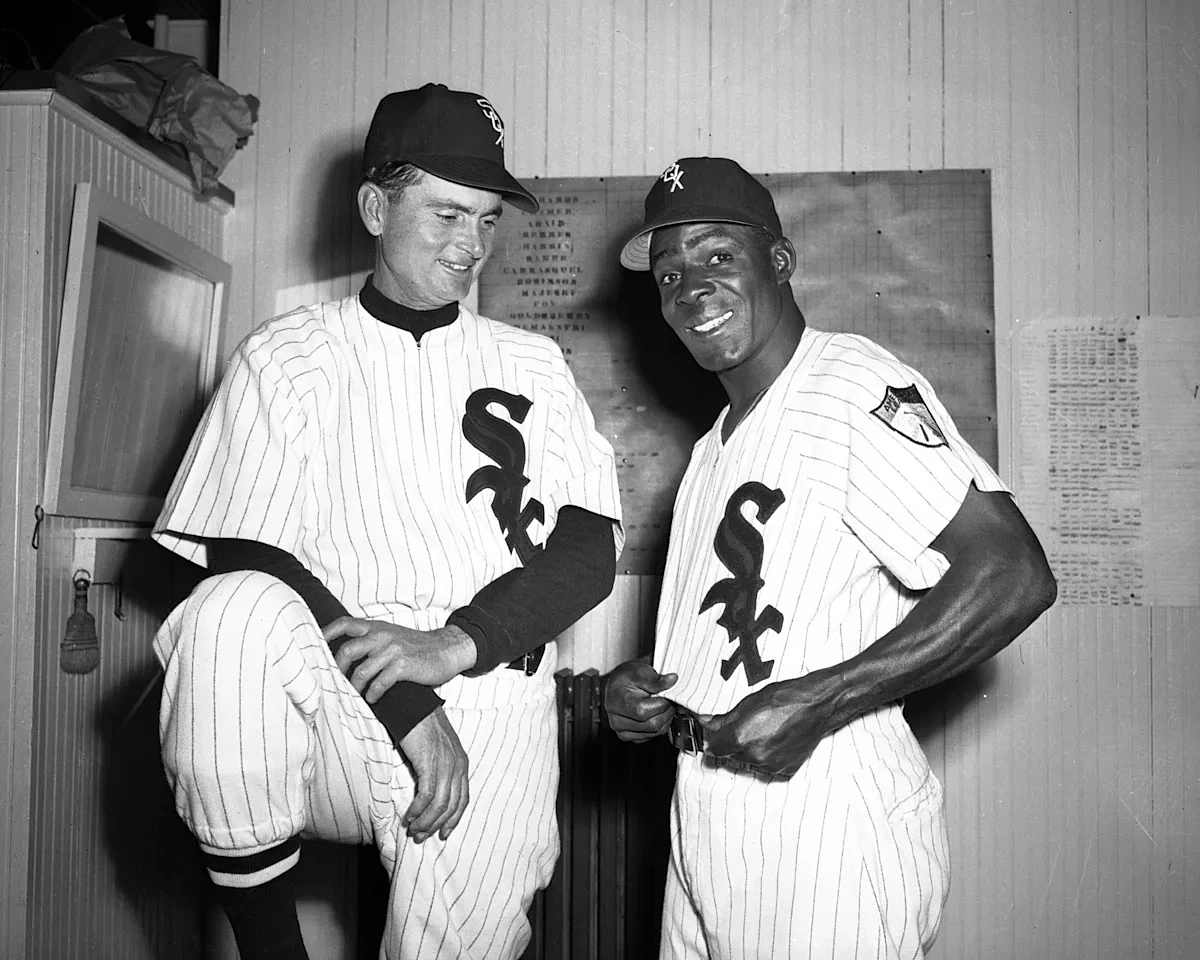
Seventy-five years ago, a moment of pure magic unfolded at old Comiskey Park that would forever change Chicago baseball. On May 1, 1951, Orestes "Minnie" Miñoso stepped to the plate for his first at-bat in a White Sox uniform and launched a home run off Yankees ace Vic Raschi—a towering shot that cleared the bullpen fence 415 feet away. It was the beginning of a love affair between "The Cuban Comet" and South Side fans that would span 64 years, lasting until his passing in 2015 at age 90.
Miñoso wasn't just any player. As the first Black major leaguer in Chicago, he was the White Sox's answer to Jackie Robinson—breaking barriers two full years before the Cubs signed Gene Baker and Ernie Banks in 1953. With the weight of history on his shoulders, Miñoso showed no fear. "I was not scared," he later recalled. "Because in baseball, I never was scared of nothing. I thought I was like in my own home."
That confidence was contagious. After his debut homer, the White Sox won 20 of their next 23 games to seize the American League lead. Miñoso was named The Sporting News Rookie of the Year, and his impact went far beyond the stat sheet. He emerged as one of baseball's first Afro-Latino stars, igniting a proud tradition of Cuban players on the South Side that continues to this day.
Over a remarkable career spanning the Negro Leagues, Cleveland, the White Sox, St. Louis Cardinals, and Washington Senators, Miñoso earned nine All-Star selections and three Gold Glove Awards. He had already made two All-Star rosters with the New York Cubans and helped them win a Negro Leagues championship before crossing over to the majors. Nicknamed "The Cuban Comet" for his blazing speed and electric style, Miñoso wasn't just a player—he was a pioneer who made Chicago's South Side feel like home, both for himself and for generations of fans who followed.