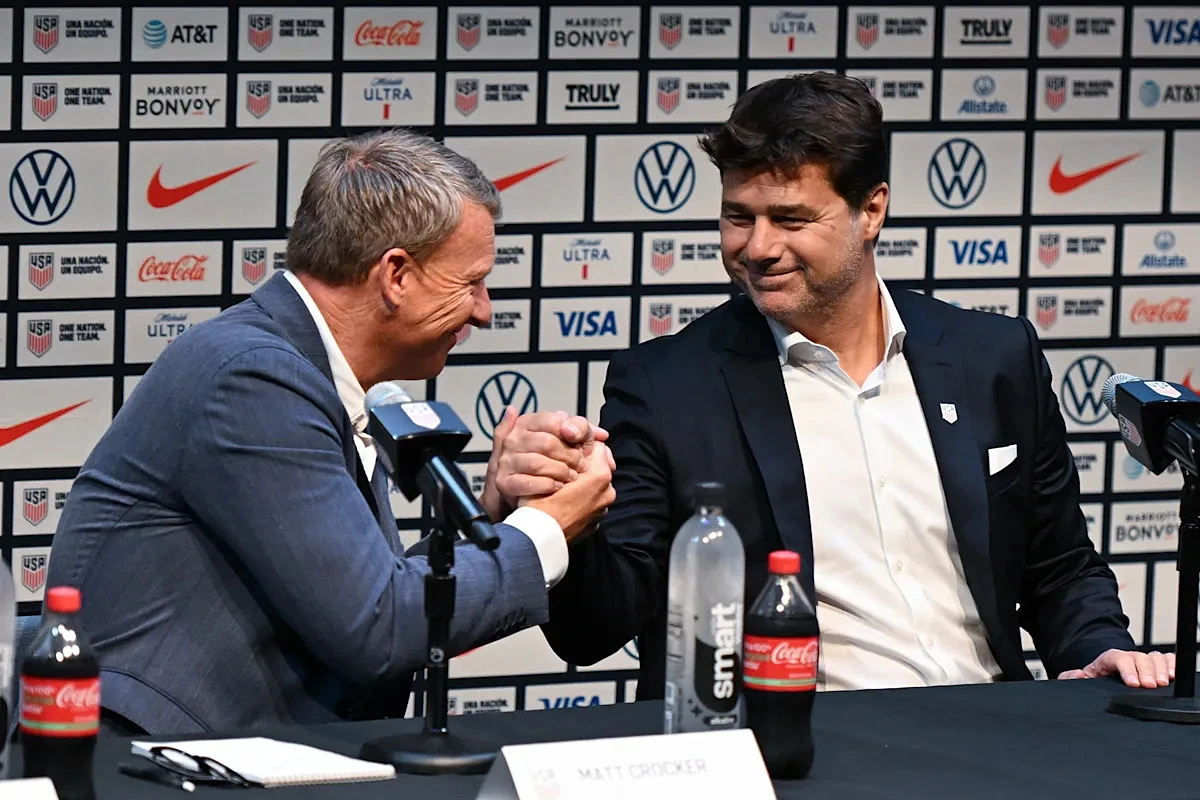
In a stunning move just two months before the 2026 World Cup kicks off on home soil, U.S. Soccer Sporting Director Matt Crocker is departing the federation after three years. His destination? The Saudi Arabian Football Federation. This surprise exit, first reported by Fox Sports, sends shockwaves through the American soccer landscape at the most critical possible moment.
While Crocker isn't a coach or player who will directly impact on-field performance this summer, his legacy is deeply woven into the fabric of the U.S. program. As the architect behind the scenes, his work over the past three years has fundamentally shaped the teams that will carry the nation's hopes. His departure now is akin to a master builder leaving the construction site just as the final touches are being applied to the cathedral.
Crocker's most consequential decision was undoubtedly the blockbuster hiring of Mauricio Pochettino. Tasked with leading the USMNT in a home World Cup, Crocker secured the highest-paid coach in federation history, a move that carried immense pressure and expectation. The success of Pochettino's squad this summer will be a direct reflection of Crocker's biggest gamble.
His track record, however, suggests a keen eye for talent. On the women's side, his hiring of Emma Hayes ahead of the 2024 Olympics was a masterstroke. Hayes not only delivered a gold medal but revitalized the program after a disappointing 2023 World Cup, injecting new talent and a winning mentality. For that decision alone, Crocker earned immense credit within the soccer community.
Beyond coaching hires, Crocker was the driving force behind a monumental infrastructure project: the new $228 million national training center set to open near Atlanta. This state-of-the-art facility, designed to house all 27 national teams, represents a long-term vision for unifying and elevating American soccer from the youth levels to the pros. It stands as a physical testament to the future he helped build.
Now, that future will be realized without him. Crocker leaves for a new challenge in Saudi Arabia, a nation investing heavily in global soccer, after earning around $1 million annually—a testament to his valued role. His exit creates an immediate leadership vacuum on the eve of the sport's biggest event in U.S. history, raising urgent questions about succession and stability. The foundation is laid, but as the World Cup spotlight shines, U.S. Soccer must ensure the house that Crocker built is ready for its grand opening.