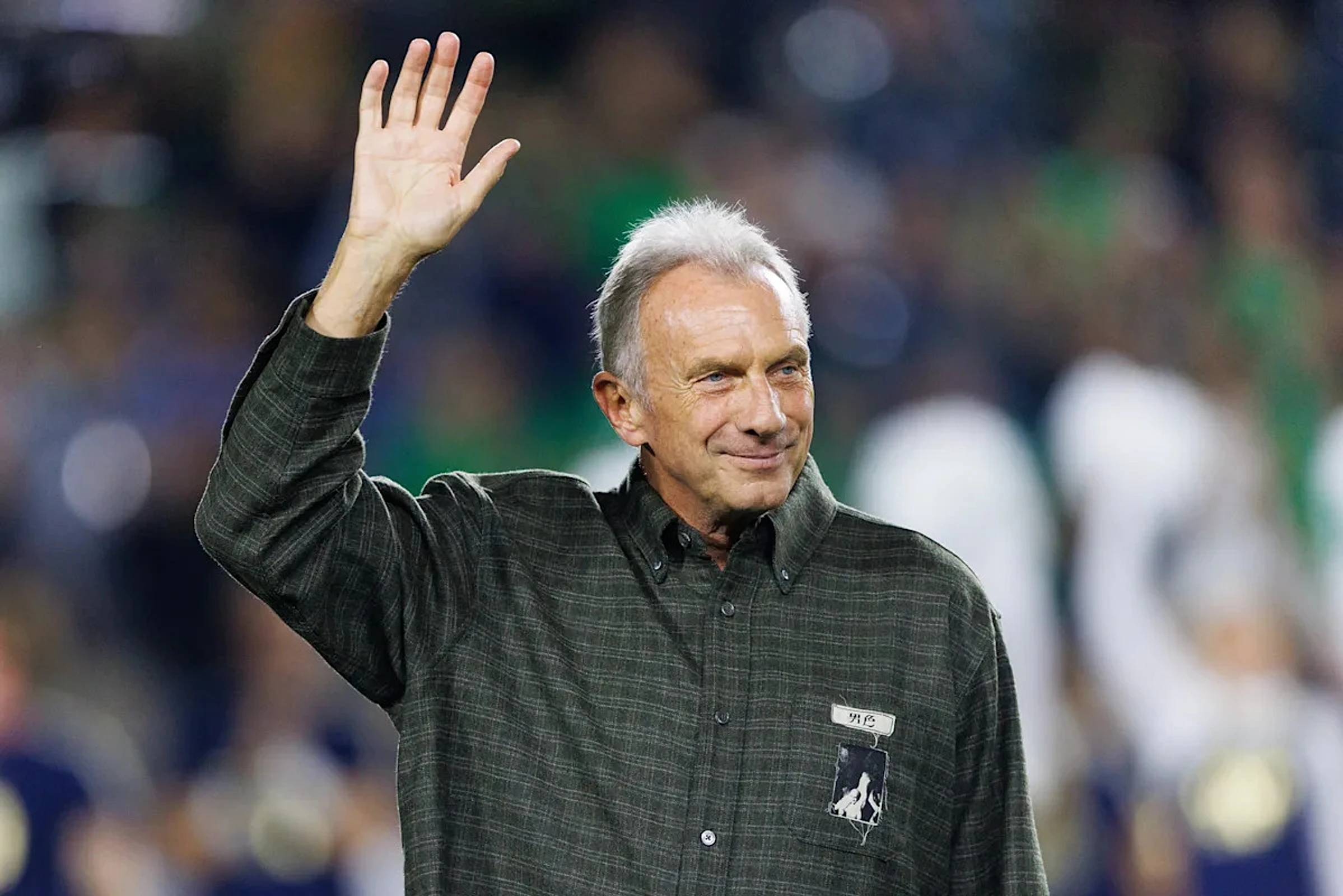
For years, a disconnect lingered between Notre Dame football and some of its most celebrated alumni. Many legends, including the iconic Joe Montana, felt overlooked by the previous coaching regime. But under the leadership of head coach Marcus Freeman, that era is decisively over. Freeman has made reconnecting with the program's storied past a cornerstone of his vision, and his efforts have successfully brought one of the greatest Fighting Irish of all time back into the fold.
Joe Montana's legacy at Notre Dame is the stuff of college football legend. From 1974 to 1978, he authored a career defined by clutch performances and miraculous comebacks, cementing himself as the face of the program. His heroics against North Carolina and Air Force in 1975 were just a preview. After battling back from a shoulder injury, he famously led a comeback against Purdue in 1977, a performance that earned him the starting job and propelled the Irish to a national championship that season. The following year, his legendary "Chicken Soup Game" in the Cotton Bowl victory over Houston sealed his immortal status in South Bend before he embarked on a Hall of Fame NFL career.
Despite being one of the most recognizable figures in football history, Montana's access to his alma mater had become limited. That changed when Marcus Freeman took the helm. In a recent conversation with Kay Adams, Freeman revealed his simple yet powerful approach: a genuine invitation rooted in respect. Freeman's philosophy, "with tradition comes responsibility," underscores his commitment to honoring the giants who built Notre Dame football. He didn't just want Montana to visit; he wanted him to feel like an essential part of the program's present and future.
The mutual respect between the legendary quarterback and the current coach is palpable. Freeman recognized that having Montana's presence back on campus is invaluable, providing a living bridge between the program's glorious history and its ambitious future. For fans who cherish tradition, seeing Joe Montana re-engaged with Notre Dame is a powerful symbol of unity and a promising sign for the culture Freeman is building. It's a homecoming that feels both long overdue and perfectly timed.