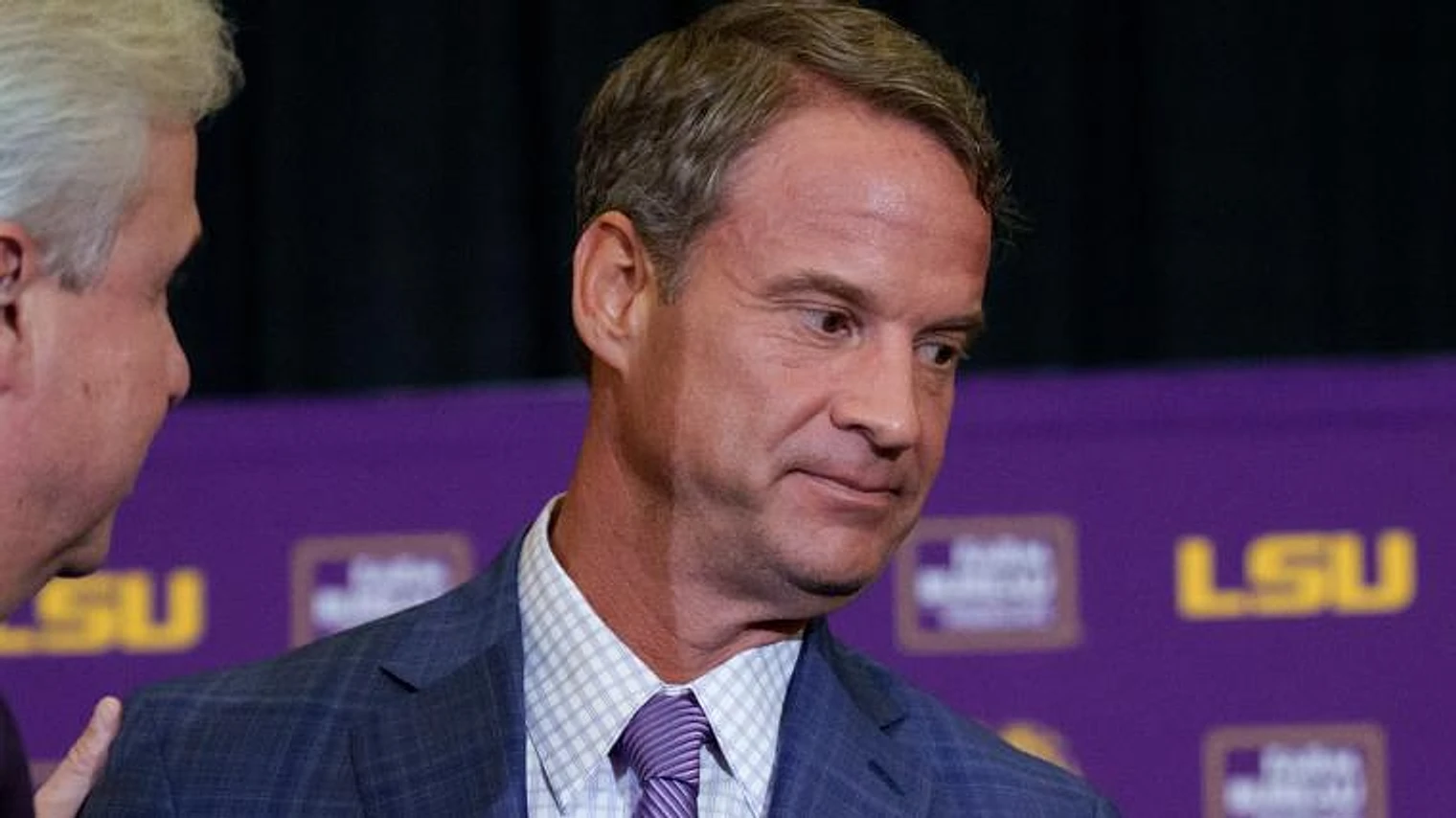
LSU Tigers head coach Lane Kiffin and Vanity Fair are facing heavy criticism over a recent feature story that many are calling a misleading hit piece on Ole Miss, the University of Mississippi, and the state of Mississippi as a whole. The controversy erupted after Vanity Fair's official X account shared a snippet from the article that painted Oxford, Mississippi, in a negative light compared to Baton Rouge, Louisiana.
In the excerpt, Kiffin is quoted saying that top recruits would tell him, "Hey, coach, we really like you. But my grandparents aren't letting me move to Oxford, Mississippi." He contrasted that with Baton Rouge, claiming that parents praised the campus diversity there, saying, "It feels like there's no segregation." The comments quickly sparked backlash from media members and fans alike.
Chase Parham of 247Sports was among the first to call out the article, pointing out that the lead story—a since-debunked claim about Kiffin being run off the road in Oxford after taking the LSU job—was publicly refuted by the Mississippi Highway Patrol. "Your lede includes a lie the Mississippi Highway Patrol publicly refuted and disingenuous imagery meant to increase emotion," Parham wrote. "May as well own you wrote a puff piece for access and click purposes."
On3's Brad Logan also pushed back, sharing a video of a recruit's mother explaining why Ole Miss felt like a safe home for her daughter. Logan noted that "the confederate flag was banned in 1983," countering the article's implication of lingering racial tension. Slate's Alex Kirschner went even further, calling it "the most cynical thing Lane has ever attempted."
Perhaps the most telling reaction came from SEC Network analyst Paul Finebaum, who admitted he's unsure whether Kiffin's persona is genuine or calculated. Even Vanity Fair's Chris Smith, the article's author, seemed conflicted, asking after four hours of conversation with Kiffin: "Is he endearingly sincere or so full of s--t that it's an art form?"
For fans and followers of college football, this saga adds another layer to Kiffin's complicated legacy—one that keeps the spotlight firmly on him, whether for good reasons or controversial ones.