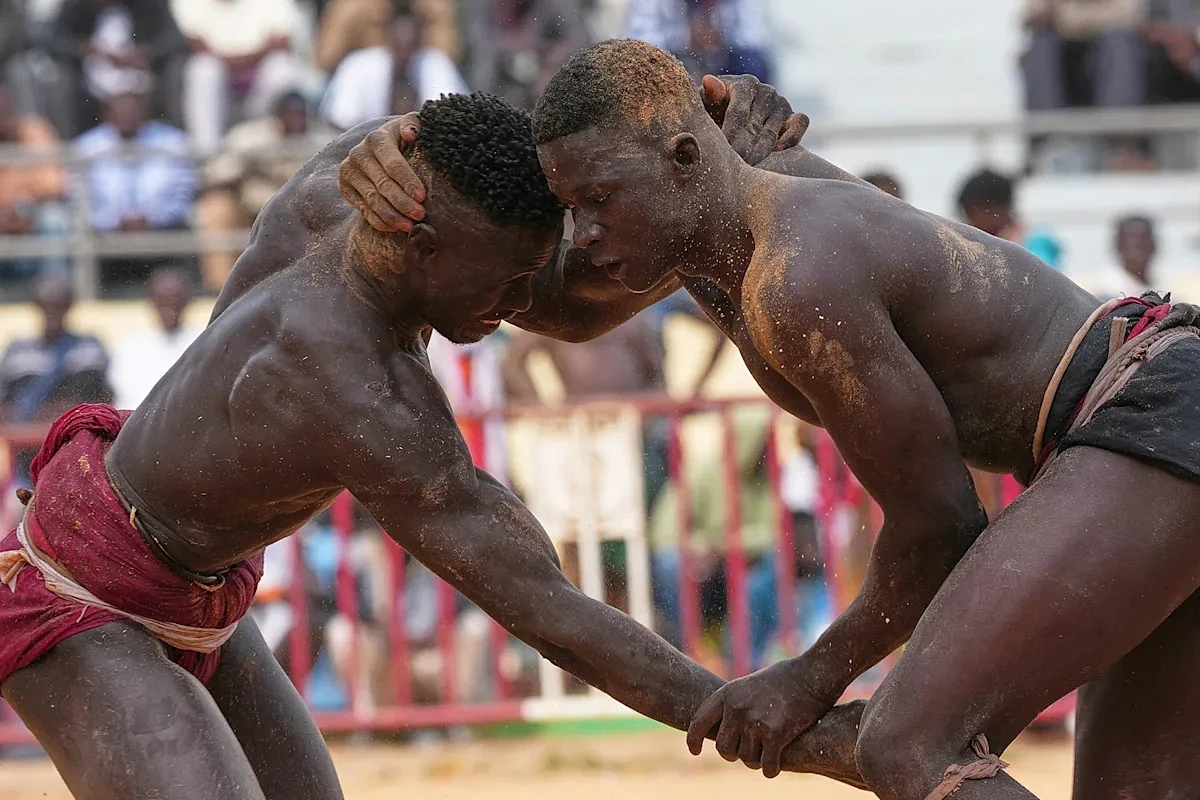
In Senegal, wrestling is more than just a sport—it's a cultural spectacle that blends raw athleticism with centuries-old traditions. Known locally as laamb in the Wolof language, this national pastime has deep roots in village life and continues to captivate audiences across the country and beyond.
At the heart of the action are Senegal's top wrestlers, who compete for the prestigious title "King of the Arenas." These athletes draw massive crowds to venues like the National Arena in Dakar, where fans pack the stands and millions more tune in from home. But what truly sets laamb apart is the pageantry that accompanies every match.
Before the first grapple, wrestlers engage in elaborate rituals that are as captivating as the fight itself. Adorned in vibrant costumes and protective charms believed to channel spiritual strength, competitors perform traditional dances and ceremonies that honor their heritage and psyche up the crowd. These moments of theatrical flair transform the arena into a stage where sport and culture collide.
The energy is electric, whether it's the roar of fans reacting to a takedown or the solemn silence as a wrestler prepares with a ritual blessing. Even in defeat, the emotion is palpable—as seen when supporters of star wrestler Modou Lo grappled with disappointment after a hard-fought loss.
For those new to laamb, it's a reminder that wrestling isn't just about strength and strategy—it's about identity, community, and the stories told through every dance and charm. From the opening ceremony to the final pin, every moment is steeped in meaning.
Whether you're a lifelong fan or just discovering this unique sport, the imagery from Senegal's wrestling arenas offers a window into a world where tradition and competition share the spotlight. And for sports enthusiasts looking to channel that same spirit of resilience and style, there's no better inspiration than the warriors of laamb.