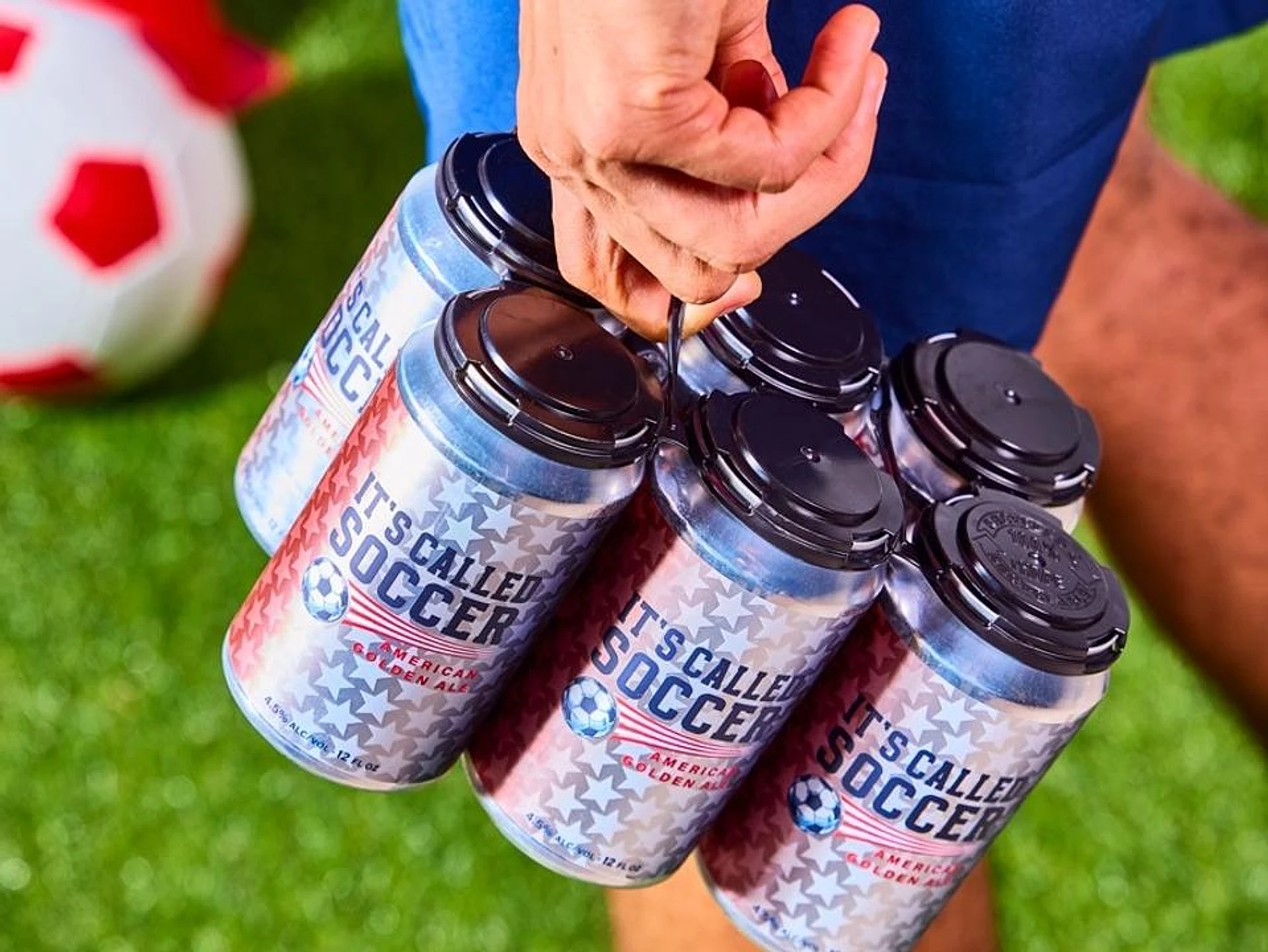
The age-old debate between "soccer" and "football" is getting a refreshing new twist—literally. As the world gears up for the 2026 World Cup on American soil, a Rhode Island craft brewery has decided to put the linguistic rivalry front and center on a beer can. Enter "It's Called Soccer," a clean, mildly citrusy American Golden Ale packaged in a red, white, and blue can that carries more cultural weight than your average six-pack.
For decades, the question of what to call the beautiful game has been a hallmark of American fandom, sparking friendly (and sometimes not-so-friendly) banter in Reddit threads, comment sections, and stadiums during every major tournament. To most, it's a running joke with just enough bite to feel meaningful. But the story behind the word "soccer" is far stranger and richer than the punchline suggests.
The word "soccer" actually traces its roots back to 1880s Oxford University, according to Dr. Stefan Szymanski, a sport management professor at the University of Michigan who has extensively researched the term's history. It emerged from a quirky British habit of shortening long institutional names—the same trend that turned "rugby football" into "rugger." At Oxford and Cambridge, adding "-er" to clipped words was all the rage, and students sliced "association football" (the game codified by the Football Association in 1863) down to its middle syllables, landing on "soccer."
For most of the 20th century, "soccer" lived comfortably in British English. Szymanski tracked the usage of both words across British and American publications and found that British newspapers regularly used "soccer" as an ordinary alternative. In fact, between the 1960s and 1980s, the two terms were nearly interchangeable in Britain. But as American fandom grew and "soccer" became more closely tied to U.S. English, British usage began to decline through the 1980s and 1990s.
Now, as the 2026 World Cup approaches, this linguistic history is getting a celebratory toast—one that reminds us that whether you call it soccer or football, the love for the game is universal. And for fans looking to show their allegiance, there's no better way to gear up than with a cold can of history in hand.