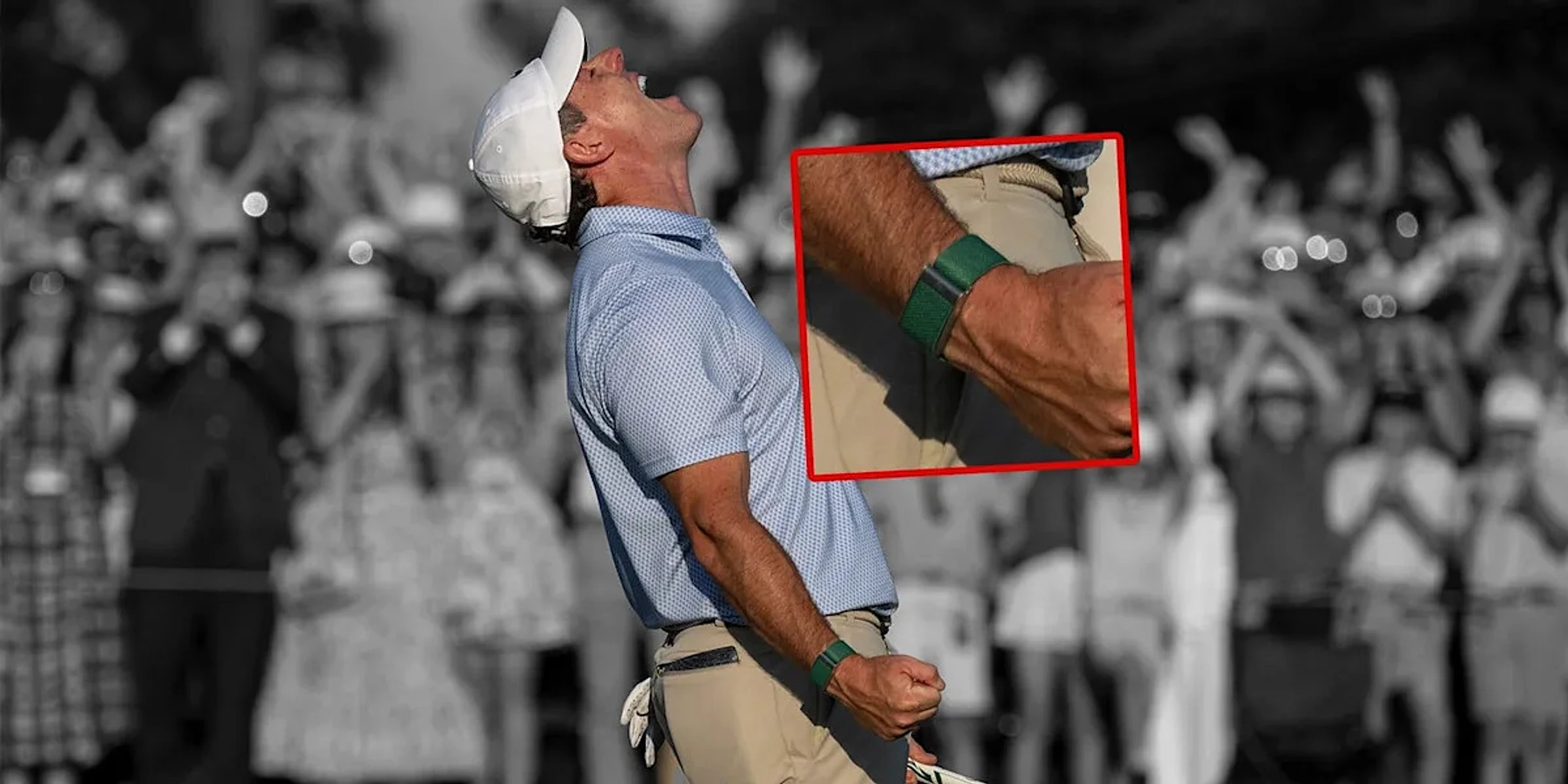
Rory McIlroy just did something only a handful of golfers have ever accomplished: he won back-to-back Masters Tournaments, securing his second Green Jacket in 2026. While his prodigious drives and clutch putting were on full display, another piece of equipment played a silent but crucial role in his historic performance.
Throughout the tournament, McIlroy was wearing a Whoop fitness tracker, providing a fascinating, data-driven look inside the mind and body of a champion under pressure. The metrics reveal a story of elite recovery and incredible composure.
The most telling data came on the dramatic final hole. After an errant drive threatened his lead, McIlroy's heart rate spiked to 135 BPM. Yet, as he executed a miraculous recovery shot from the trees, it dropped to 121 BPM—demonstrating a champion's ability to find calm in chaos. It fluctuated through the bunker and onto the green, but remarkably, his heart rate was at its lowest (105 BPM) during the tournament-winning putt. True composure is measured when everything is on the line.
Beyond the heart-pounding moments, the data highlights a foundational pillar of athletic performance often overlooked: sleep. Ahead of his Sunday victory, McIlroy logged a full 9 hours of rest, earning a 92% sleep performance score from his Whoop. Throughout the major weekend, he averaged an impressive 8.5 hours per night. This elite sleep hygiene is no coincidence; it's a non-negotiable part of the recovery that fuels peak performance, sharp focus, and physical resilience.
McIlroy's case is a powerful reminder for athletes at every level. The pursuit of greatness isn't just about the hours of practice; it's equally about the quality of rest. Optimizing recovery through sleep and understanding your body's metrics can be the edge that separates a good performance from a historic one.