

First-round No. 1 vs. No. 8 seed matchups are supposed to be perfunctory. The No. 8 seed shows some grit, but the talent disparity is too much, and the top seed shows why they earned that spot and cruises into the next round. See Oklahoma City vs. Phoenix as example 1A.
However, the No. 1 seed Detroit Pistons find themselves down 3-1 and on the verge of elimination at the hands of the No. 8 seed Orlando Magic — and the Magic deserve this lead. They have been the better team, showing (slightly) better offense, a much better defense, and the Magic have been better coached despite the Pistons’ J.B. Bickerstaff being voted Coach of the Year by his peers and Jamahl Mosley allegedly being on the verge of being fired.
How did Detroit get here? What is working for Orlando? It's a combination of things — but things that were projected as potential Detroit weaknesses that the organization and lead executive Trajon Langdon consciously chose not to address at the trade deadline. Orlando has taken away Detroit's Plan A, and it really has no Plan B.
During the regular season, Detroit bullied teams to a top-10 offense in the league. The Pistons led the league in points in the paint, averaging 57.9 points per game. Cade Cunningham would drive into the lane and finish, and Jalen Duren finished second in Most Improved Player voting because he was getting fed the rock and scoring near the rim. Combine that with an elite defense and it was enough to win 60 games.
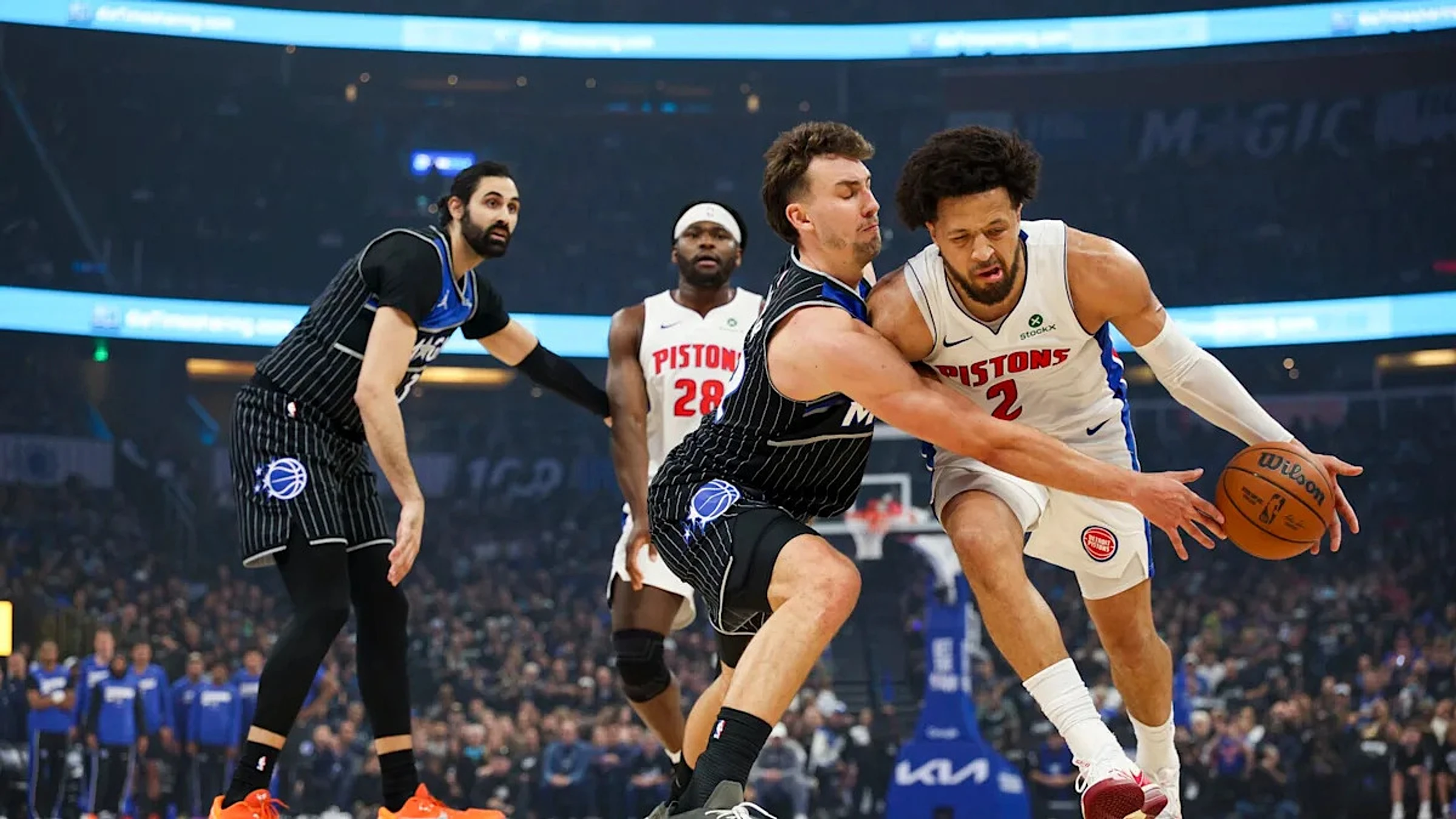
Detroit had to play this way, it didn't have the shooting, and only 28% of its points came on 3-pointers, the second lowest in the league. Detroit was just more physical and more committed to scoring in the paint than their opponents.Finally fully healthy, Orlando has the size and physicality to match Detroit, and because the Magic don't fear the Pistons' outside shooters, they can and have packed the paint. Wendell Carter Jr. has been brilliant this series, but it's also a schematic thing from Mosley: the Magic are packing the paint, collapsing to take away lanes on Cunningham's drives, and throwing extra bodies at anyone and everyone inside. Part of the result of that is Cunningham is turning the ball over more; he has 24 turnovers through the last three games, an NBA playoff record for a three-game stretch (it had been 22, held by James Harden and Larry Bird).
Through four games, Detroit's defense has been good enough, holding Orlando to just a 102 offensive rating.
However, the Pistons are averaging less than a point per possession on offense this series. They are scoring 43.5 points per game in the paint, down more than 14 from their regular-season average. There is a counter to that, which brings us to the other key issue.
In theory, Cunningham could drive into the teeth of the Magic defense, make it collapse, then kick out to open shooters to knock down the 3 — except the Pistons lack shooting. As a team, Detroit is shooting 27.5% from 3-point range in the series. The only Pistons player shooting a decent percentage from 3 is Duncan Robinson at 37% on nearly seven attempts per game, but the problem is that he is a defensive liability who the Magic attack, so it's tough to keep him on the court.
The Pistons also don't have another shot creator to turn to to help out Cunningham (Daniss Jenkins is shooting 26.1% this series; this is a big stage for him).
Jalen Duren has struggled through four games, averaging just 9.8 points a game on 46.9% shooting (down from 19.5 on 65% in the regular season). Credit Carter for some of that, but Duren has not shown the ability to score in ways other than getting fed and being a bully inside. Bickerstaff has stuck with Durent despite Isaiah Stewart being better this series — as good a defender with 3-point range who has to be respected by defenders, which could open up the paint (or lead to open looks). Bicketstaff has to be willing to make a bold playoff change, and this would be one.
However, Bickerstaff also is playing the cards dealt him. The concerns about the lack of shooting and shot creation were known, but Langdon and company said they wanted to see what this group could do in the postseason, then adjust. They were intentionally quiet at the trade deadline, adding only Kevin Huerter (in the Jaden Ivey trade), and he has played 27 minutes all series.
Now Langdon has his answer, and it's not pretty.
Detroit is still alive and at home tonight, with a chance to extend its season and force a Game 6 back in Orlando. However, those Pistons also have to win three games in a row and have not looked like a team with answers to the questions the Magic are posing.
It's going to have to be more than just out-muscling a team in the paint.