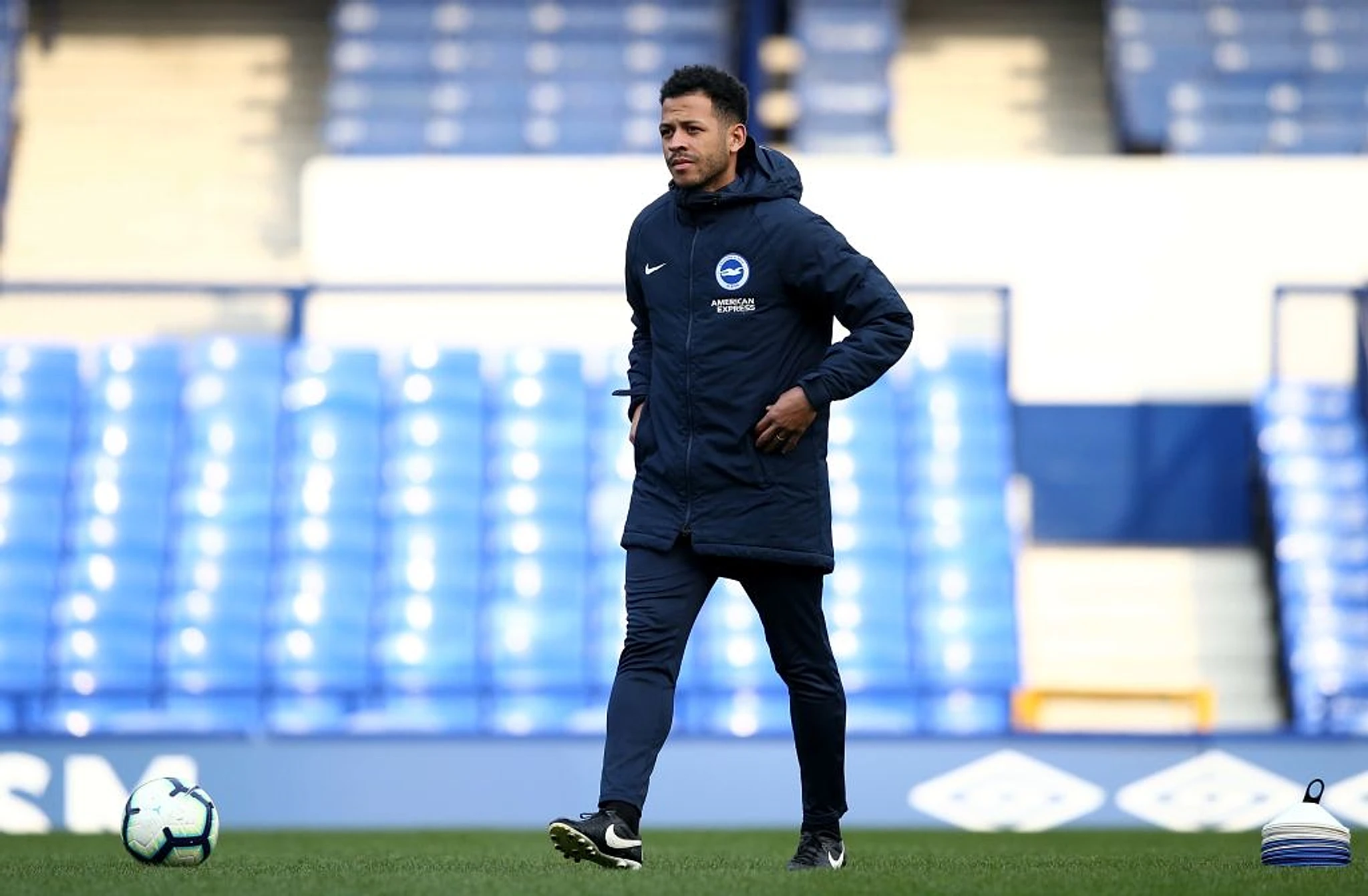

Liam Rosenior faces his former club Brighton on Tuesday in desperate need of a win following his Chelsea side’s dismal run of form of late.
Chelsea have lost six of the last seven games in all competitions and have lost the last four in the Premier League without scoring a goal.
Tuesday’s clash carries more meaning than just three points for Rosenior, however. The Chelsea head coach ended his career at Brighton, spending three years at the south coast club, who also gave him a start in his coaching journey.
The Blues boss is still early into his managerial career, with only spells in charge of Derby County, Hull City and Strasbourg on his CV before taking over at Chelsea. While he made an encouraging start to life in west London, their recent run of form has piled pressure on the 41-year-old to turn things around, something he has acknowledged himself.
“We have to win, that’s what this club demands rightfully so that’s what the fans expect,” Rosenior said ahead of the game against Brighton. “For me it’s about winning games in football, that’s what football is about.
“I can’t speak about the long term if you’re not doing a job in the short term and being really respectfully honest here, we haven’t done well enough in recent games. That needs to change and that’s on my shoulders as the head coach of this team.”
Speak to those who have been part of Rosenior’s career as a player and coach, however, and it is clear to see why he was given the opportunity at Chelsea.
John Morling was Brighton’s academy director when Rosenior was still playing for the Seagulls, and helped give the former full-back his start in coaching as part of the club’s scheme to have senior players coach the academy prospects, before Rosenior took up the role of assistant coach with Brighton’s Under-23 team.
“We had a player to coach thing, where as ex-players would obviously start on their coaching career,” Morling explains.
“As players are transitioning from playing to coaching, instead of just stopping totally, they can still add value as a player within the under-23 groups, especially in training, driving standards type stuff, whilst then obviously spending time with the coaches planning what the sessions are going to be like, who’s going to be taking them, and then they start to take their coaching badges and start their coaching work, or start their coaching journey.
“He was a senior player coming in to be an assistant, for starters, so he was very respectful of that.
“And he added value to the Under-23s with both the coaching staff and the players. He had good knowledge of the players.
“When you’re working in development, there’s lots of unseen work, like extra stuff with players, obviously working with video staff, watching other sessions, researching. You’ve got to become a student of the game in order to do well in your coaching career, which he obviously was.
“And he’s very articulate. He’s done very well in the media before he started coaching. He understands the game. He’s very tactical. He’s obviously doing his research, doing his own work, and he’s obviously done a lot of hours preparation before.
“He e has worked hard and there’s no doubt about that and he’s obviously a success, but he’s a very likeable person as well. I think if you speak to people at the club, whether you’re the academy secretary, whether you’re the under-23 coach, first-team coach, someone that works in the kitchen, people know that he’s quite infectious, which is a big compliment to him.”
Chelsea and Brighton might not appear obvious rivals but it has become something of a derby in recent years given the relationship between the two clubs.
Robert Sanchez, Moises Caicedo, Marc Cucurella and Joao Pedro have all made the move from Brighton to Chelsea for hundreds of millions of pounds combined.
Rosenior is just one of a number of Chelsea staff members to have benefited from Brighton’s model too, meanwhile. Former Chelsea boss Graham Potter joined the Blues directly from Brighton, while sporting director Paul Winstanley also made the switch from the AMEX to Stamford Bridge along with director of global recruitment Sam Jewell, formerly Brighton’s head of recruitment.
It is no surprise to Morling that Brighton’s success as a club has tried to be emulated by others.
“I think you have to have a clear vision of where you’re going, what you want to be doing as a club,” he reflected on Brighton’s growth the lower echelons of the football league to becoming an established Premier League side.