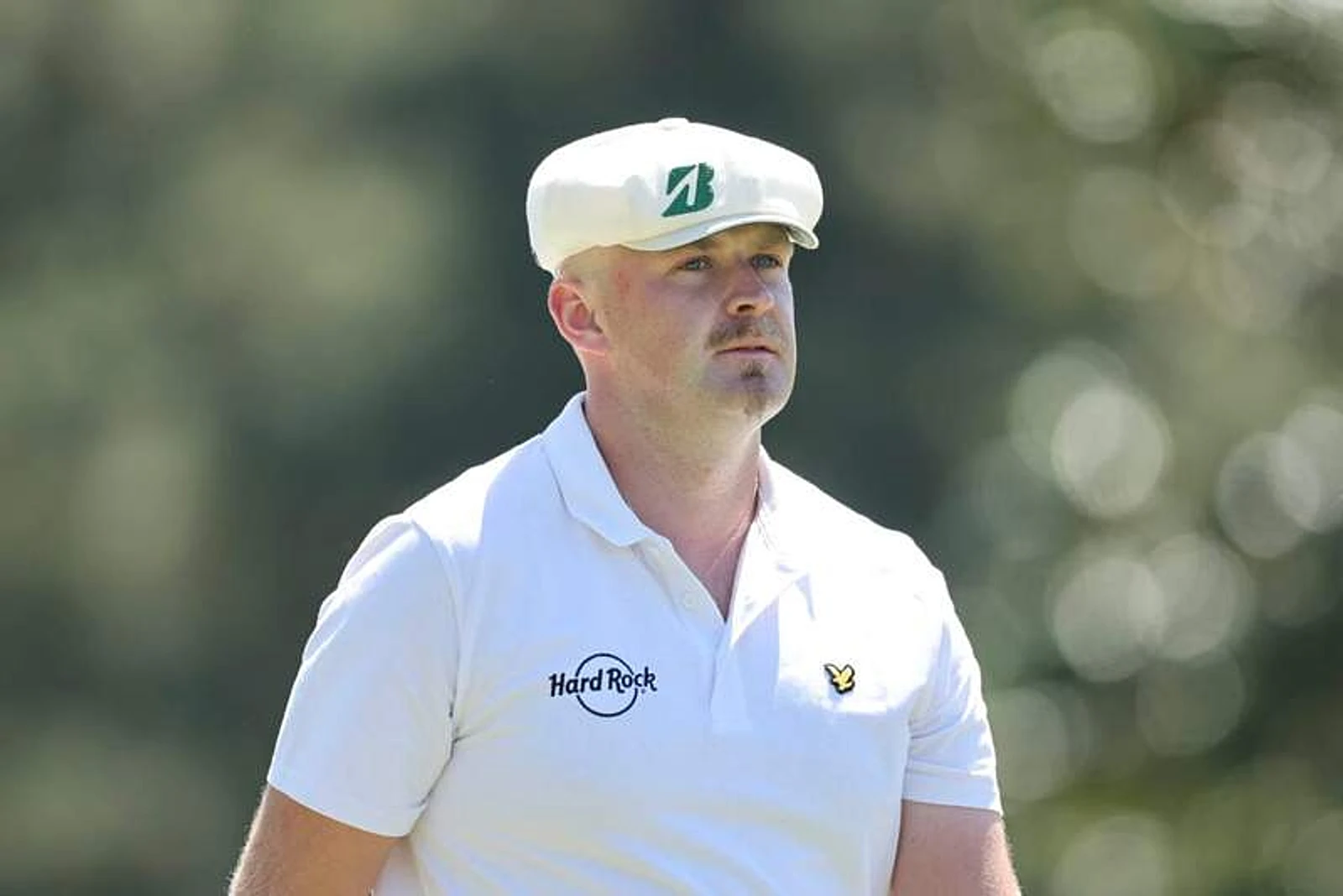
Augusta National showed its teeth on day one of The Masters, with firm, sun-baked conditions testing the world's best. Bounds were bounding, greens were rejecting approaches, and the stage was set for a brutal test of precision and patience.
For Englishman Harry Hall, the test proved particularly difficult. An opening 77 left him scrambling to make the cut, and his immediate solution was radical: a complete shake-up of his equipment. After just 18 holes, Hall announced he would be adding a second driver and switching to a new putter for his second round.
"I'm going to change my driver, I'm going to put two drivers in play tomorrow, different ones," Hall stated. "I'm going to put a new putter in play, and go and figure it out on the range."
His reasoning went beyond the scorecard. While his driving was statistically solid, Hall pinpointed a critical issue: a lack of stopping power with his irons on the rock-hard greens. "I don't think I spin my irons enough... I still can't stop it on a dime like I need to," he explained, suggesting he might even add loft to his irons to compete in major championship conditions.
The real story of his round, however, was his short game. Hall lost a staggering 3.23 strokes around the greens, a catastrophic number at Augusta. This disaster area explains his frustration with his iron spin; when approach shots don't hold, players are left with impossible chips and pitches, turning potential pars into big numbers.
Hall's logic for the driver change becomes clearer in this context. He felt he wasn't hitting it far enough off the tee, leaving himself with longer, less precise clubs into the greens. Longer approaches spin less and hold less, creating a vicious cycle of difficult recovery shots. In his mind, finding more distance could be the key to breaking that cycle and giving his short game a fighting chance.
It's a dramatic mid-tournament adjustment that highlights the fine margins at the highest level. When a course like Augusta exposes a weakness, even an elite player like Hall is forced into quick, decisive—and sometimes unconventional—action to keep his weekend hopes alive.