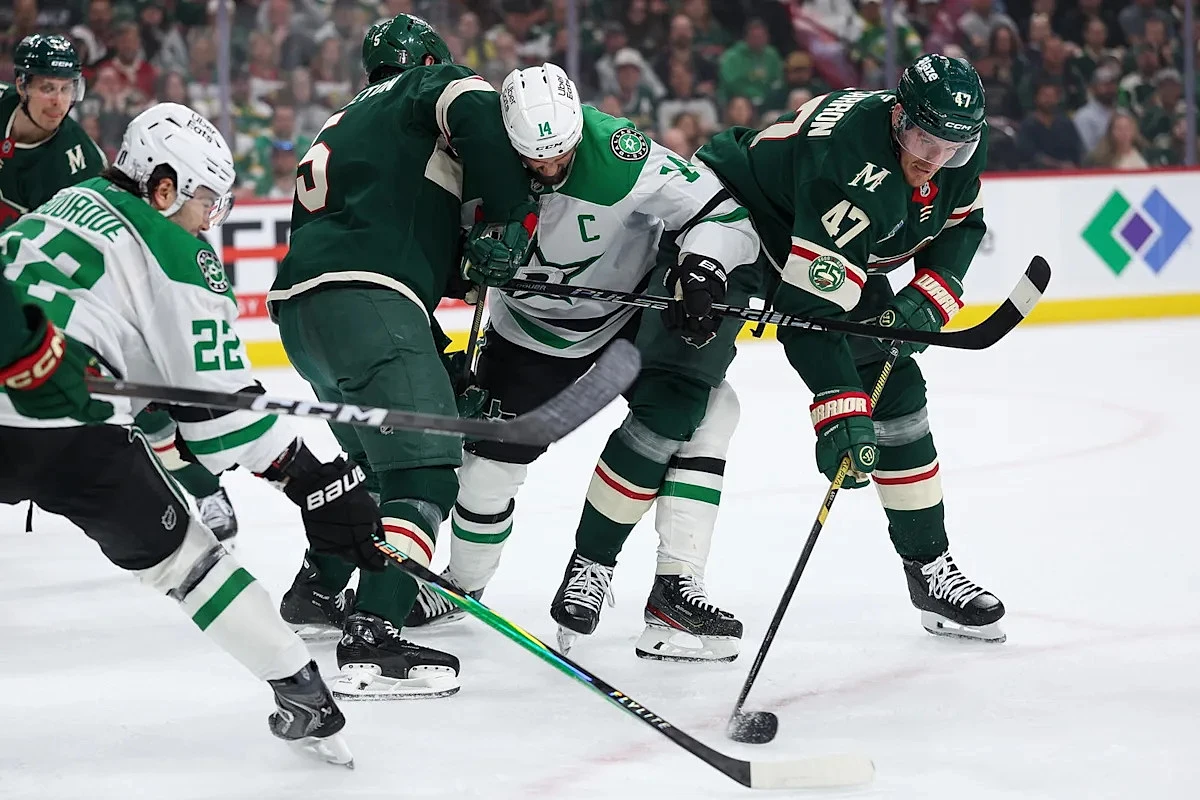


ST. PAUL, Minn. — For 92 minutes on Saturday night, the Minnesota Wild (1-2) kept circling.
In a Game 3 that stretched through regulation and two overtimes, the Stars didn’t just win, they erased the most dangerous ice on the rink.
Not a single inner-slot shot allowed. Not one look from the area teams build entire offensive systems around.
That’s not a fluke. That’s structure. And it’s becoming the defining battle of this series against the Wild.
The Dallas Stars played 92 minutes and 10 seconds of playoff hockey last night without allowing a shot on net from the most dangerous area of the ice... pic.twitter.com/yr5BGxcrbv
“They do a great job of getting inside and protecting their areas. And so we've had a challenge ourselves to get in there," Stars head coach Glen Gulutzan said. "With us, we've been good at it all year. You can just see our guys commitment to defense. We've been really good at inner slot stuff all year, and our guys have just taken it to a different level, because we know how dangerous they are.”
That commitment showed up in layers. Sticks in lanes. Bodies boxing out. Forwards collapsing low. Defensemen sealing off the middle before plays could even develop.
It was impressive how Dallas defended. But was this about how they defended or was it about the Wild being too perimeter?
“I can't speak on them [Minnesota] but we know how we want to play within our system,” Stars defenseman Tyler Myers said. “We believe we have a really good system to defend, and that's our main focus. Just be as consistent with that as possible and keep progressing as we go.”
For Minnesota, the frustration wasn’t just about what Dallas did, it was also about what the Wild didn’t.
They had zone time. They had possession. But they rarely forced Dallas out of its structure. And that’s where the problem lives.
“Well, I think it's a little bit of both,” Wild forward Nick Foligno said. “I think we just, I don't think we're quick to trigger. I don't think we are understanding of the some of the key spots that we can clue in on, but they're tightening up, right? Like this is what happens as you get on the series. And I think there are a lot of things we're doing to negate them as well. So it's just understanding the chess match that kind of goes between the two teams and knowing that they're going to do things to negate our offense and vice versa. We're going to have to fight a little harder to get inside. And that's part of playoff hockey. It hurts to win. It hurts to get on the inside, but it's the price you pay to get the success that you need. It's an area of focus for both teams. It's not just us. They're doing the same thing. It definitely needs to be an area that we address and get to. And hopefully tomorrow we can do that.”
That “chess match” Foligno talks about is playing out in real time.
Dallas is shrinking the ice. Minnesota is trying to stretch it just enough to create a seam and so far, they haven’t found it.
Because getting to the inside isn’t just about effort. It’s about timing. Right?
“Yeah, both,” Foligno said. “First of all, you can't let [Jake] Oettinger, he's too good of a goalie, to have just free shots and lanes to the net. So it's getting bodies there, but also understanding when to attack the middle. There are certain triggers inside each team's Dzone that you have opportunities to step to the middle, and it's making sure that you do that more times than they can, right? And that's the reality. Just the attrition of doing that and over time, hopefully breaking them down on one of those.”
Until then, it can look like offense without threat. Zone time without purpose. Possession without pressure.
“Well, it can fool you, right?” Foligno said. “Like, even just zone time. If you're on the perimeter, it's like, all right, you're not really attacking. There are no shots. Yeah, you're skating around our end, but you're just tiring yourself out, and we're just compact. So it is 100% that balance of perimeter to set up a play and then attacking and knowing when that trigger is. We talked about that a little bit in here, and hopefully we can put it in the game.”
That’s the adjustment now. Because in the playoffs, the middle of the ice isn’t given. It’s taken and Minnesota is figuring that out.
Through three games, Dallas has made it clear. If Minnesota wants it, they’re going to have to pay for every inch.