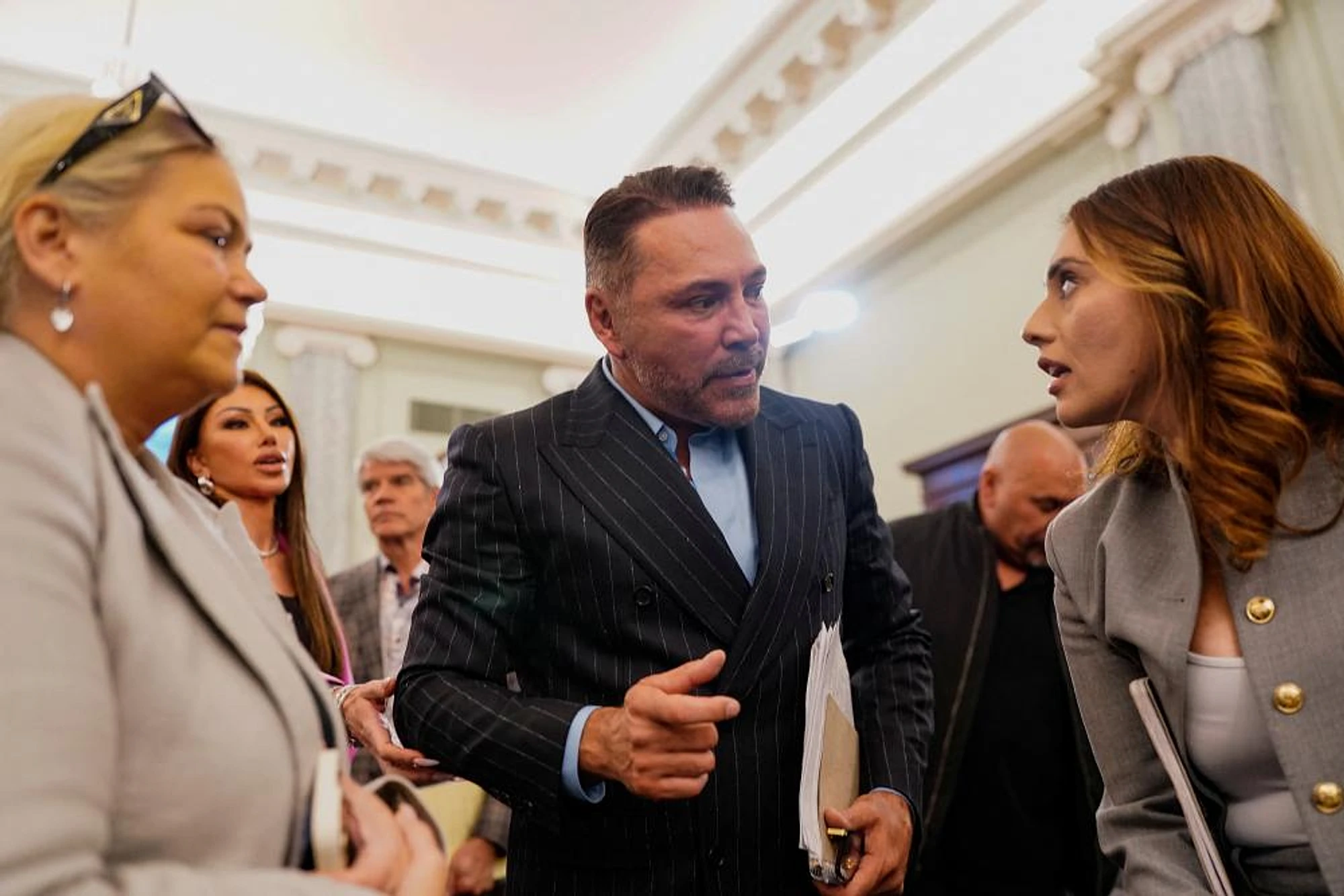

A US Senate hearing on the future of boxing laid bare a sharp divide over the sport’s direction on Wednesday, as longtime boxing figures including Oscar De La Hoya warned the changes could erode fighters’ rights while executives aligned with an Ultimate Fighting Championship-backed push for a centralized model argued they would bring structure and investment.
“When one system controls access, choice becomes theoretical, not real,” professional boxer Nico Ali Walsh told lawmakers, framing the stakes of a debate that could dramatically reshape boxing’s economic model. “When that happens, you fight who you’re told to fight or you don’t fight at all.”
Related: Zuffa Boxing says it will save the sport – but the fine print shows that fighters may pay the price
At issue is a House-passed overhaul of the Muhammad Ali Boxing Reform Act that would allow the creation of centralized “Unified Boxing Organizations” (UBOs) operating alongside the current fragmented system. Supporters say the approach would simplify matchmaking and attract investment. Critics counter it would concentrate power and weaken fighter protections enshrined in federal law.
The hearing, convened by Texas senator Ted Cruz, who chairs the commerce, science and transportation committee, comes as the bill moves to the Senate, where lawmakers are weighing whether the current framework has kept pace with an evolving combat sports landscape.
“This is a fundamental shift in power that … would put corporate profits first, fighters second,” said De La Hoya, the former world champion turned promoter and a vocal critic of the proposal.
Decorum prevailed throughout Wednesday’s hearing, but the clash of perspectives was sharply drawn.
“The current state of the sport [is] difficult to witness,” said Nick Khan, a board member of TKO Group Holdings, the parent company of the UFC and World Wrestling Entertainment (WWE), which is backing the new Zuffa Boxing venture expected to operate under the proposed framework.
Khan pointed to a system in which multiple fighters can claim to be champion in the same division.
“There is no middleweight champion … there are at least four different people who say they are,” he said. “It would be like if Major League Baseball went to the Dodgers after they beat the Blue Jays and said, ‘No, we’re going to take this title away from you because you didn’t pay us money.’”
Walsh, the grandson of Muhammad Ali and a fighter with 15 professional bouts, rejected the premise that boxing is fundamentally flawed.
“Boxing is not broken,” he said. “If it were, UFC champions … would not be actively targeting boxing fights because of the fair pay.”
Underpinning the debate is a deeper structural question: whether boxing should remain a decentralized marketplace or move toward a single, top-down system backed by major investors.
The bill would sit alongside the existing law rather than replace it, allowing fighters to choose between competing under the traditional framework or within a unified system. But critics argue that distinction may prove more theoretical than real if the new model consolidates power.
Under the proposal, UBOs could act as both promoter and governing body, breaking from the Ali Act’s fundamental firewall between those roles and aligning more closely with the structure used in mixed martial arts. In practice, that would give a single entity significant influence over rankings, title shots and matchmaking, shaping both who fights and the terms of those fights.
That shift is widely seen as paving the way for ventures such as Zuffa Boxing, a joint enterprise backed by TKO Group Holdings and Saudi Arabia’s Public Investment Fund. The effort reflects a broader push by Saudi-backed entities to expand their influence over boxing, following heavy investment across sports that has often prioritized scale and visibility over short-term profitability.
Related: How the Ali Act overhaul is clearing the path for a Saudi-backed takeover of boxing
The effort is being led in part by Dana White, the UFC president and longtime Donald Trump ally who has been tasked with building the new promotion and has promoted a league-style model in which “the best fight the best”.
TKO has sought to expand into boxing through Zuffa Boxing and a partnership with Turki al-Sheikh, the figure behind Saudi Arabia’s General Entertainment Authority and a close confidant of Crown Prince Mohammed bin Salman.
As previously reported by the Guardian, proposed changes to the law would allow exclusive, long-term contracts and reduce financial disclosure requirements, potentially limiting fighters’ ability to negotiate freely and understand the revenues generated by their bouts. The proposal also includes standards for fighter pay, medical coverage and drug testing, measures supporters say would bring greater consistency and safety to the sport.