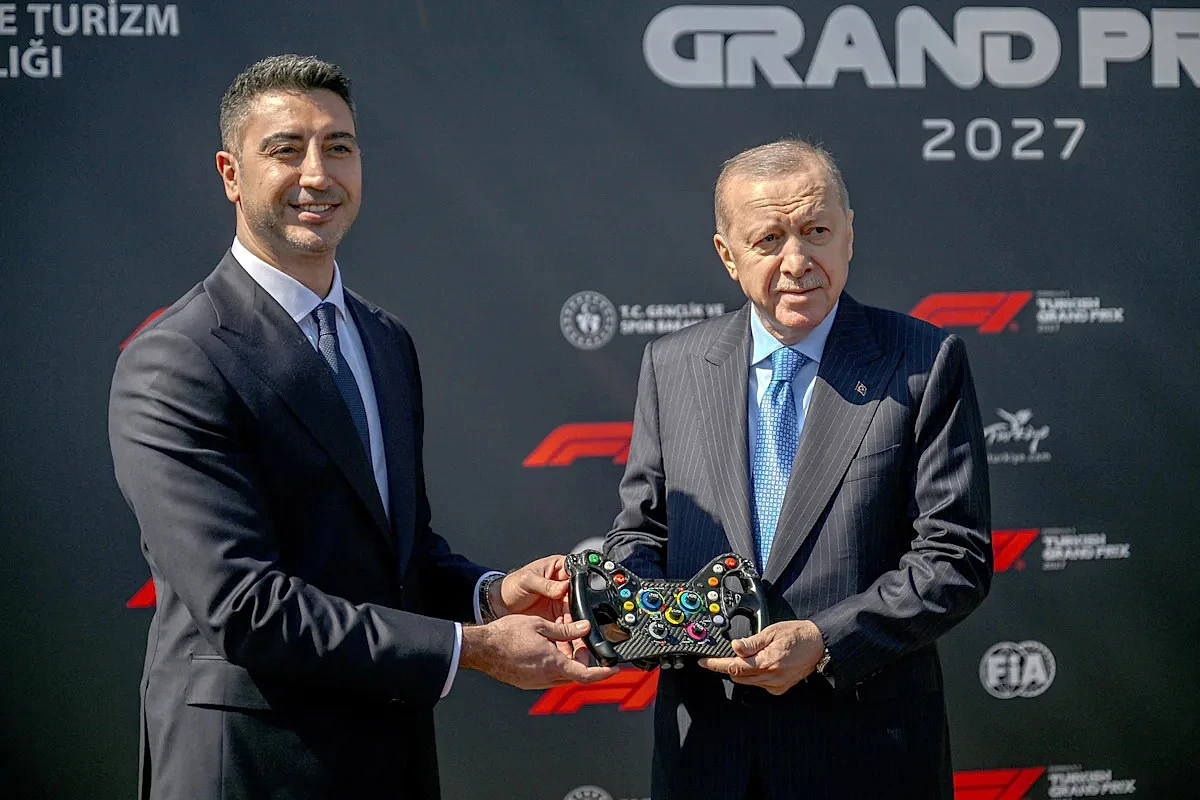
When you first see a Formula 1 steering wheel, you might think you've stumbled into a cockpit or a video game arcade. It's not really a wheel at all—more like a high-tech rectangle packed with buttons, dials, and screens that would make a fighter pilot jealous. And this Sunday at the Miami Grand Prix, drivers will be gripping one of the most advanced pieces of engineering in all of motorsports.
Getting a close-up look at a 2026 F1 steering wheel? That's like asking Coca-Cola for their secret recipe. Teams guard these designs fiercely, as they're packed with proprietary technology and personalized driver settings. But here's what we do know: this isn't just a steering wheel—it's a $50,000 command center on a car that can cost upwards of $10 million.
So what makes it so special? Let's start with the basics. "The first thing you want to make sure is always the grip," says Zhou Guanyu, Cadillac's backup driver and the only Chinese driver on the F1 circuit. "You want to make sure the grip is comfortable because there's a lot of different widths you can have. You want to make sure also the grip material is grippy enough that your hands don't slip."
But grip is just the beginning. Behind those hands, drivers are managing over two dozen controls while staring at a video display that feeds them crucial data in real time. The shift paddles get the most action—and for good reason. "We've got eight gears. We're going up and down like a hundred times during a lap," Guanyu explains. "And then we're doing 55 laps." That's over 5,000 gear changes in a single race.
The real magic, though, happens beneath the surface. This wheel doesn't just steer—it monitors and adjusts everything from brake pressure on each individual tire to the differential, which controls how torque is distributed. "As the tires change characteristics, as the fuel comes down, the car balance changes," Guanyu notes. Drivers use the wheel to tune the handling of the car on the fly, locking or unlocking the differential to match their driving style and track conditions.
For fans watching the Miami Grand Prix, the steering wheel is a window into the incredible technology that makes F1 the pinnacle of motorsport. And for drivers, it's the ultimate tool—a fusion of human skill and machine precision that turns every lap into a masterpiece of engineering.