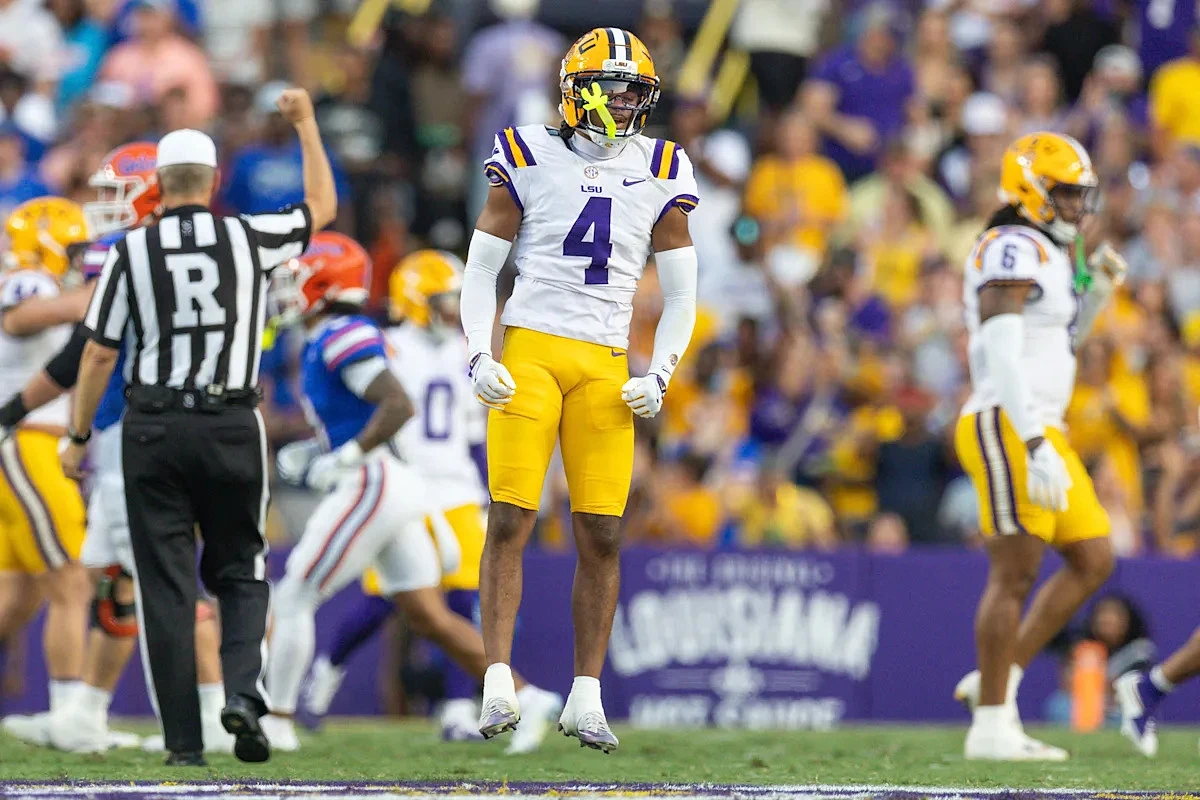
The Los Angeles Rams hold the 13th overall pick in the NFL Draft, presenting a golden opportunity to fortify their roster. While the board will offer talent across positions, one critical need stands out: cornerback depth. Despite savvy offseason moves, the secondary remains an area where the Rams could use another high-impact player to solidify their championship aspirations.
This offseason, the Rams made significant strides by acquiring standout cornerback Trent McDuffie and adding his former Super Bowl teammate, Jaylen Watson. These are major upgrades, signaling a clear intent to bolster the pass defense. However, in the modern NFL, where teams frequently deploy three or more cornerbacks, having just two proven commodities might not be enough to navigate a grueling 17-game season.
Beyond McDuffie and Watson, the depth chart raises questions. Emmanuel Forbes Jr. is a promising talent, but the cupboard is relatively bare after that. The Rams learned the hard way last season about the perils of thin depth, having to scramble to the veteran free-agent market to patch up injuries. In a league where attrition is guaranteed, relying on practice squad projects is a risky proposition for a team with Super Bowl ambitions.
Consider the defensive scheme: the Rams often utilize a three-cornerback rotation. Even if Forbes steps up brilliantly, who reliably fills that crucial third spot? Without another quality addition, the existing players risk being overworked and exposed. Furthermore, injuries to key safeties like Kam Curl or Quentin Lake could force a reshuffle, potentially pulling McDuffie into the slot and reopening the depth problem at outside corner.
This context makes a first-round cornerback a compelling and logical choice for Los Angeles. Whether it's a prospect like Mansoor Delane or Colton Hood, adding a top-tier rookie would provide immediate competition, invaluable depth, and long-term security. For a team built to win now, securing the defensive backfield with premium draft capital isn't just a luxury—it's a strategic necessity to stay ahead in the ultra-competitive NFC West.