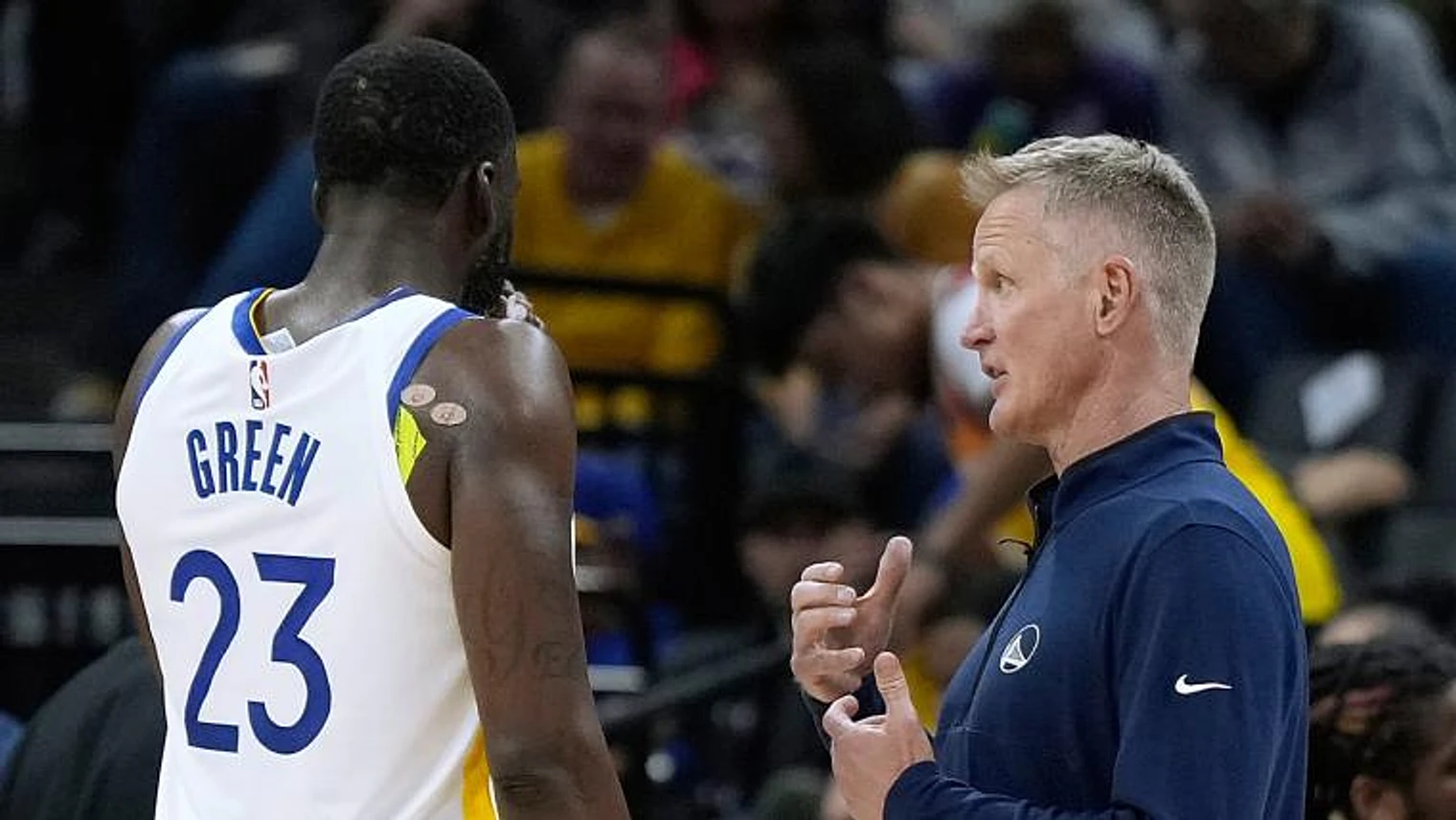
Golden State Warriors star Draymond Green has long been one of Steve Kerr's most vocal supporters, even recently saying he hopes to never play for another coach. But that doesn't mean their relationship has been without its challenges.
On a recent episode of his podcast, Green opened up about how Kerr may have actually held him back as a player—while also acknowledging the incredible success they've achieved together. It's a candid look at the complex dynamic between one of the NBA's most unique talents and the coach who helped shape a dynasty.
"As much as he's done for me in basketball, a part of me thinks he's hindered me in my career and what I could have become," Green said. "But what he's also helped me become. You got to take the good with the bad, man."
Green's resume speaks for itself: four championship rings, a Defensive Player of the Year award, and multiple All-Star selections. But the four-time champion revealed a surprising detail about his offensive role that has lingered for nearly a decade.
"You know, when Kevin Durant came from 2016 on, I have not had a play in our playbook. Not a single play that we run for me in our playbook since 2016," Green explained. "You think that would hinder someone as an offensive player? Of course."
It's a striking admission from a player known for his defensive brilliance and playmaking, but whose scoring has often taken a backseat to the Warriors' star-studded lineup. Green reflected on the bittersweet reality of his career arc, wondering what might have been if he had been allowed to develop his offensive game differently.
"At times, I go home and I think about my career and I'm happy as hell of what I've been able to build. But at times, sometimes I sit there and think, 'What could I really have been if I stayed true to my game?'"
Yet Green remains grateful for the journey. "I don't hold that against him. I'm forever grateful that he still put me in a position to be successful and that I could become Draymond Green despite my offensive role on our team."
For fans and aspiring players, Green's honesty is a powerful reminder that even the most successful careers come with trade-offs. It's not just about the stats you put up—it's about the championships you win and the legacy you build along the way.