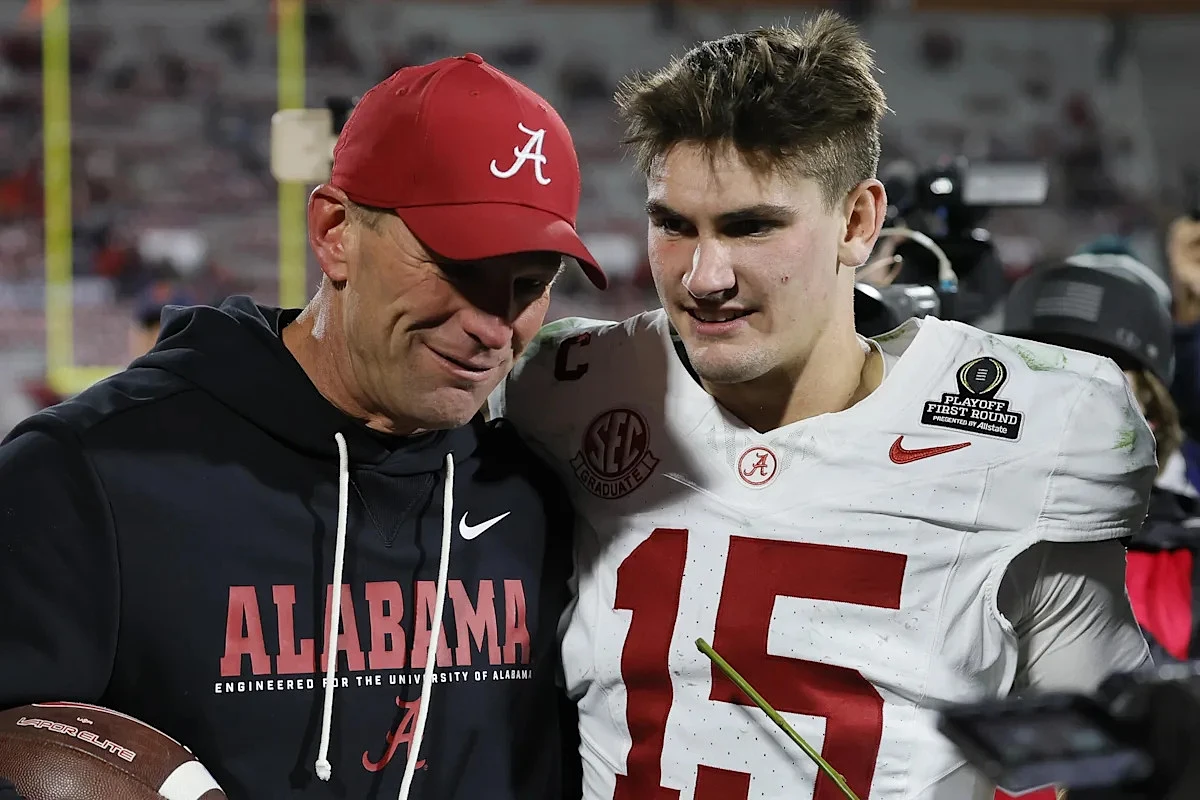
Sean McVay has a vision. When the Los Angeles Rams used the 13th overall pick on Alabama quarterback Ty Simpson, the plan was crystal clear: groom him as the heir apparent to Matthew Stafford. But in the high-stakes world of NFL drafting, even the best-laid plans come with a side of skepticism—especially when a recent first-round pick from the same system is already raising questions.
Enter Michael Penix Jr., the Falcons' rookie signal-caller who arrived in the NFL with far more college experience running Alabama's complex, pro-style offense. If Simpson ultimately matches Penix's talent, did the Rams make the right call? That's the burning question for fans wondering whether McVay's gamble will pay off.
Simpson was lauded for his quick processing and high football IQ—traits that thrive in Alabama's system, which is notoriously tougher than most college offenses. But Penix's NFL struggles have thrown a wrench into the comparison. Remember, Penix wasn't always a first-round lock. His journey started at Indiana in 2019, where offensive coordinator Kalen DeBoer's system lit up the scoreboard. In six starts before an injury, Penix helped the Hoosiers average 36.6 points per game. After DeBoer left for Fresno State, Indiana's offense sputtered—a telling sign of the coach's impact.
DeBoer's magic touch continued at Fresno State, where quarterback Jake Haener—a player few saw as an NFL prospect—threw 33 touchdowns in 2021, earning a fourth-round pick by the Saints. (Fun fact: Rams running back Ronnie Rivers was also on that Fresno team.) Then came Washington. In 2022, DeBoer reunited with Penix, and the duo exploded. Over two seasons, they led the Huskies to the national championship game, falling to Michigan 34-13.
So, what does this mean for Simpson? The Rams are betting on his upside, but Penix's rocky transition to the pros serves as a cautionary tale. For now, McVay's choice is a high-risk, high-reward play—one that could define the franchise's future.