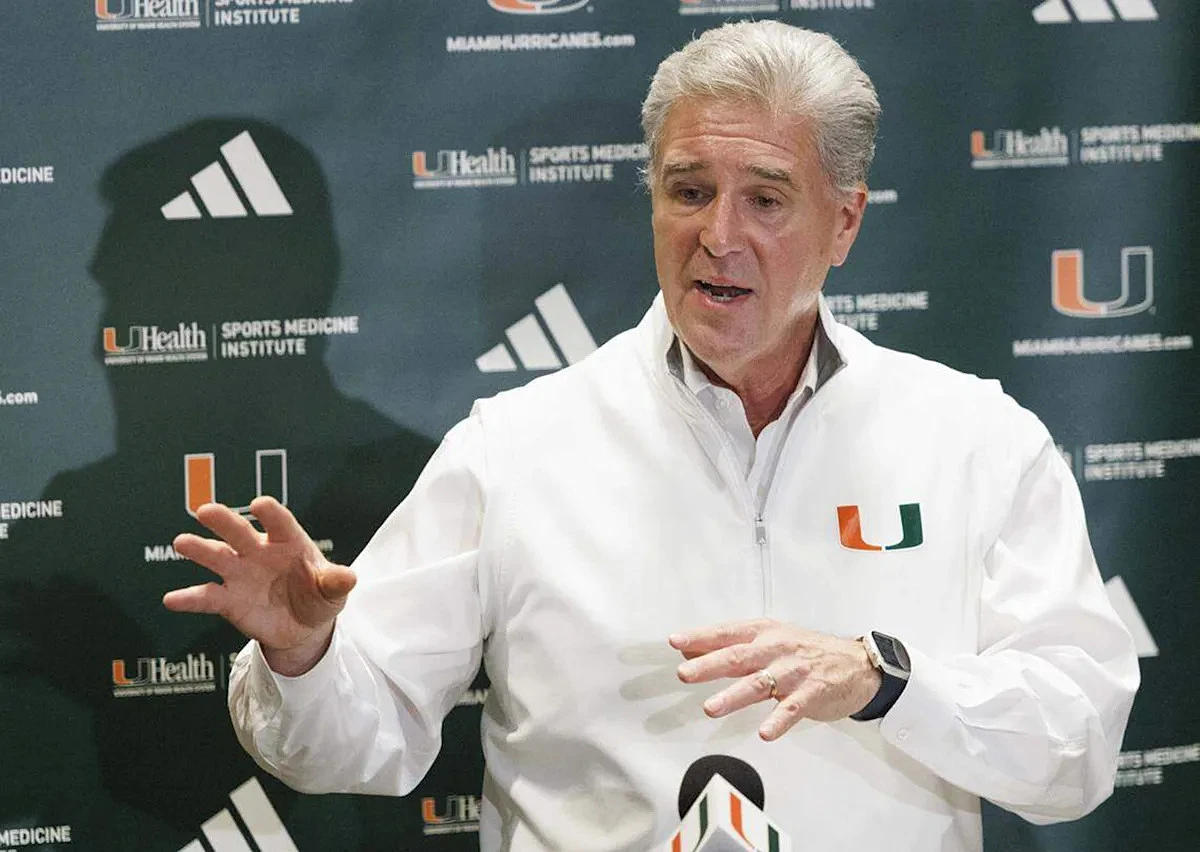
Welcome to Miami's new world of college athletics, where the role of an athletic director is being reimagined for a modern era. It's a shift that has been decades in the making.
Think back more than 30 years: I sat in the office of legendary Miami athletic director Sam Jankovich when he casually opened a drawer, pulled out a list of five potential football coaches, and said, "I'm always updating these candidates in case we need a new coach." That was the old-school way—always prepared, always in control of the roster behind the roster.
Fast forward to two decades ago, when I sat with Hurricanes AD Paul Dee. He laid out a meticulous vision for both the football and basketball programs, right down to the type of young, rising coaches who could win big, get poached by wealthier schools, and still fit within Miami's budget constraints.
But the game has changed. In recent years, Miami was at the forefront of the Name, Image, and Likeness (NIL) revolution, activating the new rules in a way that propelled the football program back to national prominence. Now, the university is taking that innovative spirit one step further by reorganizing the very definition of an athletic director.
Dan Radakovich is stepping down after five years of steady, integrity-driven leadership. But don't mistake this for a traditional departure. The athletic director as you've known him isn't disappearing—the job is evolving. The real architect of this new vision is school president Joe Echevarria, who has fundamentally changed Miami's approach to sports.
Echevarria didn't just tweak the budget; he expanded the entire financial and philosophical framework. "We're spending as much as any school out there on sports," a Miami source told me. That's a far cry from the days when Randy Shannon was the second-lowest-paid football coach in the ACC, and Al Golden lamented having the worst facilities in the conference.
Five years ago, then-president Julio Frenk—a classic academic leader with little connection to athletics—tasked Echevarria and his chief of staff, Rudy Fernandez, with rethinking the entire sports department. The result? A complete overhaul of how Miami operates.
Today, the big decisions are made by a tight-knit group of insiders that includes Echevarria, Fernandez, the influential Mas brothers (Jorge and Jose), and Manny Kadre—the auto magnate and chair of the board of trustees. This isn't the old model of a single AD ruling from on high. It's a collaborative, forward-thinking leadership team that's as nimble as it is well-funded.
For a Hurricanes fan—or anyone following the new landscape of college sports—this is a fascinating glimpse into the future. Miami isn't just keeping up; it's rewriting the playbook.