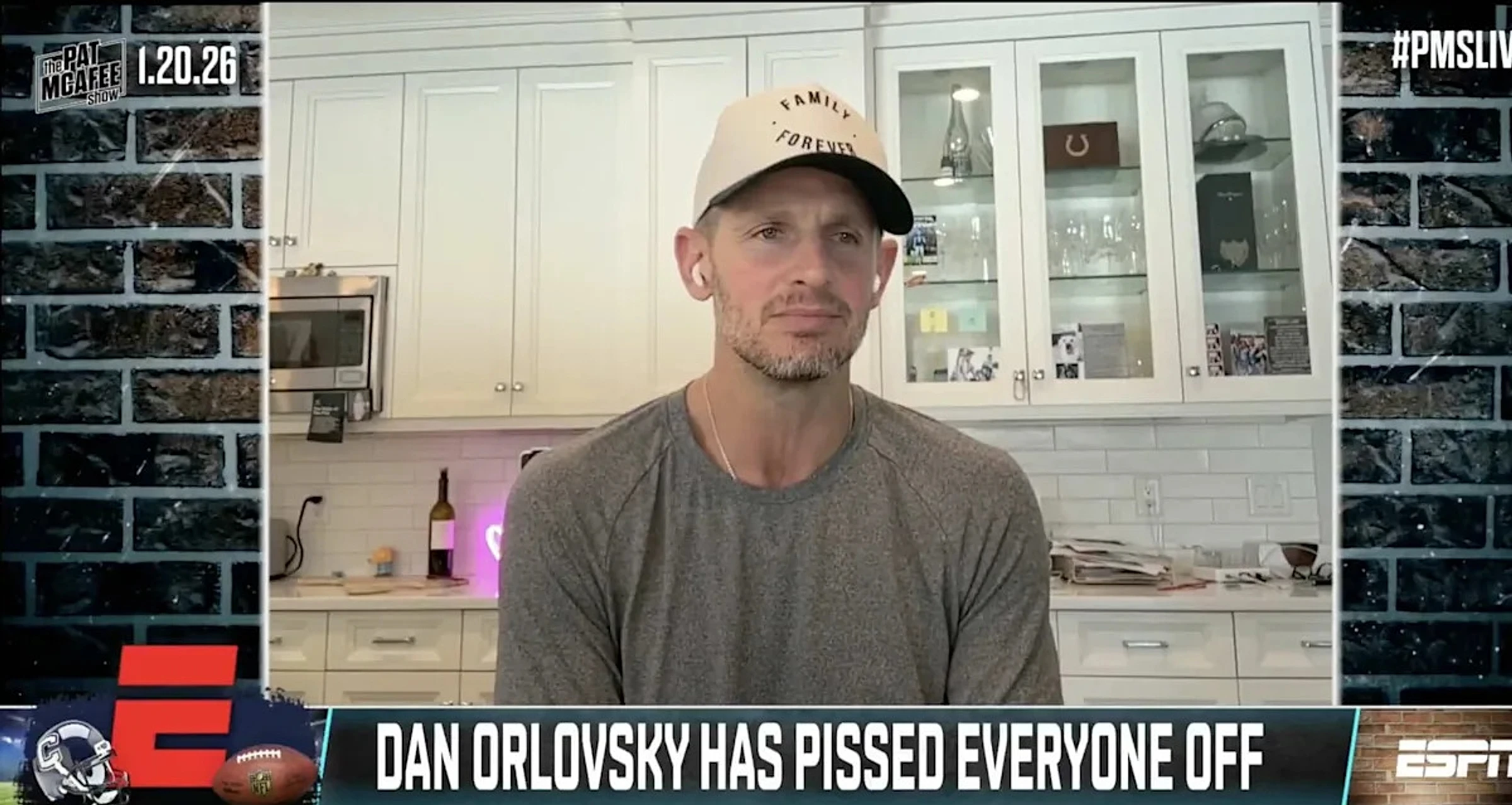


Dan Orlovsky has probably seen the clip of himself running out of the back of the end zone with the Detroit Lions thousands of times by now.
Posting the clip is an easy way for his critics to tease him and call out his lack of success in the NFL. While Orlovsky spends his days on ESPN breaking down star quarterbacks, he never was one himself.
And in a new interview on the Bussin’ With the Boys podcast, Orlovsky acknowledged he struggled with that dynamic early in his career.
“It was a little bit of a struggle, and I still kind of am conscious of it, like, I gotta go on and be critical of Patrick Mahomes? Me? I was a backup for 12 years,” he said.
The noise, from both fans and colleagues in the NFL, made it even harder to ignore the disparities between Orlovsky and those he analyzes on-air.
“I’ve gotta be critical of guys that are obviously, clearly, I mean everybody’s a better player than me, essentially, at that position if we’re talking about them. So I’m conscious of it,” Orlovsky said.
“It was probably something that was on my mind a little bit more starting in my career, but nowadays I just want to do the job better than everybody else. That’s all I want to do. And if guys hate me for it, they hate me for it. If I cross a line, I will be honest with myself and apologize.”
A turning point for Orlovsky came in his third or fourth year at ESPN, once he had become a full-time panelist on NFL Live. Midway through the season, Orlovsky worked with one of the show’s producer for a breakdown segment arguing that Mahomes was the worst mechanical thrower in the NFL.
Though the producer questioned if Orlovsky was sure he wanted to open that particular can of worms with the unquestioned best player in the league, Orlovsky went through with it.
“That was a turning point for me to be like, just do it the right way,” he said. “If you do it the right way, if you show why you are saying what you’re saying, I always believe the tape [shows it].”
Football media, especially game analysts at the level that Orlovsky has openly lobbied to be at, is filled with former superstar QBs. Nobody questions when Tom Brady or even Tony Romo is critical of Mahomes or other top signal-callers. But because Orlovsky peaked as a career backup, his analysis is more liable to face pushback.
Where Orlovsky seems to have settled is to let his work speak for itself. Being a great player is one thing, but history has shown that even among retired athletes, the all-time greats succeed because they become great broadcasters, their on-air talent and preparation standing out beyond what they did on the field.
The post Dan Orlovsky discusses overcoming discomfort of criticizing QBs who are more successful than he was appeared first on Awful Announcing.