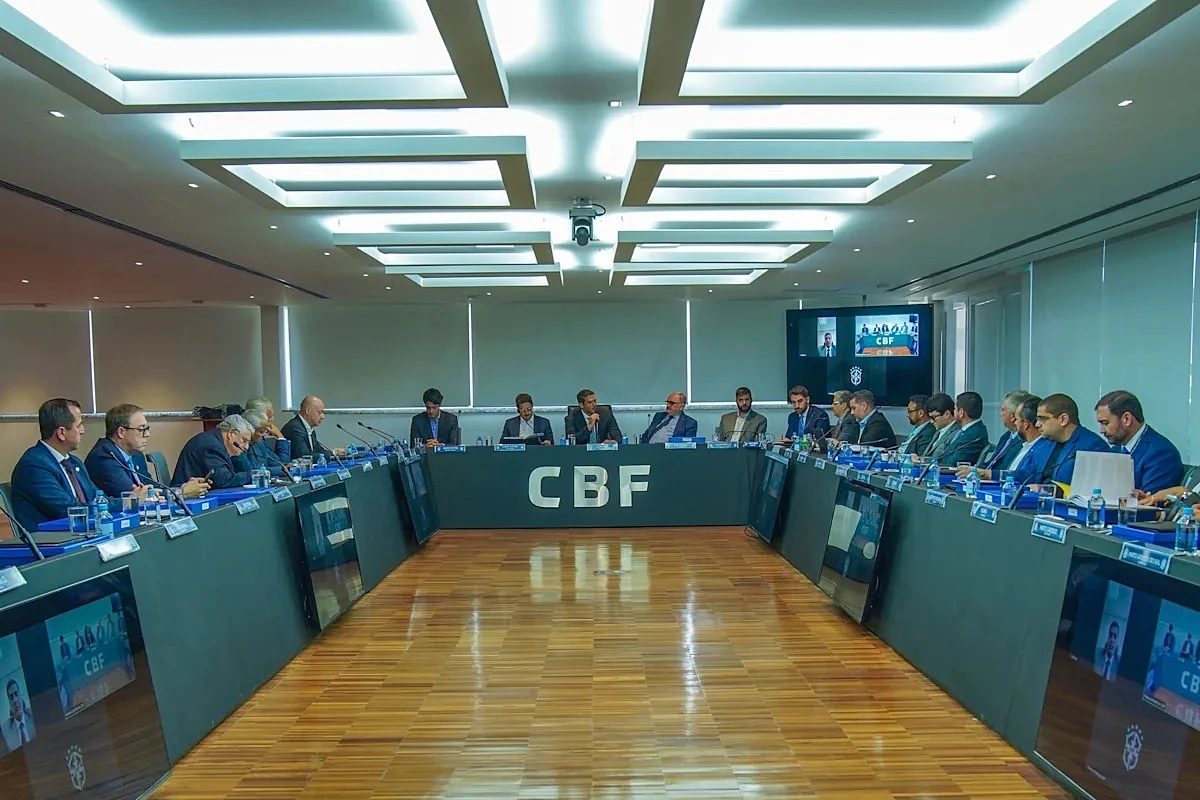


The Brazilian Football Confederation (CBF) unanimously approved the 2025 financial statements during the Ordinary General Assembly held this Monday (27). The financial report presented to the board and representatives of affiliated federations showed a deficit of R$ 182.5 million, reflecting major investments made to settle liabilities left by previous administrations.
At the Assembly, revenue of approximately R$ 2.7 billion was approved for the 2026 fiscal year.
Since taking office, the current CBF board has begun work with an in-depth analysis of the entity’s financial situation. Once the diagnosis was made, efforts were focused on balancing the books in order to eliminate the liabilities inherited from previous administrations.
The increase in operating expenses in 2025 was 111% compared to the previous year, which explains the R$ 182.5 million deficit. Most of this amount comes from the end of the legal dispute involving club Icasa, around R$ 80 million, a debt originating from an episode involving the Ceará club in 2013.
CBF president Samir Xaud cited the investments made by the administration and the return of confidence in the CBF, demonstrated by the record number of 12 sponsorsCredits: Nelson Terme / CBF
Also included in these expenses is an increase in provisions for civil and labor contingencies, with write-offs and settlements totaling R$ 17 million; the revision of the policy for provisioning credit losses, which required write-offs and contributions impacting the result totaling R$ 55 million; an investment of R$ 27 million in logistics expenses due to increased travel by the Brazilian men’s national team for the World Cup Qualifiers and friendlies; as well as investments in marketing (R$ 13 million), technology (R$ 9 million), and institutional, sporting, legal, and communications consulting services, in addition to other general services necessary for CBF operations (R$ 22 million).
Another factor weighing on the result is that the CBF’s largest sponsorship contract, with sportswear supplier Nike, had revenue brought forward to the 2024 fiscal year.
The financial report, however, shows the first results of the new administration’s actions, such as the record number of sponsors: 12 in total. For president Samir Xaud, this is one of the clearest signs of the return of confidence the entity has earned in less than a year of work.
“We took over with the clear intention of developing our football and leaving a legacy. We put the house in order, invested in important and structural aspects of Brazilian football, rebuilt the CBF’s image, and the response to that has been very positive. We set a pre-World Cup sponsorship record. We faced problems and took on the commitment to reorganize finances and regularize labor debts and debts with clubs. This investment will bring us results,” said Xaud.
According to CBF financial director Valdecir de Souza, after investing to put the house in order, the outlook is for revenue growth in the coming yearsCredits: Nelson Terme / CBF
CBF financial director Valdecir de Souza believes that even if the financial report does not show a surplus, the moves being made now point to a clear future outlook of increased revenue.
“It was necessary to spend in order to seek efficiency in the new administration: future results, growing revenues, so that we can do what matters most, which is investing in football. During the Assembly, I think everyone noticed this new environment, this new administration, the desire to make things happen, to have a CBF with modernity comparable to major confederations such as FIFA. It is the CBF’s leading role that we need to regain,” he said.
Even before the vote that unanimously approved the accounts, the presidents of the federations participating in the meeting asked to speak in order to reinforce the content of the presentation and share how the federations had been positively affected by changes in management conduct.
Rubens Lopes, president of FERJ, praised the greater participation of the federations, a priority in the CBF’s new administrationCredits: Nelson Terme / CBF
The president of the Rio de Janeiro Football Federation, Rubens Lopes, cited the decentralization of management and the increased participation of federations in matters concerning Brazilian football. “The new management model repositioned everything. It restored the federations to their rightful importance in the process of shared management. And that, for us federation presidents, is fundamental. What is happening here is reflected in every state and in all the positive points presented in a short period of time. There has been a course correction, so to speak, in CBF management, and the results are there for everyone to see,” said Lopes.
For Reinaldo Bastos, president of the São Paulo Football Federation, the impact of these 11 months of a new CBF is also evident in the entity’s restored position as a leading force in football at the global level and in winning back fans’ support for the Brazilian national team. “What excites me is seeing that we can look ahead to something better in the future: in the relationship and professionalization of federations and clubs, in bringing clubs closer to the CBF, in regaining ground at CONMEBOL and FIFA and, above all, in bringing back the fans, the heart of the Brazilian fan, which is what drives the passion and all of Brazilian football,” he said.
Reinaldo Bastos, president of FPF, believes the new administration’s actions have helped restore the CBF’s pioneering role on the global football stageCredits: Nelson Terme / CBF
This article was translated into English by Artificial Intelligence. You can read the original version in 🇧🇷 here.