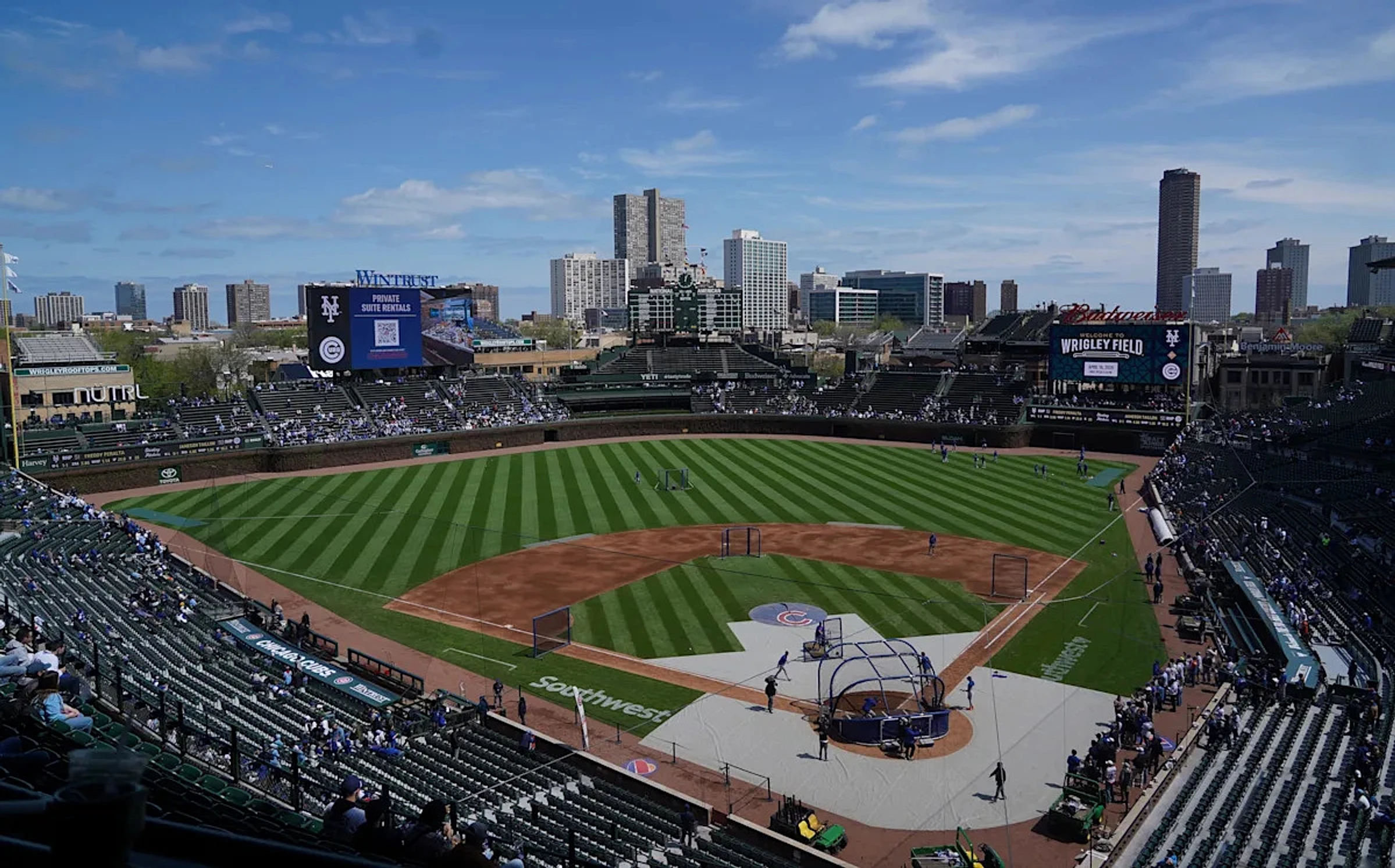

Chicago is a city of many climates – known for its wind, cold, humidity and snow.
Have you ever wondered how this chaotic weather can impact one of the city's favorite past times? According to AccuWeather meteorologist Geoff Cornish, weather conditions like these can have a significant impact on home runs at Chicago baseball stadiums.
"In baseball, you’re playing the weather," Cornish said. "Hot day in Texas? Thinner air. The ball flies farther. Cold night in San Francisco? Heavy air — you won’t hit fly balls."
So how does Chicago's weather impact the Cubs and the Sox? Here's what we know.
At the center of how weather affects home runs is air density — how tightly packed air molecules are in a given space. That density determines how much resistance, or drag, a baseball encounters as it moves through the air, Cornish said.
Air pressure is the main factor that sets that density. Higher pressure packs more air molecules into the same space, increasing the number of collisions with a baseball and slowing it down faster. Lower pressure means fewer molecules and less resistance, allowing the ball to retain more of its speed over distance.
Even small changes in that resistance can add up over the 350- to 450-foot flight of a ball.
Elevation is where those pressure differences become most obvious.
As altitude increases, atmospheric pressure drops because there is less air above the surface pushing downward. The result is thinner air and lower drag conditions, Cornish said.
Denver’s Coors Field, at about 5,200 feet above sea level, is the clearest example of that effect — and what Cornish calls "a hitters’ paradise." In that environment, baseballs do not gain extra lift; they simply lose velocity more slowly after leaving the bat, which extends their flight.
In comparison, Chicago's Wrigley Field and Rate Field sit at just under 600 feet in elevation, meaning balls soaring through the air experience more drag and loss of velocity.
Humidity affects baseball flight in ways that often run counter to intuition.
Moist air contains a higher proportion of water vapor, which is lighter than the nitrogen and oxygen that make up most of the atmosphere. When humidity increases, some heavier gas molecules are displaced by these lighter ones, slightly lowering overall air density. With fewer dense air molecules in the path of a moving baseball, aerodynamic drag decreases and the ball can carry marginally farther.
This means balls could potentially experience slightly less drag in a humid city like Chicago, where the average relative humidity ranges between 66-76% throughout the year, according to the Illinois State Climatologist.
But humidity also affects the baseball itself, not just the air around it. Moisture can influence the leather and core, changing how the ball compresses at impact. It can also affect grip and spin, which in turn alters pitch movement and contact quality.
Because it influences both the environment and the ball’s physical behavior, humidity is more variable in its effects than temperature or pressure.
"Generally if it’s humid, the ball will travel more," Cornish said. "But if the ball gets saturated, it’ll deaden the ball a little bit."
They can also become slightly heavier and less lively off the bat — which is one reason some ballparks and leagues use humidor systems to store baseballs under controlled conditions. In fact, The New York Times announced in 2022 that all 30 MLB stadiums would adopt the system to "help provide consistency" among stadiums' ball storage.
These systems regulate temperature and humidity to keep balls closer to a baseline condition, often around 70 degrees and 50% humidity, helping reduce extremes in how the ball performs from game to game.
This means balls would be less impacted by moisture in the air at a stadium like Wrigley, which The New York Times reported was the ninth-most humid MLB stadium, with an average relative humidity of 57.9%.