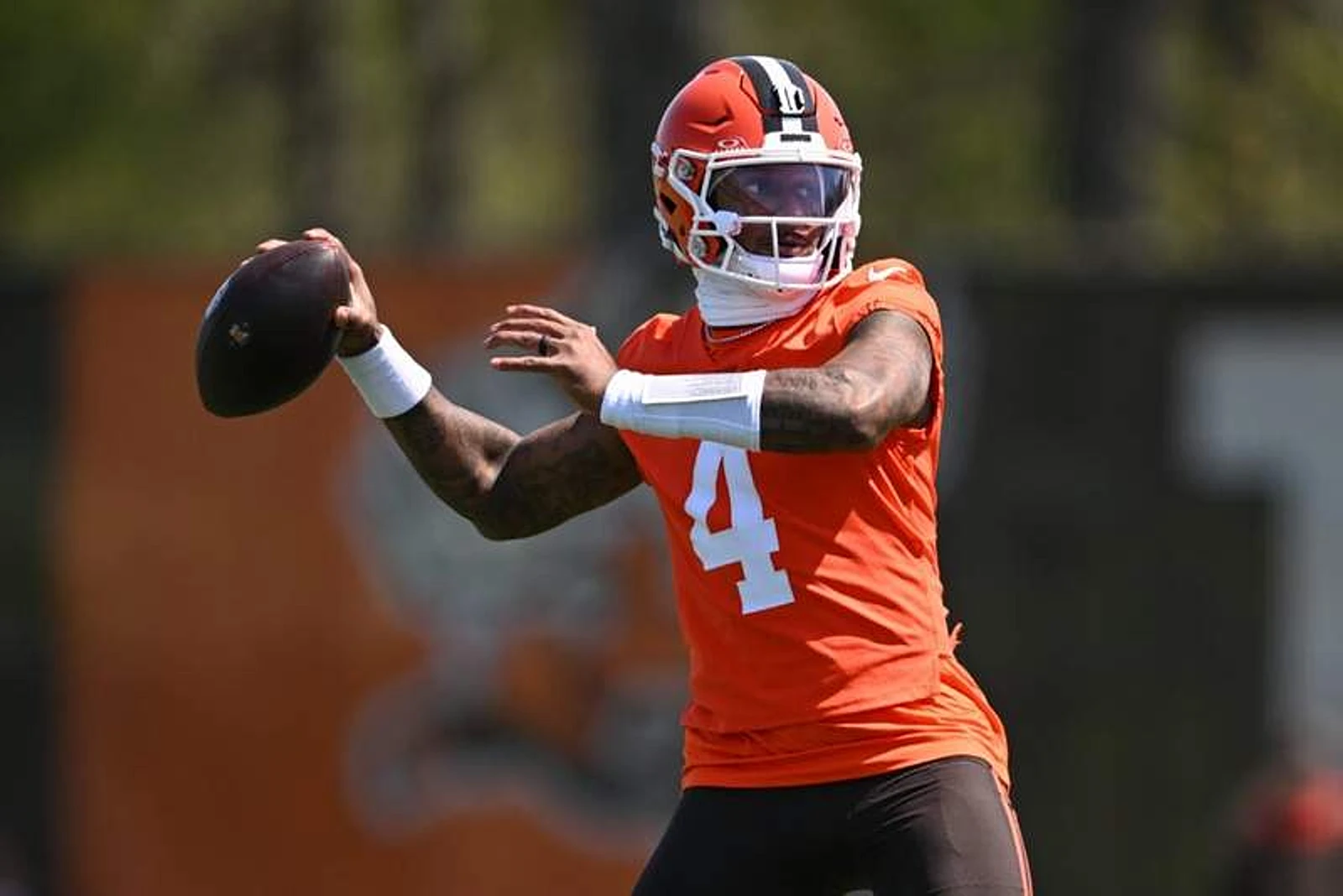


Cleveland’s wide receivers dropped 25 passes in 2025, finishing with a league-low catch rate of around 50 percent. It seems like an obvious area for improvement with a top-10 pick, but that wouldn’t address the real issue.
The Browns’ offensive line was responsible for pressure on 39.1 percent of dropbacks, giving up 224 pressures and 51 sacks, while the offense managed just 16.4 points per game. The drops were more a result of structural issues than their source.
Using the No. 6 pick on Carnell Tate would address the visible symptoms rather than tackle the root cause of Cleveland’s offensive struggles.
It’s hard to deny the drop count was high, but it wasn’t out of line with what you typically see from teams under this much pressure. Most sides at the bottom of the league in catch rate are closer to 30 or more. Cleveland was below average, but it wasn’t extreme enough to reshape the draft strategy around.
The more pressing concern is why those drops happened in the first place. Pressure can throw off everything within a passing offence. It shortens routes, disrupts timing, and creates throws that receivers have to adjust for on the fly. When your quarterback is being rushed on nearly half his dropbacks, it doesn’t matter who you have outside—everything gets thrown off.
This is where the case for drafting a receiver to fix drops falls apart. Research shows that drop rate has extremely low year-to-year correlation compared to usage or production stats. It is considered a non-predictive metric.
Receivers can move between elite, average, and below-average depending on how well the offensive structure works around them. Drops are one of the least stable metrics in football, and they are often not something teams should chase during the draft.
Cleveland’s receivers finished 2025 with 25 drops and the worst catch rate in the league at around 50 percent. That looks like a problem a top-10 pick should fix. It is not.
The Browns’ offensive line allowed pressure on 39.1 percent of dropbacks, gave up 224 pressures and 51 sacks, and the offense scored 16.4 points per game. The drops were a symptom of a broken structure, not the cause.
Drafting Carnell Tate at No. 6 to fix receiver production would be reacting to the most visible part of the problem instead of the most important one.
There is no question that pressure affects everything about an offense. But it was not the only thing affecting production. Play-calling matters, and the Browns had a rotating cast of offensive coordinators throughout the year. The room is already packed with names that have each had moments to contribute, but none who have pulled ahead as true feature receivers.
Cleveland’s catch rate is not something that will get better without improvement at both receiver and quarterback play. Though Deshaun Watson has shown he can help, there are still questions about how much he can improve efficiency with this unit without more firepower on offense.
There are two problems here – one that’s visible and one that’s structural. Drops are obvious. Fans react to them, they show up in highlight reels, and they stick out in the box score. But pressure is what really shapes an offence, even if it doesn’t stand out as much on film.
Top-10 receivers generally do pan out well, so picking one isn’t a massive risk by position alone. But why the pick is made matters just as much. If Cleveland chooses Tate simply because they had 25 drops last season, it’s basing the decision on a stat that doesn’t predict future issues and ignores the bigger problem of poor protection.
Tate is a good player who fits a clear role in an NFL offence. The Browns do have real issues to fix. But those start with protection and quarterback play, not at wide receiver. Unless those areas improve first, even the best receiver prospects won’t be able to turn things around.
Jets face key decision at No. 2 between Bailey and Reese
Donald Trump said buying Dallas Cowboys was a ‘no win situation’ before they became the most lucrative US franchise
Fernando Mendoza’s one tendency could cause problems for him in NFL, says anonymous NFC executive