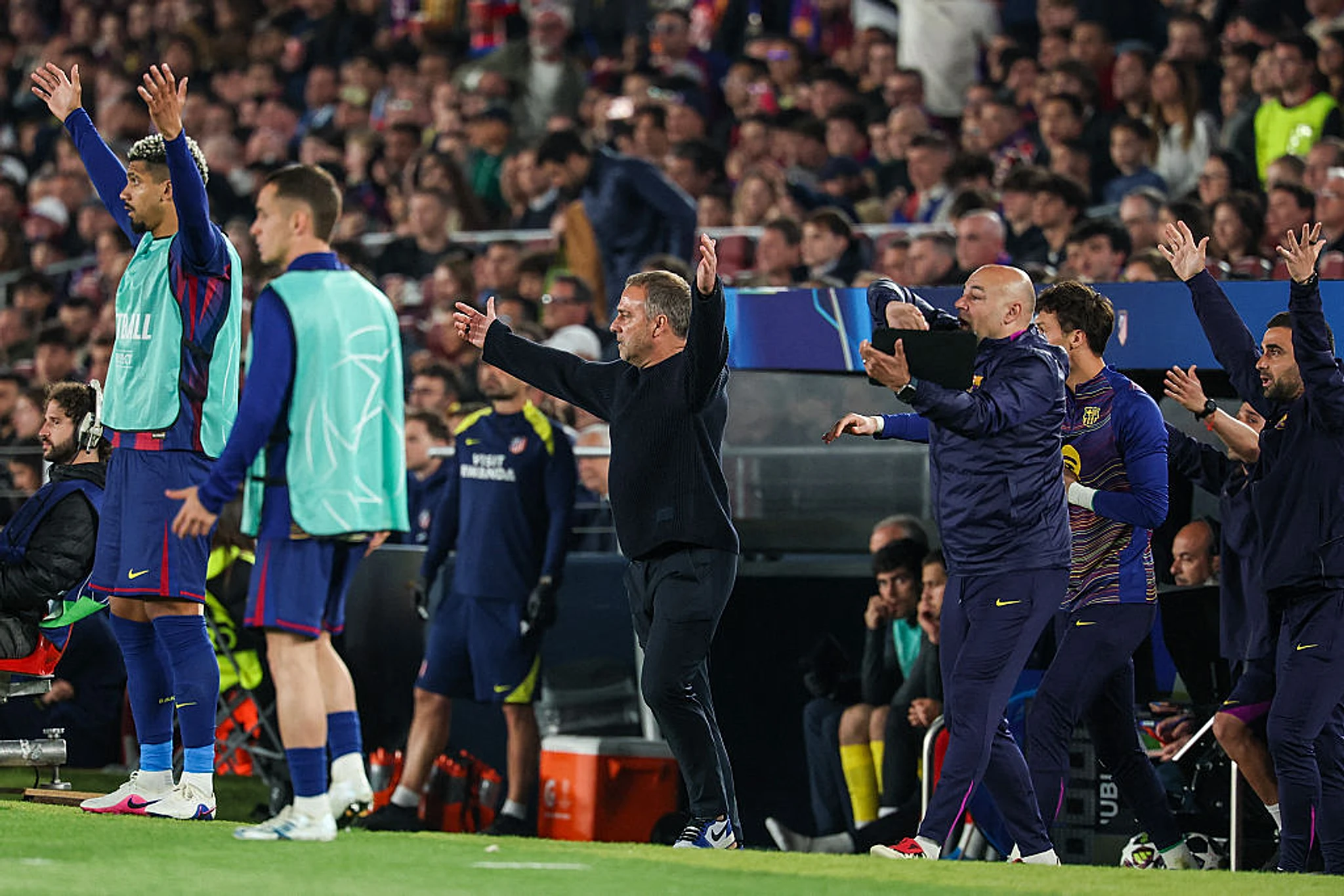
Barcelona's Champions League quarter-final first leg against Atlético de Madrid was a tense, gritty affair, made even more difficult after they were reduced to ten men. Trailing 1-0 in the second half, the Catalan giants erupted in fury over a controversial non-call that could have swung the momentum.
The flashpoint came from a seemingly routine goal-kick sequence. Atlético's goalkeeper, Musso, played a short pass to defender Pubill inside the box. Pubill then handled the ball before taking what appeared to be a second goal kick—a clear violation that typically results in an indirect free kick, or in some interpretations, a penalty. Barcelona's players and nearby fans immediately protested, but referee Istvan Kovacs and the VAR officials remained unmoved, leaving Barça feeling aggrieved.
This type of incident is becoming a frustratingly familiar debate in modern football. Just this season in the Champions League, a nearly identical situation between Arsenal's Gabriel and goalkeeper David Raya went unpunished against Bayern Munich, while Club Brugge was awarded a penalty for a similar error by Aston Villa. The inconsistency in rulings adds fuel to the fire for teams on the wrong end of these decisions.
For Barcelona, already battling a numerical disadvantage, this missed call felt like a pivotal moment that could have offered a lifeline back into the tie. In the high-stakes theatre of the Champions League knockout stages, such marginal decisions often define legacies and seasons.