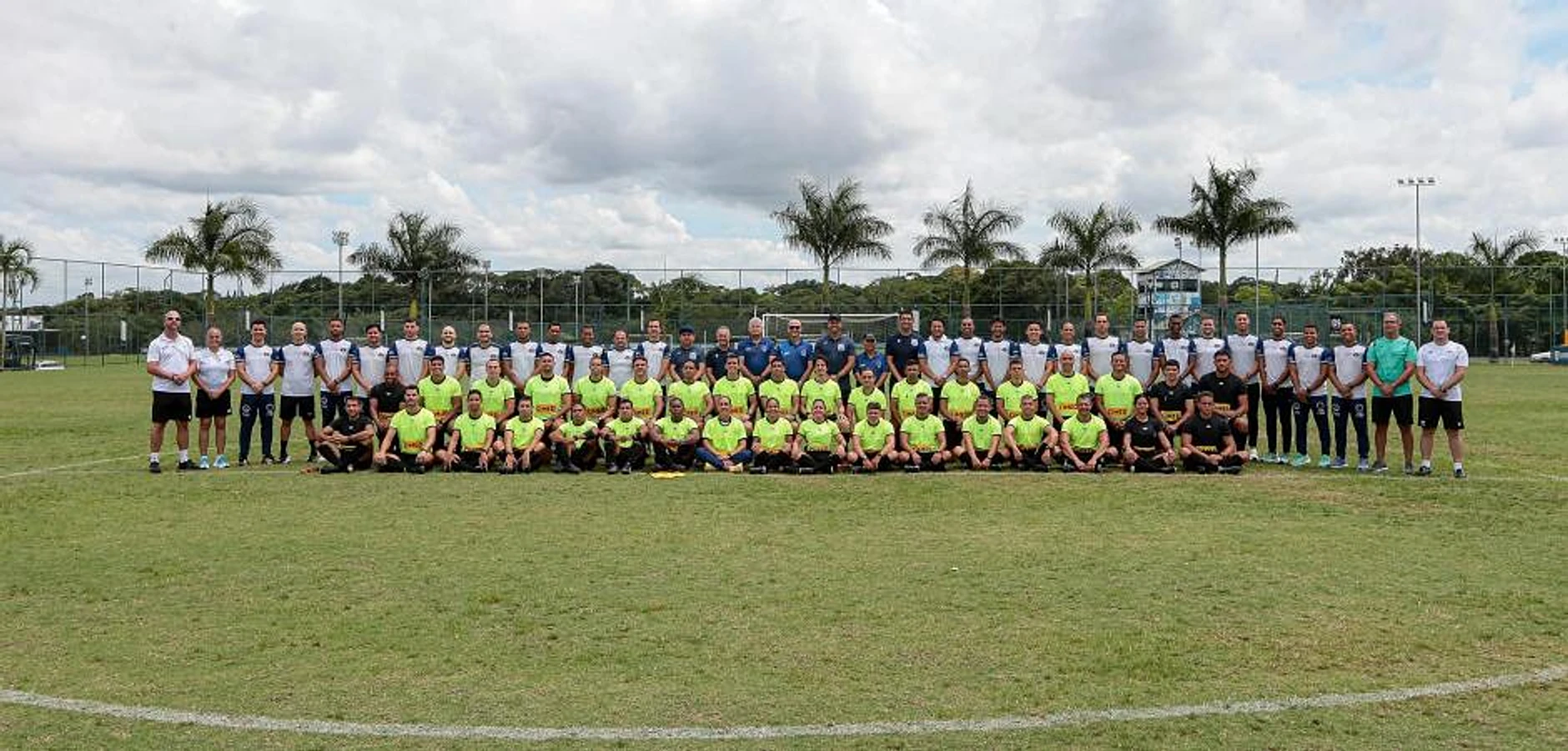
Brazilian football took a significant step forward this past weekend as the innovative "Arbitragem Sem Fronteiras" (Refereeing Without Borders) project wrapped up in Pernambuco. This intensive three-day program, a collaboration between the Brazilian Football Confederation (CBF) and the Pernambuco Football Federation (FPF), aimed to unify and elevate the standard of officiating across the nation.
From April 9th to 11th, local referees worked alongside members of the National Refereeing Commission in a deep technical immersion. The focus was clear: standardize interpretations, improve in-game reading, and sharpen on-field decision-making—the very skills that ensure the beautiful game flows fairly and consistently.
The program kicked off with crucial classroom sessions at the FPF auditorium, tackling modern officiating essentials like game control, tactical fouls, and handball interpretation. The learning then moved to the pitch at the Retrô Training Center, where theory met practice through simulated matches, real-time play analysis, and video review sessions.
Rodrigo Cintra, president of the CBF Refereeing Commission, underscored the project's national importance. "We are working to minimize interpretation differences in Brazilian football," Cintra stated. "This project is a vital step, promoting integration, updating, and technical alignment while helping us spot new talent."
The initiative also marks a win for Pernambuco's football community. FPF president Evandro Carvalho highlighted the state's role, noting, "Hosting a project of this magnitude reinforces our commitment to football's development. Investing in referees means investing in the credibility of every match."
For the referees on the ground, the impact is immediate. Ubirajara Ferraz, president of the Pernambuco State Refereeing Commission, emphasized the value of the experience: "This technical alignment raises our level and brings greater confidence to every decision we make on the pitch." It's a reminder that precision and professionalism in officiating are as critical to the sport as the performance of the athletes themselves.