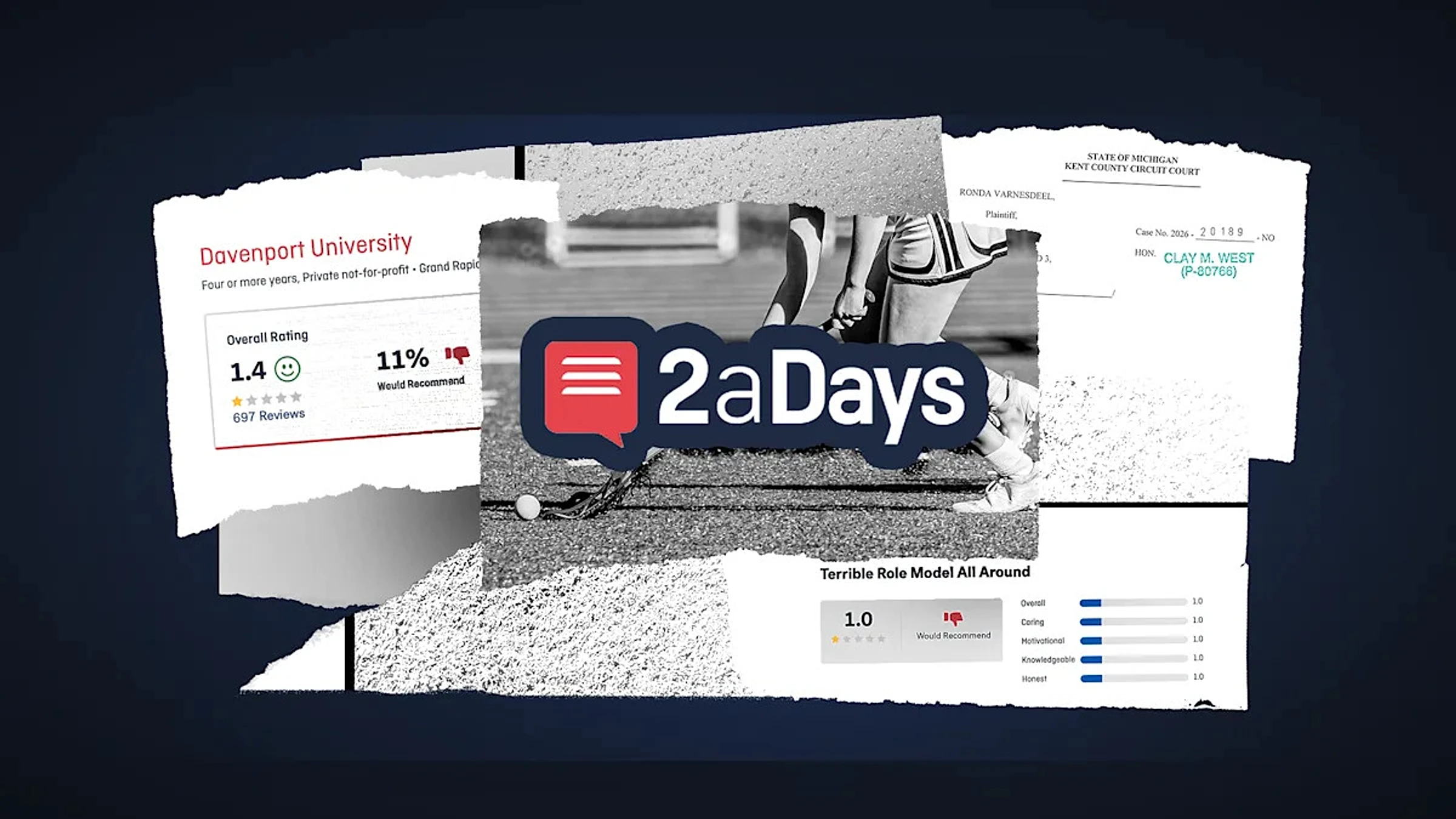
In the competitive world of NCAA Division II athletics, where national recognition can be hard to come by, Davenport University has found a spotlight—just not the kind any program wants. The private Michigan school, with its 27 varsity teams, is currently at the center of a digital firestorm on the anonymous athlete review site, 2aDays.com.
A simple search reveals a stark contrast to the typical collegiate sports narrative. Instead of celebrating wins and school spirit, Davenport's profile is flooded with criticism, painting a picture of a deeply troubled athletic department. With a dismal 1.4 out of 5-star rating from nearly 700 reviews and only 11% of respondents recommending the program to prospects, Davenport stands out as one of the most poorly reviewed schools on the platform.
The feedback zeroes in on a culture issue, with much of the anonymous ire directed at Associate Athletic Director Ronda Varnesdeel. Her individual rating sits at an almost unprecedented 1.2 stars, with a mere 6% recommendation rate from over 400 reviews. The comments, purportedly from athletes and parents, describe an environment riddled with toxicity and unethical conduct, directly blaming her leadership.
This situation highlights a growing trend in sports: the power of athlete voice. Platforms like 2aDays are becoming a crucial, unfiltered channel for feedback in an era where the athlete experience is paramount. For recruits and their families, these anonymous reviews add a new, complicating layer to the college decision process, emphasizing that a program's culture is just as critical as its facilities or win-loss record.
While the anonymity of the reviews makes verification impossible, the sheer volume and consistency of the complaints cannot be ignored. For a program striving to compete, this public relations crisis underscores that in today's sports landscape, reputation is built both on and off the field.