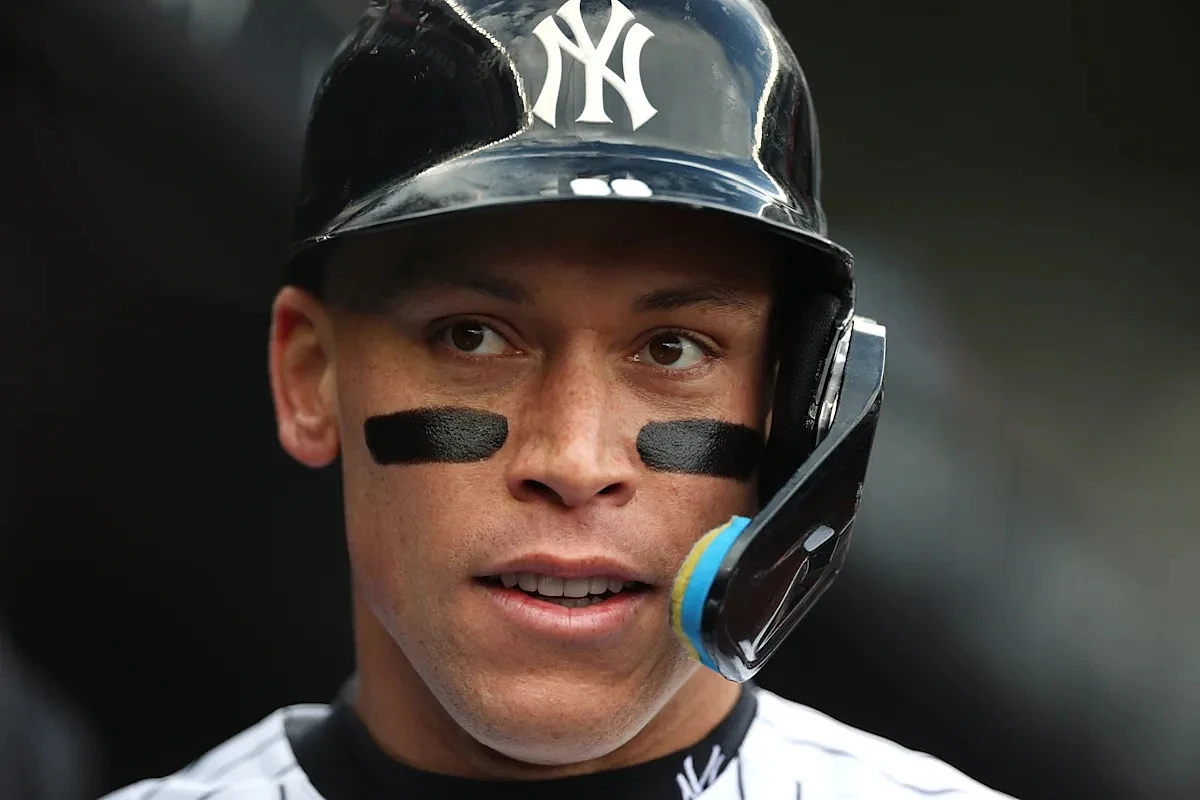


On Sunday afternoon, Aaron Judge did something he had done 89 times previous — tying Mickey Mantle for the second-most such occasions in franchise history. A long, deep fly ball went out toward Monument Park, and Judge went deep in the first inning, giving the Yankees a lead they never looked back from. It was the fifth time Judge had a home run in the first frame this year, and while we’re conditioned to think of hits that come in the seventh inning or later as “clutch”, putting up offense early, especially crooked numbers, can be just as decisive in the game’s final outcome.
Take Sunday’s bomb for example. The at-bat in question had a Leverage Index of 1.43, in an environment where 1.0 is considered an at-bat of average importance. Before that big swing, the Yankees had a 58.3 percent chance of winning, incorporating the general 54 percent “home field advantage” and the fact that Ryan Weathers had sat down the Royals in the top of the first, before Ben Rice walked.
After the homer, the Yankees had a 73.8 percent chance of winning, or, Judge added .155 points of Win Probability. That turned out to be the single most impactful play in terms of WPA that game — in short, Judge didn’t win Sunday’s game all on his own, but he was the most important single player in the victory.
WPA isn’t perfect, it assumes a zero-sum model where only the pitcher or hitter can be credited or debited depending on the outcome of a given play. Still, with the first inning being a relatively important frame from a leverage standpoint, Judge’s habit of early home runs sure helps his club out:
Just like Sunday, the first-inning dinger on April 3rd was the most-pivotal moment of the game, taking the Yankees from a 48.1 percent win probability all the way up to 64.9 percent. Two-thirds chances of winning isn’t a guarantee, just ask Hillary Clinton, but you’d definitely prefer being the guy with those odds to being on the other side.
That home run on the 15th, in that bizarre series against the Angels, is an example of the way WPA breaks out. José Caballero’s walk-off hit was the biggest single hit of the Yankee season and indeed is responsible for him being second overall in WPA across all of baseball. Still, Judge’s home run took the club from essentially a 50-50 shot to win in the first to a 61 percent chance, once again a clear favorite.
The game state is never static — Mike Trout going unconscious in that series is a good example — but as Judge has essentially spotted his team 1-2 runs five times so far this year, that does change the way that you manage a game. All of a sudden your hitters can be a little looser, you can start to project out how you want your bullpen run, everything gets a little bit easier if you’re up by a crooked number early.
Whether that’s “clutch” or not is in the eye of the beholder. First-inning home runs almost always come off starting pitchers, who are starters because they were able to stick in a rotation, and bullpen arms generally can’t. So the home run is coming in a relatively high-leverage spot, against a pitcher that’s probably better overall even if not on a per-inning basis.
Some people will never want to see Aaron Judge as clutch, and there’s little I’m going to be able to do to change their minds. As long as he keeps ending up on the positive side of WPA though, I’ll take those early homers and the impact they have on the Yankees’ chances to win.